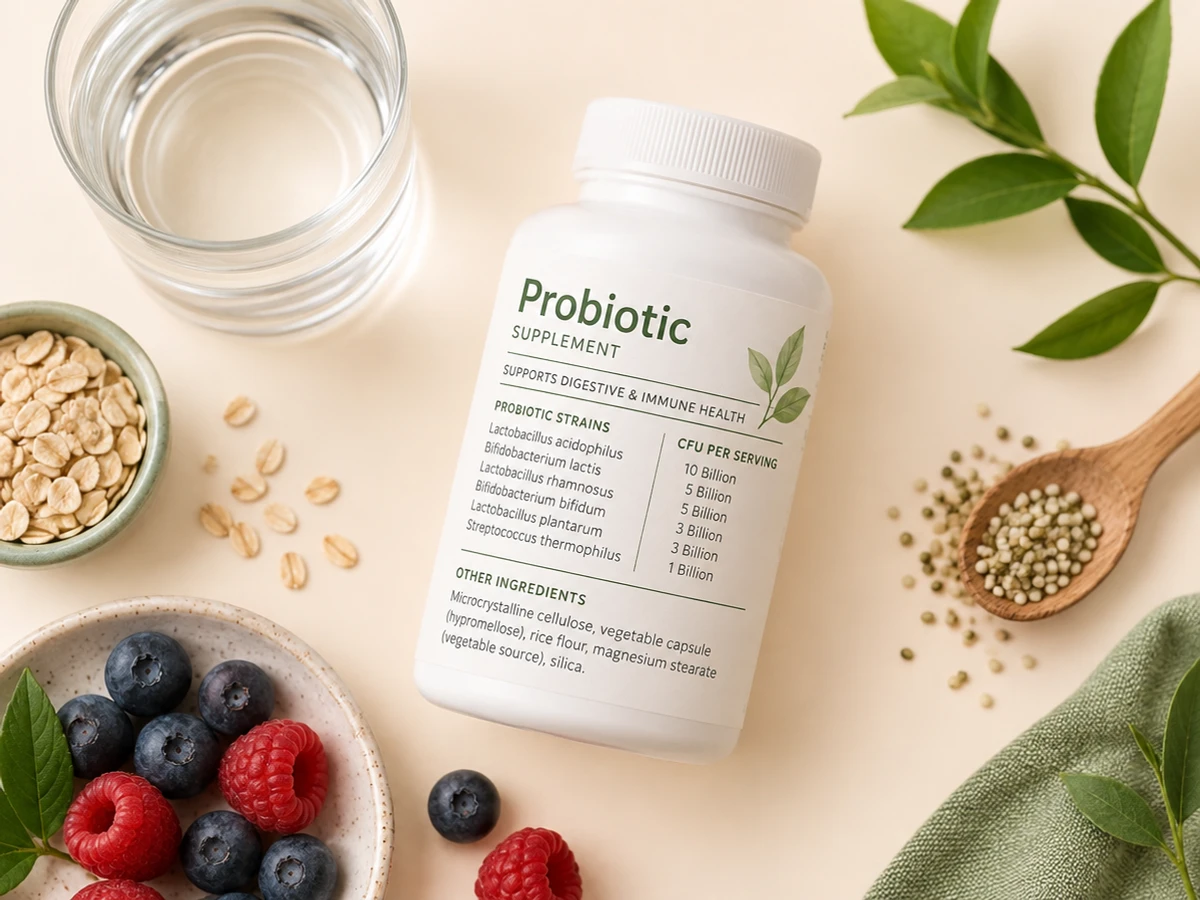
What if cranberry supplements may help lower the chance of some repeat urinary tract infections, but aren’t a way to treat symptoms once they begin? Conflicting claims can make cranberry supplements effectiveness difficult to judge, especially when labels use broad language and studies examine different products and groups of people. The useful question isn’t simply whether cranberry “works,” but what outcome has been studied and whether that evidence applies to you.
For women balancing work, exercise, family life, and changing health needs, a supplement decision should fit the bigger picture. Menstruation, pregnancy, breastfeeding, perimenopause, and postmenopause can all shape the questions you bring to a healthcare professional, though no life stage alone determines what’s right for you. Research reviews have found potential preventive benefit in some groups, while evidence doesn’t support using cranberry to treat an active urinary infection.
This article explains how researchers assess cranberry products, which label details may help you compare options, and how capsules, juice, and cranberries as food differ. You’ll also find a practical way to weigh evidence, product information, and personal context without expecting a guaranteed result. The aim is to help you make an informed choice that feels appropriate for your wellness routine.
Short answer: cranberry supplements may help reduce the risk of recurrent urinary tract infections (UTIs) for some people, but they don’t treat an active infection. Research has focused on prevention, not on easing symptoms after a UTI begins. If you have symptoms such as pain or burning when urinating, seek medical care rather than relying on a supplement.
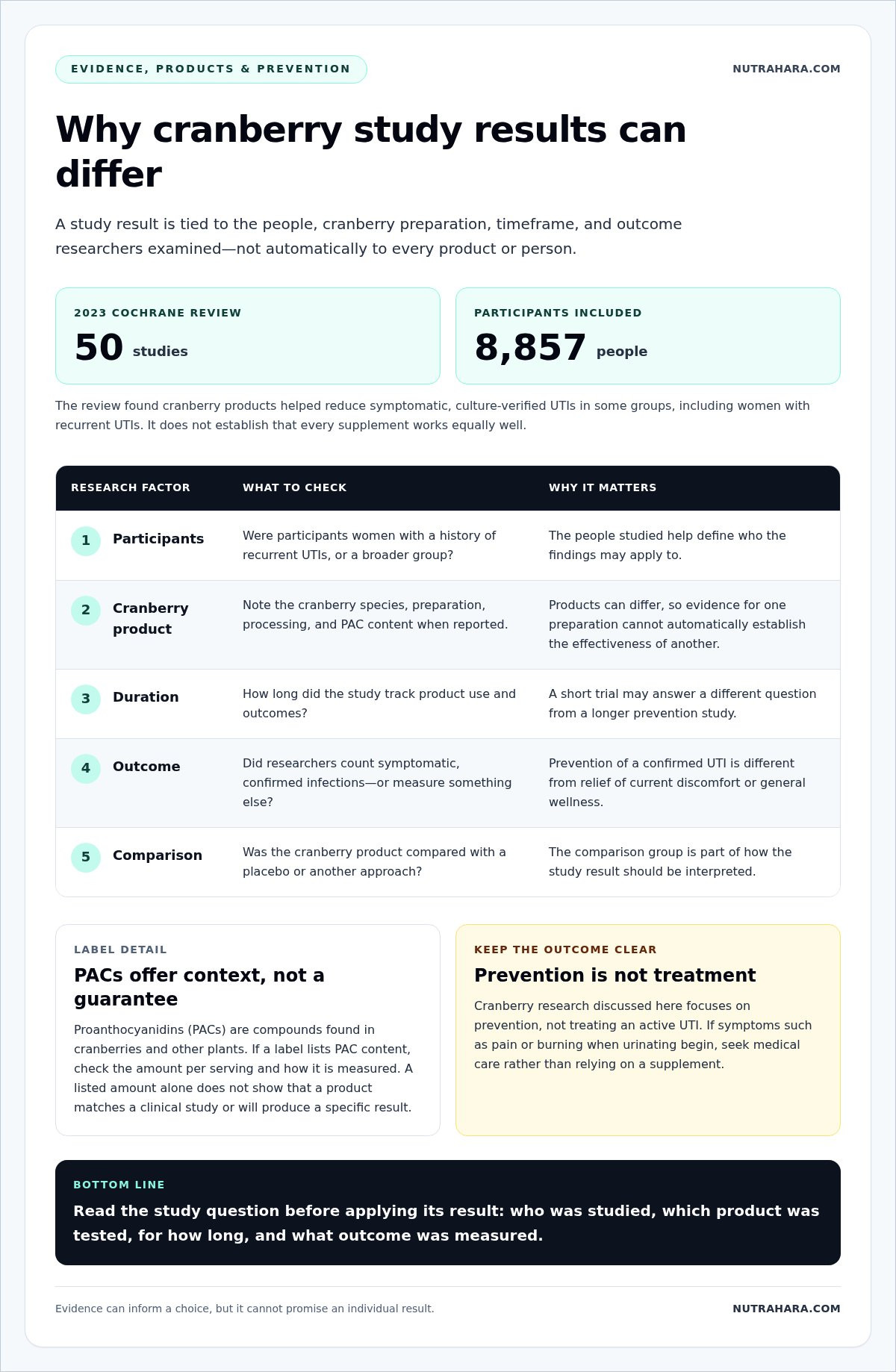
Cranberry supplements are products made with cranberry fruit ingredients, such as powders or extracts, and are studied for outcomes including UTI recurrence. Much of the research concerns the North American cranberry, Vaccinium macrocarpon, though species and preparations can vary between products. For botanical background, see Cranberry – Wikipedia. A 2023 Cochrane review of 50 studies involving 8,857 participants found cranberry products helped reduce symptomatic, culture-verified UTIs in some groups, including women with recurrent UTIs. That result doesn’t establish that every supplement works equally well.
For cranberry supplements effectiveness to mean something useful, the outcome needs to be clear. A study might measure whether participants experience another confirmed UTI over a set period. That’s different from asking whether cranberry relieves current discomfort or supports general wellness. Results can depend on the participants, the cranberry formulation, and the question researchers set out to answer. Evidence for one preparation can’t automatically be applied to every product on a shelf.
The urinary tract and vagina are separate parts of the body, with different functions and health considerations. Evidence about cranberry and UTI prevention doesn’t show that cranberry supplements restore vaginal pH or treat vaginal symptoms or conditions. If you’re looking for information about that separate topic, read our guide to vaginal pH balance. Keeping these questions distinct helps you focus on support that matches your concern.
Cranberry research looks at more than whether someone takes a capsule. Researchers also consider who takes it, how the cranberry ingredient is prepared, how long it’s used, and what outcome is measured. These details help explain why a result from one study may not predict what another woman will experience.
One proposed mechanism is that certain cranberry compounds may make it harder for some bacteria, particularly E. coli, to adhere to the urinary tract lining. This explanation is under study; it doesn’t prove that a supplement will prevent an infection for any individual. The 2023 Cochrane review discusses cranberry products in the context of UTI prevention, with evidence tied to the populations and products studied. Read the Cochrane review.
Proanthocyanidins, often shortened to PACs, are compounds found in cranberries and other plants. Cranberry research has focused in particular on A-type PACs and their possible role in bacterial adhesion. A label that lists PAC content gives you more information about a formula, but a number alone doesn’t show that the product matches a clinical study or will produce a specific result. Check whether the label states the amount per serving and explains how it’s measured.
Study results are easier to interpret when you look at the design, not just the headline. Check what kind of cranberry product was tested and whether it was compared with a placebo or another approach. Consider:
Products can differ in cranberry species, processing, and PAC content, so findings for one preparation can’t automatically establish the effectiveness of another. Study duration and comparison groups matter too: a short trial may answer a different question from a longer prevention study. Together, these factors shape what cranberry supplements effectiveness means in practice. Evidence can inform a considered choice, but it can’t promise an individual result.
Capsules, juice, and whole cranberries aren’t interchangeable. They differ in serving format, ingredient concentration, and how easily you can assess what you’re consuming. The FDA’s qualified health claim for cranberry juice applies to a specific beverage serving and describes the evidence as limited and inconsistent. That claim doesn’t establish that every juice or supplement offers the same benefit.
| Option | Convenience and serving | What to check | Evidence limitation |
|---|---|---|---|
| Supplement capsules | Compact, pre-portioned format | Cranberry ingredient, serving details, and any PAC information | Formulas vary; a label amount doesn’t prove the product matches a studied preparation. |
| Cranberry juice | Drinkable, but requires a pour and a serving | Percentage of cranberry juice, serving size, and Nutrition Facts, including Added Sugars | Juices and juice cocktails differ in composition; evidence for juice is limited and inconsistent. |
| Whole or dried cranberries | Easy to add to meals or snacks | Whether the product is sweetened and how it fits your dietary needs | Eating cranberries isn’t automatically equivalent to taking a studied supplement or juice. |
Look for a clearly named cranberry ingredient and an understandable serving size. If the label lists proanthocyanidins (PACs), check whether it states the amount per serving and explains what that measure refers to. A front-label phrase such as “urinary support” isn’t evidence of a particular outcome. If a brand mentions third-party testing, look for specifics about what was tested. Testing may speak to product quality, but it doesn’t by itself show that the supplement prevents UTIs.
Juice may suit you if you prefer a drink, while whole or dried cranberries can fit into meals and snacks. Check juice labels because cranberry beverages vary, and some contain added sugars. The FDA requires Added Sugars to appear on Nutrition Facts labels, so compare the serving information with your dietary priorities. Whole fruit can be a food choice, but it shouldn’t be treated as a guaranteed preventive measure.
There’s no universally best format. Consider which option fits your routine, what its label tells you, and what outcome the evidence studied. For a broader framework for choosing supplements as part of women’s wellness, explore this women’s wellness supplements guide.
Your health needs can change across menstruation, pregnancy, breastfeeding, perimenopause, and postmenopause. Those stages don’t automatically determine whether cranberry is appropriate, but they make personal context important. Evidence about cranberry supplements effectiveness doesn’t establish that every woman will benefit or that every formulation is suitable for her.
A practical step is to keep a brief record of urinary symptoms, any supplements you take, and when you take them. Note changes and questions to discuss with a qualified healthcare professional. This can make a conversation more useful, especially if you’re managing a health condition or taking medication.
If you’re pregnant, trying to conceive, or breastfeeding, seek individualized professional guidance before starting a cranberry supplement. The 2023 Cochrane review did not find evidence supporting cranberry use to prevent UTIs in pregnant women. That finding concerns evidence of benefit, not a blanket safety verdict. Medication questions also depend on your circumstances and the specific product, so review the label with a qualified healthcare professional rather than assuming a supplement is risk-free or unsuitable for everyone.
Menstruation, perimenopause, and postmenopause also don’t create one uniform need for cranberry. Consider your symptoms and overall health rather than treating life stage alone as a reason to start or avoid a supplement.
Cranberry supplements aren’t a substitute for assessment or treatment of a urinary infection. Seek prompt medical evaluation for urinary symptoms such as pain or burning during urination, frequent or urgent need to urinate, or symptoms that are severe or getting worse. Don’t wait to see whether a supplement helps. A healthcare professional can assess what’s happening and advise on appropriate care.
Keep your notes brief: record when symptoms began, how they change, and any supplements or medicines you use. This isn’t a way to diagnose yourself; it’s a practical aid for sharing clear information during care. Supplement decisions are one part of wellbeing, alongside habits such as movement, nourishing meals, and restorative practices. Explore Nutrahara’s women’s wellness approach.
A thoughtful decision starts with your goal, not a bold promise on a bottle. Use this framework to assess cranberry supplements effectiveness in the context of your health and routine:
Reassess from time to time. Keep a brief note of what you take and any changes in your symptoms or routine so you can discuss them with a healthcare professional. A supplement decision can change as your needs do.
Small, repeatable habits can make wellness feel more manageable. Try a gentle yoga stretch after a walk, or set aside a quiet moment to focus on your breathing. Choose movement, balanced meals, and restorative sleep in ways that fit your life. Yoga and meditation can support general wellbeing, but they aren’t treatments for urinary infections or proven alternatives to medical care.
Personal stories can offer connection, but they aren’t clinical evidence. Use testimonials only when a woman’s account is verified and shared with her permission. For a practical example, if you’re comparing two labels, note the cranberry ingredient, serving details, and any PAC information, then discuss the product with a qualified healthcare professional if you have safety questions. Nutrahara’s approach to women’s wellness brings Ayurvedic principles together with modern nutritional research. Explore the women’s wellness supplement guide as you make informed choices for your health.
Cranberry supplements may help reduce the risk of recurrent UTIs for some women, but the evidence is limited and doesn’t mean every product will work the same way. The clearest way to assess cranberry supplements effectiveness is to look at the outcome studied, the formulation, and whether the research applies to your circumstances. Cranberry isn’t a treatment for urinary symptoms, and personal safety questions deserve guidance from a qualified healthcare professional.
Choose thoughtfully: clarify your goal, read the label beyond its front-facing claims, and consider your health history and life stage. Sustainable habits such as regular movement, restorative sleep, balanced nutrition, yoga, and meditation can also support overall wellbeing, though they don’t treat infections.
Nutrahara focuses on women’s health supplements, combining Ayurvedic principles with modern nutritional research. Explore Nutrahara’s approach to women’s wellness and build a routine grounded in care, curiosity, and confidence.
Cranberry products may help reduce the risk of recurrent UTIs in some groups, including women with recurrent infections, but the evidence is limited and results aren’t guaranteed. A 2023 Cochrane review found a preventive benefit for certain populations. The phrase cranberry supplements effectiveness should be understood in that context: research examines prevention in studied groups, not a promise that every supplement will work for every woman.
There isn’t enough evidence to say that pills are universally more effective than juice. The FDA’s qualified health claim for cranberry juice describes the evidence as limited and inconsistent. Claims about different product formats aren’t proof from a direct comparison that one is best. Formulation and serving information matter, so compare labels rather than assuming the options are interchangeable.
There isn’t one dose established as right for everyone. The FDA’s qualified health claim for cranberry dietary supplements is based on a daily intake of 500 mg, but that figure relates to the claim’s evidence and isn’t personalized dosing advice or a guarantee of benefit. Products may differ in ingredients and formulation. Follow the product label, and ask a qualified healthcare professional what’s appropriate for your health context.
No. Cranberry supplements haven’t been established as a treatment for an active UTI, and they shouldn’t replace medical assessment or treatment. If you notice pain or burning when urinating, frequent or urgent urination, or symptoms that are severe or worsening, seek prompt medical care. Don’t wait to see whether cranberry helps. A healthcare professional can assess your symptoms and advise you on appropriate next steps.
Ask a qualified healthcare professional before using cranberry supplements during pregnancy or breastfeeding. The 2023 Cochrane review did not find evidence supporting cranberry products for UTI prevention in pregnant women; this is not the same as proving universal harm or safety. Individual health circumstances and product formulations vary. Bring the product label and a list of other supplements or medicines to your discussion so you can receive guidance tailored to you.
Whether a cranberry supplement is suitable alongside your medication depends on your personal circumstances and the specific product. Don’t assume a supplement is interaction-free because it contains a natural ingredient. Before starting it, show the full label to a qualified healthcare professional or pharmacist and ask about your medicines and health history. If the formula combines cranberry with other ingredients, include those in the discussion too.
There isn’t established evidence here that cranberry supplements restore vaginal pH or treat vaginal conditions. Research on cranberry has focused on urinary tract outcomes, which are distinct from vaginal health. If you’re concerned about vaginal symptoms or pH, seek advice from a qualified healthcare professional rather than trying to address them with a cranberry supplement. Keeping urinary and vaginal health questions separate can help guide the right next step.
This article is not a substitute for medical advice. Please consult a healthcare professional before starting any supplement, especially if pregnant, nursing, taking medication, or managing health conditions.