Do you ever feel like you’re not quite yourself? Perhaps it’s the persistent fatigue, the unpredictable moods, or the stubborn weight that just won’t budge. For too long, these subtle yet significant shifts have been dismissed as simply ‘part of being a woman.’ But what if your body is sending you a clear message? These experiences are often the key signs of hormonal imbalance in women, a common but frequently misunderstood aspect of female health. You deserve to feel validated, understood, and empowered on your wellness journey.
This complete wellness guide is here to be your trusted partner. Drawing from the timeless wisdom of Ayurveda and modern scientific research, we will help you decode your body’s signals. You will learn to confidently recognize the symptoms of hormonal shifts and discover holistic, natural ways to support your body’s delicate equilibrium. It’s time to move beyond confusion, regain a sense of control over your health, and find your way back to a vibrant, balanced state of well-being.
Think of your hormones as a sophisticated communication network, a team of chemical messengers that travel through your bloodstream to tissues and organs. They are fundamental to your well-being, orchestrating everything from your mood and metabolism to your reproductive cycles. This intricate system, known as the endocrine system, is designed to work in beautiful harmony, guiding your body through every stage of your wellness journey.
A hormonal imbalance occurs when this delicate harmony is disrupted-when you have too much or too little of a specific hormone. It is not a single condition, but rather a state of disequilibrium. While minor fluctuations are a normal, healthy part of a woman’s monthly cycle, a persistent imbalance can lead to a cascade of symptoms. Understanding these disruptions is the first step in recognizing the common Endocrine diseases and the more subtle signs of hormonal imbalance in women that can impact daily life.
For women, several key hormones play starring roles in this biological symphony:
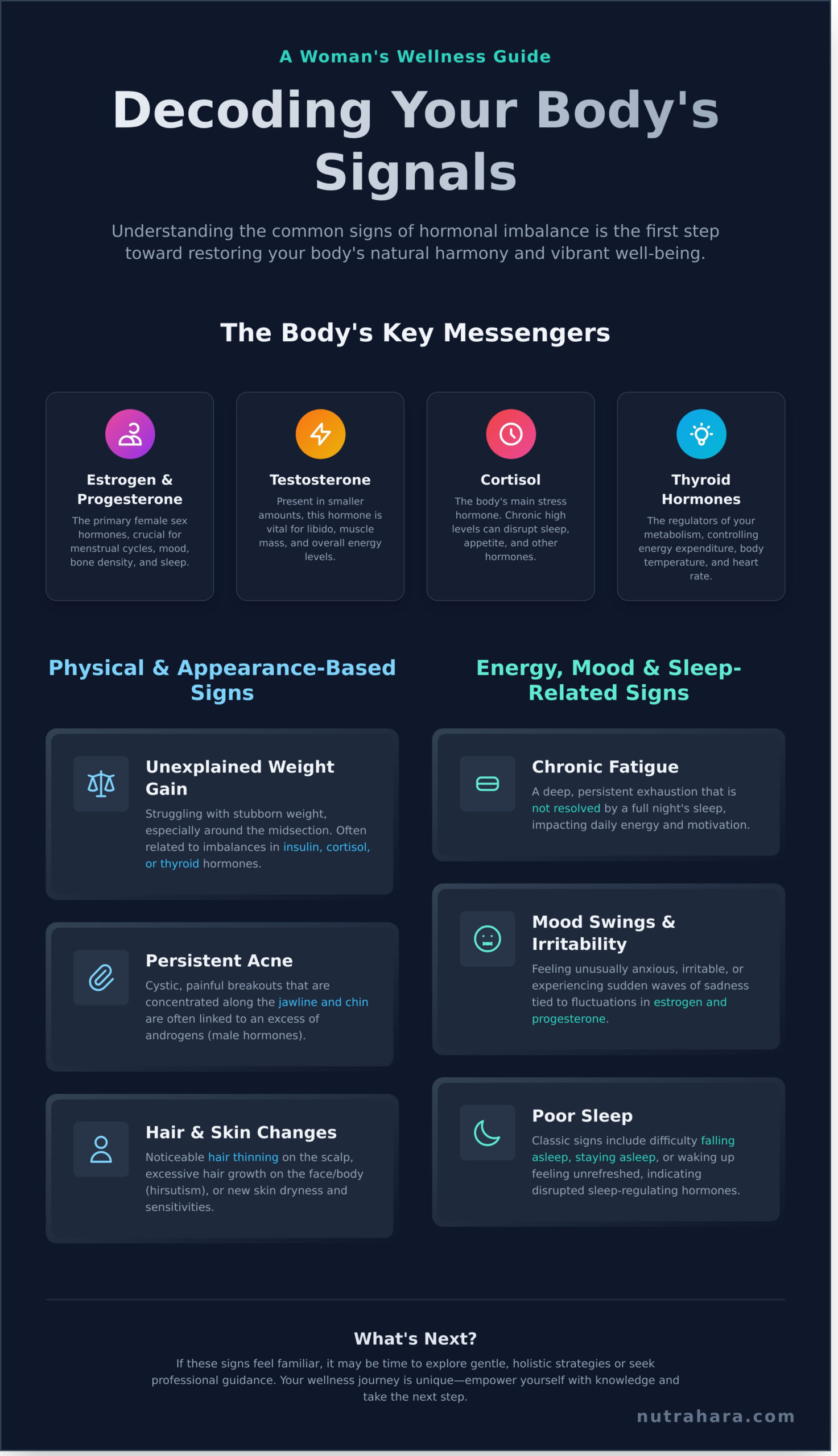
Estrogen and progesterone work together in a delicate dance throughout the menstrual cycle. Estrogen helps build the uterine lining and plays a crucial role in maintaining bone density, cognitive function, and mood. Progesterone, often called the “calming” hormone, prepares the body for pregnancy and helps ensure restful sleep. When their balance is optimal, you feel vibrant and centered; when it’s off, your entire system can feel out of sync.
Beyond reproductive health, other hormones are essential for your vitality. Cortisol governs your ‘fight or flight’ response. While useful in short bursts, chronic stress leads to consistently high cortisol, which can disrupt sleep, appetite, and sex hormone production. Similarly, your thyroid hormones (T3 and T4) act as the body’s metabolic engine, controlling energy levels and temperature. An imbalance here can mimic or worsen the signs of hormonal imbalance in women, making you feel exhausted or anxious.
Your body is in constant communication with you, and learning to listen to its signals is a vital part of your wellness journey. While it’s normal for hormones to fluctuate, a persistent pattern of symptoms can indicate a deeper imbalance. Think of the following list not as a diagnosis, but as a tool for self-awareness. Recognizing these common signs of hormonal imbalance in women is the first empowering step toward restoring your body’s natural harmony.
Your external appearance often provides the first clues to your internal hormonal environment. These physical shifts can be some of the most visible indicators that something is off-balance.
Because hormones act as chemical messengers for your brain, an imbalance can profoundly impact your mental and emotional well-being, leaving you feeling unlike yourself.
Your menstrual cycle is one of the clearest indicators of your hormonal health, making it a critical area to observe for signs of hormonal imbalance in women.
Understanding the symptoms of hormonal imbalance is the first step, but true empowerment comes from knowing why these shifts occur. Your hormones are not static; they are dynamic chemical messengers designed to ebb and flow in response to your body’s needs. Your body’s intricate network of Hormones and the Endocrine System is constantly adapting. Some fluctuations are a completely natural and beautiful part of your life journey, while others are influenced by the world around you.
A woman’s body is designed for change. These biological transitions are powerful and purposeful, each bringing a unique hormonal landscape:
Beyond our innate biological cycles, our modern environment and daily habits play a significant role in our hormonal health. These external factors can disrupt your body’s delicate balance and contribute to feelings of unwellness.
Recognizing these influences is a crucial step on your wellness journey. By understanding both the natural and lifestyle-driven causes, you can begin to support your body and navigate your path to holistic balance.
Recognizing the signs of hormonal imbalance in women is the first step on your wellness journey. The next is to empower yourself with gentle, sustainable practices that nurture your body’s innate wisdom. Rather than drastic overhauls, think of these as small, consistent acts of self-care that create profound, lasting change. This holistic approach honors the deep connection between how we eat, move, rest, and feel.
The food on your plate provides the essential building blocks for your hormones. Focusing on whole, nutrient-dense foods is a powerful way to support balance from within. Prioritize these key areas:
Chronic stress is a primary disruptor of hormonal harmony, elevating cortisol and creating a domino effect across your endocrine system. Simple, mindful practices can help restore calm and resilience. Gentle movement like yoga or walking, a consistent sleep schedule of 7-9 hours, and daily moments of deep breathing can significantly lower stress levels. Ancient Ayurvedic science also offers support through adaptogens-herbs that help the body manage stress. A clinically studied herb like Ashwagandha, found in our Ashwagandha with Black Pepper formula, is a powerful ally for promoting tranquility.
Alongside these practices, carving out time for mental rest is just as vital. Getting lost in a captivating story is a powerful way to de-stress and escape daily pressures. For those looking to explore new fictional worlds, you can visit Wydawnictwo AORA and discover your next adventure.
While a healthy lifestyle is the foundation, targeted supplements can fill nutritional gaps and provide specific support where it’s needed most. Drawing from the wisdom of both ancient Ayurveda and modern research, certain herbs and nutrients can offer a gentle lift on your path to balance. For women seeking comprehensive support for vitality and well-being, a thoughtfully crafted formula like FemmePower combines natural ingredients to nurture your body’s delicate equilibrium. Explore our full range of clean, simple formulas at nutrahara.com.
Understanding your body is a vital part of your wellness journey. While this article provides valuable information, it is intended for educational purposes and is not a substitute for professional medical advice. Recognizing the common signs of hormonal imbalance in women is the first step, but a formal diagnosis and treatment plan must come from a qualified healthcare provider.
Your body has an incredible wisdom of its own. Listen to it. We encourage you to schedule an appointment with your doctor if your symptoms are:
To make your visit as productive as possible, you can become a proactive partner in your own healthcare. Before your appointment, consider tracking key information in a journal. Note the frequency and nature of your symptoms, the timing of your menstrual cycles, and any recent changes in your diet, stress levels, or sleep patterns. Writing down a few key questions will also ensure you leave with clarity and confidence.
Your doctor will begin with a thorough conversation about your health history and the symptoms you’ve been tracking. If they suspect a hormonal issue, they may recommend specific diagnostic tests. These often start with blood tests to measure levels of key hormones like Thyroid-Stimulating Hormone (TSH), Follicle-Stimulating Hormone (FSH), and estrogen. In some cases, an ultrasound may be used to look for physical indicators of conditions like PCOS. Remember, finding the root cause can sometimes be a process of elimination, and patience is a key part of the journey to a balanced lifestyle.
As you work with your provider to restore harmony, supporting your body with holistic care is essential. Learn more about our commitment to women’s health at nutrahara.com.
Understanding the various signs of hormonal imbalance in women is the first empowering step toward reclaiming your well-being. As we’ve explored, factors from nutrition and stress to natural life stages play a significant role in your body’s delicate harmony. The path to balance is a holistic one, combining mindful lifestyle choices with the wisdom of when to seek professional medical guidance.
As a trusted partner in your personal health journey, Nutrahara is here to support you. We formulate our products by bridging the ancient wisdom of Ayurveda with modern science, using only clean, natural, and clinically studied ingredients to help you find your equilibrium. Begin your wellness journey with our natural supplements for women.
Remember, achieving balance is a journey of self-care. You have the power to listen to your body, nurture your health, and embrace your vitality every day.
To get your hormone levels tested, the first step is consulting with a healthcare provider, such as your primary doctor, a gynecologist, an endocrinologist, or a naturopathic clinic like Holistic Family Practice. They can recommend the most appropriate tests based on your symptoms. Common methods include blood tests, which measure circulating hormones, as well as saliva or urine tests that can provide a different snapshot of your hormone function. This initial consultation is a crucial step on your wellness journey to gain clarity and direction.
Yes, a hormonal imbalance can be a significant factor in unexplained weight gain. Hormones like cortisol, insulin, and thyroid hormones play a critical role in regulating your metabolism, appetite, and where your body stores fat. When these are out of sync, it can lead to a slower metabolism and increased fat storage, particularly around the midsection. Addressing the root hormonal cause is key to achieving and maintaining a healthy, balanced weight.
Nourishing your body with the right foods is foundational for hormonal health. Focus on incorporating healthy fats from sources like avocados, nuts, and seeds, which are building blocks for hormones. High-quality protein and fiber from leafy greens, broccoli, and legumes help stabilize blood sugar and support estrogen metabolism. Ancient Ayurvedic herbs like Ashwagandha can also support the body’s stress response, promoting overall balance. These natural ingredients are a simple way to support your well-being.
The timeline for balancing your hormones naturally varies for every woman. It depends on the specific imbalance, your unique body, and the consistency of your lifestyle changes. While some women notice improvements in a few months, it can often take six months to a year of dedicated effort with nutrition, stress management, and proper supplementation to achieve lasting, stable results. Patience and consistency are your most powerful allies on this healing journey.
Absolutely. Chronic stress is a primary driver of hormonal imbalance. When you’re constantly stressed, your body produces high levels of the hormone cortisol. This sustained “fight-or-flight” state can suppress the production of other vital hormones like progesterone and disrupt the delicate balance of your entire endocrine system. Managing stress through practices like meditation, gentle movement, and adequate sleep is therefore not a luxury but a necessity for hormonal harmony.
Yes, the signs of hormonal imbalance in women can manifest differently depending on your age and life stage. In your 20s and 30s, you might notice issues like persistent acne, severe PMS, or irregular cycles, which could be linked to conditions like PCOS. In your 40s, symptoms often overlap with perimenopause and may include hot flashes, night sweats, fatigue, and changes in mood as estrogen and progesterone levels naturally begin to fluctuate.
Perimenopause is the natural transition leading to menopause, specifically caused by the age-related decline of estrogen. A hormonal imbalance, however, can occur at any age and stem from various factors like chronic stress, thyroid dysfunction, or diet. While perimenopause involves a hormonal imbalance, not all imbalances are related to perimenopause. Understanding this distinction can help clarify the unique symptoms you may be experiencing on your health journey.
This article is not a substitute for medical advice. Please consult a healthcare professional before starting any supplement, especially if pregnant, nursing, taking medication, or managing health conditions.