Is Vitafusion vitamin D worth it in 2026 | Updated September 1, 2026 | 8 min read | Nutrahara Wellness Team
Is Vitafusion vitamin D worth it in 2026? For most healthy adults who simply need a convenient, budget-friendly way to hit baseline vitamin D intake, yes — Vitafusion Vitamin D3 gummies deliver 2,000 IU or 3,000 IU per serving at roughly 7 to 9 cents per gummy, covering basic bone and immune support. But if you’re a woman navigating hormonal shifts, low energy, or stress-related sleep issues, a single-nutrient gummy candy sweetened with glucose syrup and sugar probably isn’t your best move. This Vitafusion Vitamin D review 2026 breaks down what’s actually in the bottle, what the science shows, and whether you’d be better served by a more targeted, women-specific formula.
Vitamin D deficiency isn’t rare — it’s the default. Roughly 1 in 4 U.S. adults has insufficient blood levels of vitamin D, according to DRI Calculator’s analysis of national intake data, yet most people never test for it, let alone match their supplement to their broader health picture.
Vitafusion Vitamin D is worth it in 2026 as a basic, low-cost vitamin D3 source, but it isn’t worth it as a complete women’s wellness solution. The product accurately delivers cholecalciferol (D3) in a chewable, flavored format that’s easier to remember than a pill. The problem surfaces when you’re looking for something that tackles the broader health picture — especially the hormonal, sleep, and stress concerns that drive most women to supplement in the first place.
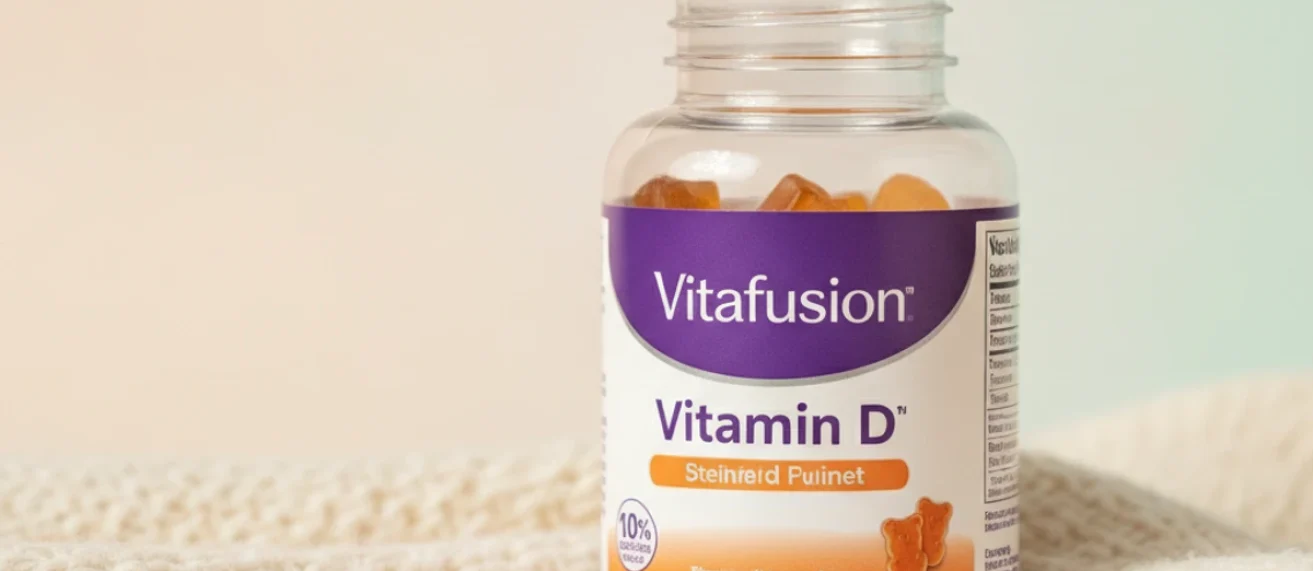
The standard Vitafusion Vitamin D3 gummies provide 50 mcg (2,000 IU) per two-gummy serving, while the Extra Strength version bumps that to 75 mcg (3,000 IU) per serving. Both doses sit comfortably under the 4,000 IU tolerable upper intake level set by the National Institutes of Health and exceed the 600–800 IU RDA that most adults need, per the NIH Office of Dietary Supplements.
Key Takeaway: Vitafusion Vitamin D is a reasonable, inexpensive fix for a single nutrient gap, but it isn’t designed to be — and shouldn’t be marketed as — a comprehensive women’s wellness product. Understanding what’s actually in the formula, and what’s missing, helps clarify whether it matches your real needs. For deeper context, see (3 pack) vitafusion Extra Strength Vitamin D3 Gummy …. For related guidance, see Ashwagandha With Black Pepper.
Vitafusion Vitamin D gummies primarily deliver cholecalciferol (D3) as their active ingredient, but their appeal and limitations become clear once you examine the inactive ingredients, which are heavy on glucose syrup and gelatin. A closer look at the full ingredient list explains both why it’s so popular and exactly where it falls short for women seeking something more comprehensive.
| Attribute | Vitafusion Vitamin D3 (Standard) | Vitafusion Vitamin D3 (Extra Strength) |
|---|---|---|
| Vitamin D dose per serving | 50 mcg (2,000 IU) | 75 mcg (3,000 IU) |
| Serving size | 2 gummies | 2 gummies |
| Count / supply | 150 count / 75-day supply | 120 count / 60-day supply |
| Base ingredients | Glucose syrup, sugar, gelatin | Tapioca syrup, sugar, gelatin |
| Approximate price | ~$10.89 | ~$10.98 |
| Additional actives | None | None |
Key Takeaway: The ingredient profile confirms Vitafusion is a straightforward, sugar-sweetened gelatin gummy delivering one nutrient — solid for basic supplementation, but not formulated with the layered, whole-body approach that many women need when addressing interconnected health concerns. For deeper context, see Boost your day with Vitafusion™ Women’s Multivitamin ….
For women, Vitafusion Vitamin D offers the convenience of a gummy to address vitamin D deficiency, which is more prevalent in women, but it introduces real trade-offs around added sugar, gelatin content, and a narrow focus on one nutrient. This matters especially because deficiency rates run higher in women across most age groups, particularly those with darker skin tones or predominantly indoor lifestyles.
| Category | Pros | Cons |
|---|---|---|
| Convenience | Chewable, pleasant flavor, easy to remember daily | Requires 2 gummies per serving, easy to over- or under-dose informally |
| Cost | Roughly 7–9 cents per gummy, widely available at retailers | Recurring cost adds up over months with no added functional benefit |
| Formulation | No high-fructose corn syrup, gluten, or synthetic dyes | Still contains added sugar (glucose syrup/sucrose) as leading ingredients |
| Dietary fit | Gluten-free | Gelatin-based, not suitable for vegetarians or vegans |
| Scope of support | Effective single-nutrient bone and immune support | No hormonal, stress, sleep, or energy support for women’s broader concerns |
A gummy vitamin that only addresses one nutrient can still leave a woman feeling “off” if her fatigue, mood swings, or sleep issues stem from hormonal or stress-related imbalances that vitamin D alone was never designed to fix.
Key Takeaway: Vitafusion Vitamin D earns solid marks for convenience and affordability, but its cons — added sugar, gelatin base, and narrow single-nutrient scope — matter more for women managing multiple, interconnected wellness concerns. This is where the conversation shifts to what a more comprehensive approach might look like. For deeper context, see What’s the Deal with Vitamin D?.
Ayurvedic-based alternatives often compare favorably to isolated vitamin D for women because they offer a holistic approach, addressing not just vitamin D absorption but also interconnected concerns like hormonal balance, stress resilience, and sleep quality, which a single-nutrient gummy cannot. When women search for the best vitamin D for women, the real question is often broader than one nutrient.
Key Takeaway: For women specifically searching for the best vitamin D for women in 2026, an Ayurvedic-informed, multi-system formula tends to address more of the actual symptoms — fatigue, mood, sleep, hormonal shifts — than a standalone vitamin D gummy ever can. Understanding this distinction helps guide the next decision: whether Vitafusion matches your actual needs or if a broader formula would serve you better. For related guidance, see Anxioguard.
The right answer to “is Vitafusion vitamin D worth it in 2026” ultimately depends on what problem you’re actually trying to solve. Vitafusion is a fine, low-commitment choice for a narrow use case, while women with layered health concerns typically need a formula built around more than one nutrient.
A vitamin D gummy can check one box on a supplement checklist. For women juggling hormonal, sleep, and energy concerns simultaneously, checking that single box rarely resolves how they actually feel day to day.
Key Takeaway: Vitafusion Vitamin D is worth it in 2026 for simple, single-nutrient needs — but health-conscious women with hormonal, sleep, or energy concerns are generally better served by a holistic, Ayurvedic-informed formula designed around women’s physiology rather than one isolated vitamin. For a side-by-side breakdown, see Bioequivalence Studies of Vitamin D Gummies and Tablets in ….
So, is Vitafusion vitamin D worth it in 2026? For a narrow, single-nutrient need, it’s a reasonably priced and convenient option — but it was never designed to address the broader hormonal, sleep, and energy concerns that drive most women to start supplementing in the first place.
Yes, with caveats: Vitafusion Vitamin D delivers 2,000–3,000 IU of D3 per serving at a low cost and in a convenient chewable format, making it worth it for adults with a simple, confirmed vitamin D gap. However, for women managing hormonal shifts, sleep disturbances, or energy issues, it falls short. The formula contains added sugar, uses a gelatin base, and offers no support beyond basic bone and immune health, failing to address the interconnected wellness concerns often present in women.
The standard formula provides 50 mcg (2,000 IU) per two-gummy serving, while the Extra Strength version provides 75 mcg (3,000 IU) per two-gummy serving. Both fall well under the 4,000 IU tolerable upper intake level set by the NIH.
It provides the same D3 dose regardless of sex and doesn’t include any women-specific ingredients for hormonal balance, sleep, or stress. Women dealing with more than a simple vitamin D gap typically need a formula built around female physiology rather than a general-purpose gummy.
Glucose syrup (or tapioca syrup in the Extra Strength version) and sucrose are listed as the first two inactive ingredients, meaning sugar is a primary component of every serving. This matters for anyone tracking daily added sugar intake over months of continuous use.
The RDA is 600 IU for adults up to age 70 and 800 IU for adults over 70, according to the NIH Office of Dietary Supplements, with a tolerable upper intake level of 4,000 IU. Many practitioners recommend 1,000–2,000 IU for adults with limited sun exposure, per wellness researchers tracking current intake guidance.
Vitafusion’s core Vitamin D3 gummies use gelatin, which is animal-derived and not suitable for vegetarians or vegans. Shoppers avoiding gelatin should look for pectin-based or capsule alternatives, and women wanting broader plant-based support often turn to Ayurvedic-formulated options like those from Nutrahara.
A standalone vitamin D gummy won’t address sleep disruption or hormonal fluctuations, since those require targeted botanical and hormonal support rather than a single vitamin. Formulas that combine vitamin D with adaptogenic herbs and hormone-supportive ingredients, such as Nutrahara’s women-focused product lines, are generally better matched to those combined concerns.
Both doses are considered safe and effective for most healthy adults, since the tolerable upper limit is 4,000 IU per day. The right choice depends on your current blood levels — confirmed via a 25(OH)D test — and factors like body weight, skin tone, and sun exposure, which can all increase your actual vitamin D needs.
This article is for informational purposes only and does not constitute medical advice. Product details, pricing, and ingredient information were sourced from publicly available retailer and manufacturer listings current as of publication and may change over time; always consult a qualified healthcare provider before starting or changing any supplement regimen, and confirm vitamin D status through blood testing when possible.