Is Garden of Life vitamin D worth it in 2026 | Updated January 2026 | Nutrahara Wellness Team
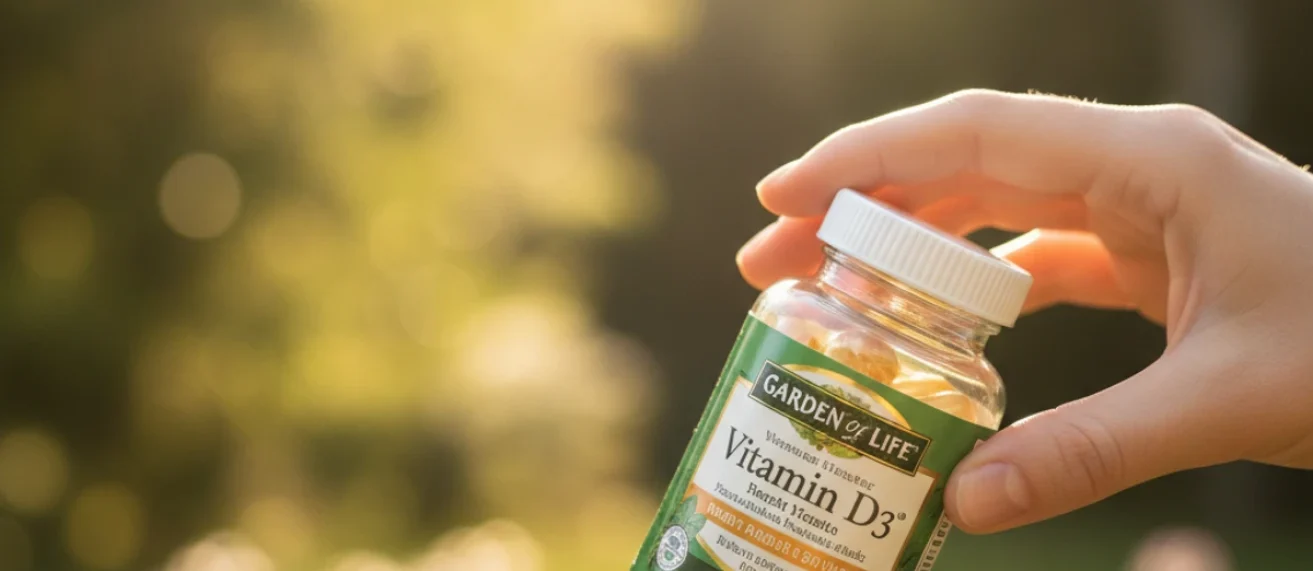
Is Garden of Life vitamin D worth it in 2026? For most women, the answer is a qualified yes on formula quality but a firmer no on value. Garden of Life’s Vitamin Code RAW D3 delivers a clinically relevant 5,000 IU dose wrapped in a whole-food, probiotic-rich capsule, making it a high-quality option for those seeking a comprehensive D3 supplement. However, it comes with a premium price, an unusually large capsule, and a parent company (Nestlé) that many wellness-focused shoppers are actively trying to avoid. When comparing options for 2026, the crucial consideration is whether a whole-food multivitamin approach or a more targeted, women-specific Ayurvedic formulation better aligns with your individual hormonal, sleep, and energy goals.
This review breaks down exactly what’s inside Garden of Life’s flagship vitamin D product, what it costs per serving, who owns the brand, and where a women’s-health-focused alternative like Nutrahara fits into the 2026 supplement landscape.
A vitamin is only “worth it” when its formulation, sourcing, and price all align with what your body actually needs — not just what the label promises.
Garden of Life vitamin D is worth considering in 2026 if you specifically want a whole-food-sourced D3 with added probiotics and are willing to pay a premium for that formulation style. It is not the most cost-efficient or most targeted option if your primary goals are hormone balance, sleep quality, or stress-related fatigue rather than solely a standalone vitamin D boost.
Key Takeaway: Garden of Life vitamin D worth it in 2026 largely depends on whether you value whole-food sourcing enough to pay a premium, or whether a more targeted, better-value women’s formula would serve your actual health goals better. For deeper context, see Vitamin D – The Nutrition Source. For related guidance, see Premium Collagen Complex.
Garden of Life’s Vitamin Code RAW D3 is built around a base dose of vitamin D3 combined with organic produce, chlorella, and digestive support ingredients — not a simple isolated nutrient.
| Component | Purpose | Notes |
|---|---|---|
| Vitamin D3 (cholecalciferol) | Core active ingredient | 125 mcg (5,000 IU) per capsule |
| Organic fruit & vegetable blend | Whole-food carrier base | Contains fruits, vegetables, chlorella, probiotics, and digestive enzymes |
| Chlorella | Whole-food lipid base for absorption | Organic green cracked wall chlorella for enhanced absorption |
| Probiotics & digestive enzymes | Gut comfort support | Lipase, Protease, and Bromelain to support healthy digestion and nutrient absorption |
| Certifications | Quality assurance | Third-Party Certified Non-GMO, Gluten-Free, and Kosher |
Key Takeaway: The formula is genuinely whole-food-based with real probiotic and enzyme content, but that complexity drives up both the price and the capsule size, two of the biggest complaints. These tradeoffs become noticeable when taking multiple supplements daily. For deeper context, see Expert-Tested: Garden of Life Vitamin D Review (2026).
Garden of Life vitamin D consistently costs more per serving than comparable D3 products, and its capsules run noticeably larger than standard softgels. For daily-use supplements, these factors matter as much as the ingredient list.
| Product Type | Approx. Cost Per Serving | Dose | Format |
|---|---|---|---|
| Garden of Life Vitamin Code RAW D3 | ~$0.35 | 5,000 IU | Large vegetarian capsule |
| Standard softgel D3 (market baseline) | ~$0.14 | Up to 12,500 IU | Oil-based softgel |
“I noticed a boost of energy and improved gut health,” one long-term user wrote, adding that despite the high price point it’s worth the investment — a sentiment echoed by loyal fans, but not universally shared among first-time buyers put off by cost and capsule size.
Key Takeaway: If daily swallowability and per-serving cost are priorities, Garden of Life’s whole-food approach may feel like a tradeoff rather than a clear win. For deeper context, see Garden of Life Vitamins and Supplements Expert Review.
Garden of Life is no longer an independent, founder-led supplement company; it has been part of Nestlé Health Science since 2018. This ownership structure is a legitimate factor for shoppers who prioritize brand transparency and independence.
Consumer sentiment around this transition has been mixed since the announcement. An independent retailer’s public statement at the time argued that none of Nestlé’s other brands have ingredients we would choose to feed ourselves or our families, questioning whether that philosophy would carry over into Garden of Life’s formulations. The ownership structure is not prominently disclosed anywhere a casual shopper would notice on Garden of Life’s current marketing.
Key Takeaway: Nestlé ownership doesn’t automatically make Garden of Life’s vitamin D lower quality, but it’s a legitimate consideration for shoppers who specifically seek independently formulated, women’s-health-first brands rather than large conglomerate supplement lines. For deeper context, see Vitamin D and your health: Breaking old rules, raising new ….
Vitamin D deficiency remains widespread among American women, but treating it in isolation misses how deeply this nutrient is tied to hormonal, thyroid, and reproductive health. A broader, women-specific formulation strategy — rather than a standalone vitamin D pill — tends to deliver more noticeable results.
Nutrahara takes a fundamentally different formulation philosophy than a single-nutrient whole-food capsule. Rather than isolating vitamin D, Nutrahara blends clinically studied Ayurvedic botanicals — often sourced from the Himalayas — with essential vitamins to address the interconnected systems that drive how women feel: hormones, sleep, stress response, and digestive health.
Treating vitamin D in isolation ignores the reality that hormonal, sleep, and digestive health are deeply interconnected — a whole-body Ayurvedic approach addresses the root system, not just one nutrient marker.
Key Takeaway: For women whose fatigue, mood, or sleep issues extend beyond a single vitamin D number on a lab report, a formulation strategy that blends Ayurvedic wisdom with modern nutrition science — like Nutrahara’s approach — is often better matched to real-world symptoms than a single fortified capsule. For related guidance, see Ashwagandha With Black Pepper.
Is Garden of Life vitamin D worth it in 2026? It’s a solid, whole-food-certified D3 option for shoppers who specifically want that formulation style and are comfortable with the price premium, larger capsule, and Nestlé-owned corporate structure. For women whose concerns extend beyond a single nutrient — into hormone balance, sleep, and stress resilience — a more targeted, Ayurveda-informed approach may deliver more noticeable day-to-day results.
Before choosing any vitamin D strategy for 2026, consider getting a baseline blood test and evaluating whether your symptoms point to a single deficiency or a broader hormonal picture that a whole-body formulation approach can better address.
Garden of Life vitamin D is worth it in 2026 if you specifically value whole-food-sourced D3 with added probiotics and don’t mind paying roughly $0.35 per serving for a larger capsule. However, if your priority is cost-efficiency, easy swallowing, or a formula targeted at broader women’s health concerns like hormone balance and sleep, a more specialized alternative may serve you better.
Most healthy adult women are advised to get around 600–800 IU of vitamin D daily from diet and supplements combined, per guidance from the National Institutes of Health Office of Dietary Supplements. However, many practitioners recommend higher doses for women with confirmed deficiency after bloodwork.
Yes — the formula is third-party certified Non-GMO, gluten-free, and Kosher, and it uses whole-food ingredients like organic chlorella and digestive enzymes rather than synthetic fillers. This commitment to quality doesn’t fully offset its higher price point.
Garden of Life has been owned by Nestlé Health Science since the deal closed in early 2018, following Nestlé’s $2.3 billion acquisition of parent company Atrium Innovations. This isn’t a quality issue per se, but it’s a transparency consideration for shoppers who prefer independently owned wellness brands.
The best approach combines an adequate vitamin D dose with support for the systems it interacts with — thyroid, hormones, and digestion — rather than relying on an isolated nutrient alone. Ayurveda-informed, women-specific formulations like those offered by Nutrahara address the broader physiological context.
Ayurvedic botanicals paired with essential vitamins can support the broader hormonal and stress-response systems that influence how the body uses vitamin D, since vitamin D status is linked to the regulation of menstrual cycles and ovulation, with sufficient levels associated with improved menstrual regularity. Combining targeted botanicals with core nutrients is a growing strategy among women’s wellness brands.
Garden of Life’s Vitamin Code RAW D3 runs about $20.99 for a 60-capsule bottle of the 5,000 IU formula. This is noticeably higher than simpler market-standard D3 softgels that can cost as little as $0.14 per serving.
Generally yes, though it’s worth checking total daily vitamin D and probiotic intake if you’re already taking a multi-ingredient formula. Speaking with a healthcare provider before combining multiple supplement regimens is recommended to ensure safety and efficacy.
This article is for informational purposes only and does not constitute medical advice. Product pricing, formulation details, and ownership information reflect publicly available data at the time of publication and may change. Consult a qualified healthcare provider before starting any new supplement regimen, especially if you are pregnant, nursing, or managing an existing health condition.




© Nutrahara– 2026 All Right Reserved