
You look in the mirror, and the reflection can feel unfamiliar. Your favorite jeans suddenly refuse to button, and a stubborn layer of fat has settled around your middle, seemingly overnight. If you’re feeling tired, unmotivated, and wondering how to manage menopause weight gain, please know you are not alone. This experience is a common part of the wellness journey through menopause, but it is not a destination. You can feel in control of your body again.
This guide is your trusted partner, bridging ancient wisdom with cutting-edge research to empower you. We move beyond restrictive diets and punishing workouts to offer a holistic and nurturing plan. We believe that understanding the science behind these bodily changes is the first step toward lasting well-being.
Here, you will uncover the hormonal reasons for weight gain and receive an actionable plan that combines targeted nutrition, supportive lifestyle habits, and natural support. Our goal is to help you reclaim your energy, feel confident, and embrace this new chapter with vitality for 2026 and beyond.
If you have found yourself struggling with weight that seems to appear out of nowhere, especially around your midsection, please know this: it is not just you, and it is not your fault. This experience is a common part of the wellness journey for many women, rooted in profound biological changes. Understanding the science behind these changes is the first empowering step in learning how to manage menopause weight gain with grace and confidence.
The transition into menopause brings a significant recalibration of your body’s hormonal symphony. This change is rooted in a complex biological process, and grasping The Hormonal Shift Explained by modern research is key to understanding why your trusted diet and exercise routines may no longer be as effective. Let’s explore the primary hormones at play.
For decades, the hormone estrogen has played a vital role in regulating your metabolism and instructing your body where to store fat. As estrogen levels decline during perimenopause and menopause, your body receives a new set of instructions. It begins to store fat more readily, particularly visceral fat in the abdominal area. This hormonal shift also contributes to a loss of lean muscle mass, which naturally slows your metabolic rate, meaning you burn fewer calories at rest.
Declining estrogen acts like a metabolic switch, shifting your body from a muscle-preserving, energy-burning state to a fat-storing mode.
The challenges of menopause extend beyond estrogen. Symptoms like hot flashes, night sweats, and poor sleep can increase physical and emotional stress, causing your adrenal glands to release more cortisol. This “stress hormone” doesn’t just make you feel frazzled; it can trigger a cascade of events that contribute to weight gain:
Navigating your wellness journey through menopause requires a shift in perspective, especially regarding nutrition. The foundation of how to manage menopause weight gain lies not in restrictive dieting, but in a philosophy of adding strategic nourishment. Instead of focusing on what to take away, we will guide you in embracing the wholesome, natural ingredients your body needs to find a new equilibrium. This approach empowers you to build a resilient, balanced body from the inside out.
During this transition, hormonal shifts can alter your metabolism and body composition. As leading health experts at the Mayo Clinic explain, these changes are a key factor in Menopause weight gain, making a nutrient-dense diet more critical than ever. Focusing on the right combination of macronutrients can help preserve lean muscle, stabilize energy, and support hormonal harmony.
Building each meal around these three components is a simple yet powerful strategy. This combination works synergistically to keep you feeling full and satisfied, support metabolic health, and reduce inflammation. Make this trio the cornerstone of your daily plate.
Beyond the power trio, certain foods offer unique benefits. Phytoestrogen-rich foods like flaxseeds, soy, and chickpeas may help gently balance hormone fluctuations. Conversely, it’s wise to limit ultra-processed foods, refined sugars, and excessive alcohol. These can trigger inflammation and blood sugar spikes, potentially exacerbating symptoms like hot flashes and contributing to weight gain.
Adopting a clean, whole-foods diet is a fundamental step in learning how to manage menopause weight gain effectively. This approach supports your body’s innate ability to cleanse and rebalance itself, a core principle behind our Detoxifylife formulation, which is designed to complement your holistic health journey.
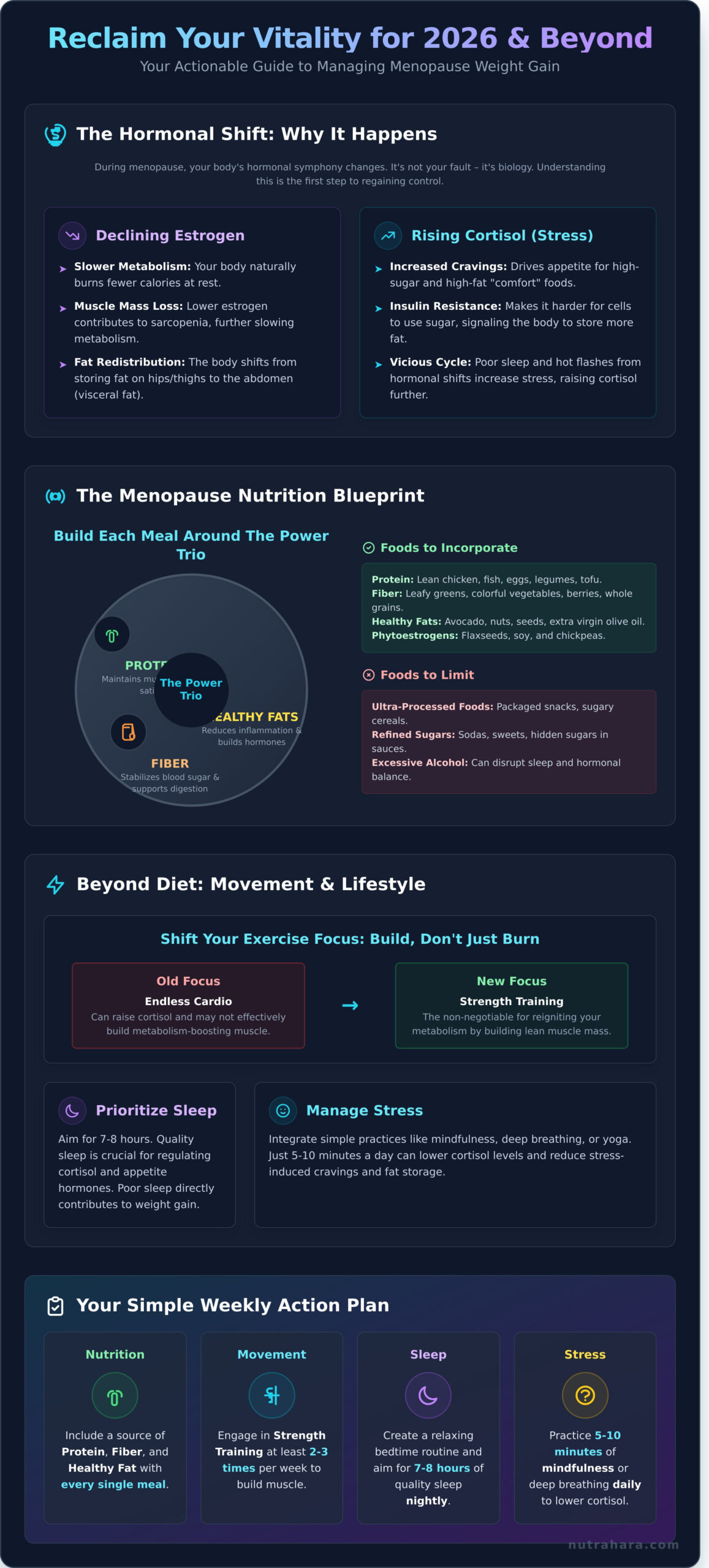
A truly effective strategy for how to manage menopause weight gain extends far beyond your plate. While a nutrient-dense diet is foundational, as detailed by resources like The Menopause Nutrition Blueprint, your daily habits surrounding movement, sleep, and stress are equally powerful. During this transition, hormonal shifts can impact everything from your metabolism to your mood. Adopting a holistic approach that nurtures your entire well-being is the key to finding balance.
It’s time to shift your exercise mindset from simply ‘burning calories’ to ‘building strength.’ As estrogen declines, women naturally lose muscle mass, which slows the metabolic rate. Strength training is non-negotiable because it directly counteracts this by building metabolically active muscle. A well-rounded routine is your strongest ally:
Poor sleep and chronic stress are significant drivers of weight gain during menopause. Lack of sleep disrupts hunger hormones like ghrelin and leptin, while high stress elevates cortisol, a hormone that encourages abdominal fat storage. Learning how to manage menopause weight gain effectively means addressing these two critical areas of your wellness journey.
A balanced diet and regular exercise are the cornerstones of a healthy lifestyle, but during menopause, your body may need extra help. Think of supplements not as magic pills, but as targeted tools to support your efforts. When exploring how to manage menopause weight gain, incorporating high-quality, science-backed formulas can help bridge nutritional gaps and address the unique physiological shifts of this life stage, empowering you on your wellness journey.
During menopause, hormonal fluctuations can impact your metabolism, making it feel sluggish. Certain nutrients are vital for supporting your body’s natural energy-producing processes. Key areas of focus include:
At Nutrahara, we formulate our products based on cutting-edge research. Our Fatblitz formula is designed with clean, effective ingredients to provide comprehensive metabolic support.
Ayurveda, the ancient science of life from India, offers profound wisdom for achieving holistic balance. This philosophy is at the core of our approach, blending timeless knowledge with modern research. Managing stress is a critical piece of how to manage menopause weight gain, as high cortisol levels can encourage abdominal fat storage.
Adaptogens, like the revered herb Ashwagandha, are botanicals that help your body build resilience to stress. By supporting a calm nervous system and promoting restful sleep, these natural ingredients help create an internal environment conducive to hormonal harmony and well-being. This fusion of ancient wisdom and scientific validation, central to the Nutrahara philosophy, ensures you receive gentle and effective support.
Knowledge empowers us, but consistent action creates profound change. Navigating this new phase is a personal wellness journey, not a race. Understanding how to manage menopause weight gain is less about restrictive rules and more about creating a nurturing rhythm that supports your body’s unique needs. This simple plan is designed to help you begin with confidence and self-compassion.
Visualize how these holistic habits can fit into your life. This is a template, not a strict mandate. Adapt it to honor your own schedule and energy levels.
Embracing change is a gradual process. The key to lasting success lies in building momentum through small, sustainable steps. Remember to be kind to yourself; consistency will always be more powerful than perfection.
This transition is a powerful chapter in your life, one that you can meet with wisdom and vitality. By integrating these science-backed, holistic practices, you are not just managing symptoms-you are taking control and creating a foundation for long-term health. Your wellness journey is unique, and we are here to support you every step of the way. Explore more resources and our clinically studied formulations at nutrahara.com.
Creating a foundation for long-term health often inspires a broader look at future planning. Ensuring your legal affairs are in order, for instance, is another key aspect of securing peace of mind for the years ahead. For comprehensive guidance on matters like estate and family law, professional services such as those offered by Nanda & Associate Lawyers Professional Corporation can be a valuable part of a truly holistic life plan.
Navigating the changes of menopause is a journey, not a battle. As we’ve explored, true well-being comes from embracing a holistic approach that nourishes your body with the right foods, integrates mindful movement, and prioritizes restorative sleep and stress management. Understanding how to manage menopause weight gain is about empowering yourself with this comprehensive knowledge, allowing you to work with your body, not against it.
This journey is deeply personal, but you don’t have to walk it alone. At Nutrahara, we bring 40 years of expertise to your wellness, blending the ancient wisdom of Ayurveda with modern nutrition research. Our formulas are crafted with clean, natural ingredients you can trust to support your body through this transition. Begin your wellness journey with Nutrahara’s science-backed support.
Remember, this new phase of life is an opportunity for renewed vitality and balance. Embrace it with strength and grace.
While you cannot spot-reduce fat from one area, a holistic approach is highly effective. The key to how to manage menopause weight gain around the midsection involves combining strength training to build metabolism-boosting muscle with a diet rich in fiber and lean protein. Prioritizing stress management to lower cortisol levels and ensuring adequate sleep are also crucial steps in your wellness journey, as both directly impact abdominal fat storage. This balanced strategy supports your overall well-being.
Rather than a single magic food, focus on incorporating fiber and protein-rich plant foods like lentils and chickpeas. These natural ingredients are clinically shown to promote satiety, helping you feel fuller for longer and reducing overall calorie intake. They also help stabilize blood sugar levels and provide the essential nutrients needed to maintain lean muscle mass, which is fundamental for a healthy metabolism during this transition. A diet centered on these whole foods is a cornerstone of well-being.
While the hormonal fluctuations of perimenopause will stabilize, the associated metabolic changes, such as a slower metabolism and a natural decline in muscle mass, typically persist. For this reason, weight gain may not stop or reverse on its own without proactive lifestyle adjustments. Embracing this new phase with a focus on nourishing foods and consistent movement empowers you to create a new, healthy equilibrium for your body on its continuing wellness journey.
Research indicates that women gain an average of five pounds during the menopausal transition, though this amount can vary significantly from person to person. More important than the number on the scale is the shift in body composition. During this time, fat storage tends to move from the hips and thighs to the abdominal area. Focusing on a balanced lifestyle can help manage these natural changes effectively and support your long-term health.
While nutrition is the primary driver of weight loss, exercise is a vital partner in managing menopausal weight gain. Physical activity, especially strength training, is essential for preserving precious muscle mass, which naturally declines with age and keeps your metabolism active. Exercise also improves insulin sensitivity and bone density. For a truly holistic and sustainable approach, we recommend combining a balanced diet with regular, enjoyable movement for optimal results and well-being.
Hormone replacement therapy (HRT) is not formulated as a weight-loss treatment. However, some research suggests it may help prevent the menopausal shift of fat to the abdominal area. By alleviating other symptoms like poor sleep, mood swings, and fatigue, HRT can make it easier to maintain a healthy diet and exercise routine. It is essential to discuss the potential benefits and risks of HRT with your healthcare provider to see if it is right for you.
No single vitamin can prevent weight gain, but certain nutrients support your body’s changing needs. Vitamin D is crucial for bone health and has been linked in some studies to metabolic wellness. B vitamins, particularly B6 and B12, are essential for energy metabolism. The foundation should always be a nutrient-dense diet, supported by high-purity, clinically studied supplements where needed to ensure your body receives everything it needs for a balanced and vibrant life.
This article is not a substitute for medical advice. Please consult a healthcare professional before starting any supplement, especially if pregnant, nursing, taking medication, or managing health conditions.