We believe your health is a personal, ongoing journey that deserves the highest level of transparency and care. It’s time to move past the confusion and reclaim your peace of mind. This guide provides a clear framework to vet any brand using rigorous clinical standards and traditional Ayurvedic principles. You’ll learn exactly which third-party certifications matter, how to identify bioavailable ingredients, and how to use our 5-step quality checklist to choose your daily vitamins with absolute confidence.
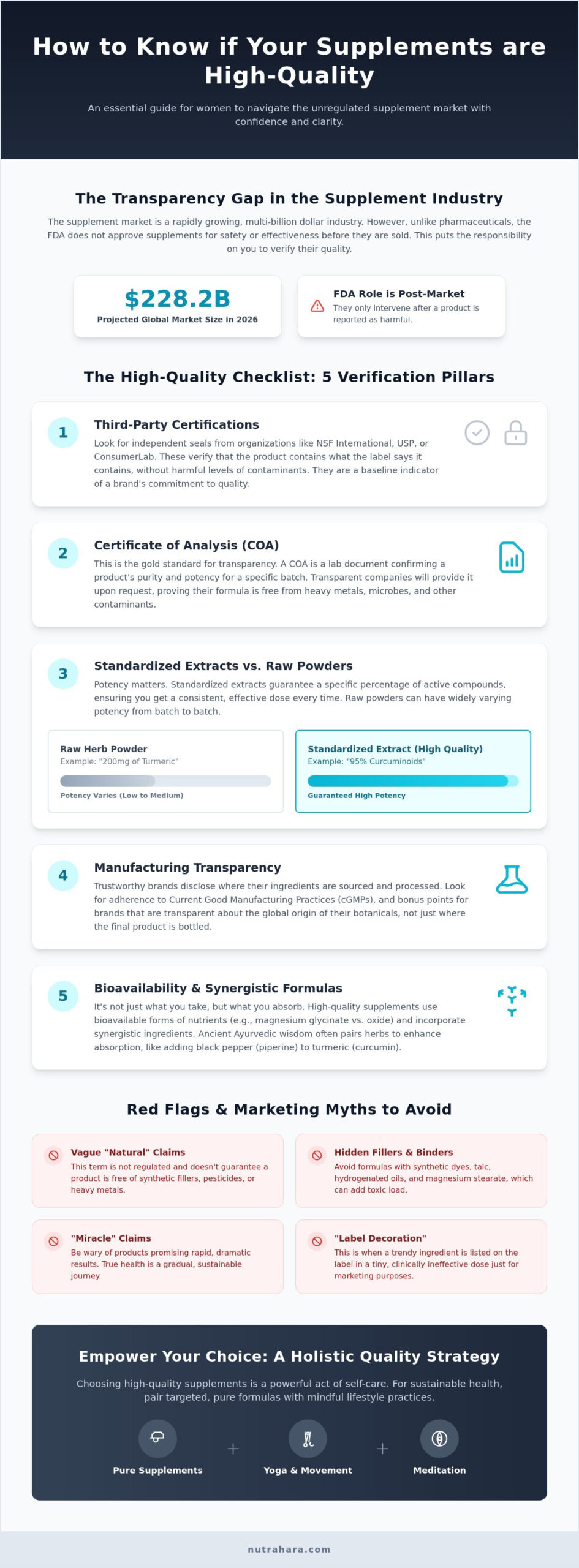
The supplement aisle often feels like a sanctuary of health, but the regulatory reality is far more complex than the vibrant labels suggest. Most women believe their vitamins undergo the same rigorous testing as pharmaceutical medications. This is not the case. The Dietary Supplement Health and Education Act of 1994 fundamentally changed how these products reach your cabinet. It created a legal framework where the burden of proof for safety rests almost entirely on the manufacturer, not a government agency. This “transparency gap” makes it difficult for the conscious consumer to determine how to know if my supplements are high quality.
Many brands use the term “natural” as a comforting shield to build trust. In reality, “natural” is a marketing claim with very little regulatory weight; it does not guarantee the absence of heavy metals or synthetic fillers. There is also a significant difference between food-grade and pharmaceutical-grade ingredients. Food-grade supplements only meet the standards required for human consumption. Pharmaceutical-grade options must exceed 99% purity and contain no binders or fillers. Some companies even engage in “label decoration.” This practice involves listing a trendy ingredient on the front of the bottle while including such a tiny, ineffective dosage that it offers no clinical benefit. It’s a strategy designed to sell a product, not to support your health progression.
The FDA’s role in supplement oversight is strictly post-market rather than pre-market, meaning they only intervene after a product is already being sold and reported as harmful. While manufacturers must follow Current Good Manufacturing Practices (cGMPs) under 21 CFR Part 111, these regulations are the bare minimum for facility cleanliness. They do not ensure that the botanical extract inside the capsule is potent or even present. You cannot rely on a product’s placement on a reputable retail shelf as a proxy for quality. True assurance requires a deeper look into a brand’s specific testing protocols.
Women’s bodies are intricate biological systems that respond sensitively to environmental shifts. Our endocrine systems are particularly vulnerable to the “hidden” ingredients found in low-quality formulas. Synthetic dyes, talc, and hydrogenated oils are often used as cheap fillers, yet they can disrupt hormone metabolism and irritate the delicate gut lining. During pivotal life transitions like pregnancy or perimenopause, your body requires clean, bioavailable support without an added toxic load. Choosing a pure formula like Ashwagandha with Black Pepper ensures you receive botanical wisdom without unnecessary additives. Purity is a requirement for long-term well-being, and understanding these nuances is essential for how to know if my supplements are high quality.
While the regulatory landscape is complex, you have the power to verify what goes into your body. Understanding how to know if my supplements are high quality starts with looking for specific verification pillars that separate premium formulas from mass-market imitations. These standards ensure that your wellness journey is supported by both science and purity. By following a structured checklist, you can move from confusion to absolute confidence in your daily routine.
The U.S. Pharmacopeia (USP) seal is the gold standard for ingredient identity, ensuring the product actually contains what it claims. NSF International is another vital certification, particularly for those who prioritize quality assurance for supplements and need to ensure products are free from banned substances. ConsumerLab acts as an independent watchdog, frequently testing retail products to catch brands that fail their own label claims.
Begin by differentiating between “Active Ingredients” and “Other Ingredients.” High-quality formulas keep the “Other” list short, avoiding synthetic dyes and talc. Beware of the “Proprietary Blend” trap; these often hide low-cost fillers by masking the exact dosage of the expensive, beneficial herbs. Always verify if the dosage listed on the label refers to a single capsule or the full daily serving size to avoid accidentally taking less than your body requires. Choosing a transparent formula like Ashwagandha with Black Pepper ensures you’re prioritizing standardized extracts over mystery powders. This level of scrutiny is the best way to master how to know if my supplements are high quality.
Bioavailability is the silent hero of a successful wellness routine. If your body cannot break down and utilize the nutrients in your capsule, even the most expensive formula becomes a wasted investment. This concept is central to how to know if my supplements are high quality. A high-quality brand doesn’t just provide ingredients; it provides a delivery system that ensures those nutrients reach your cells. While many mass-market products focus on high dosages of isolated chemicals, the most effective supplements respect the natural intelligence of the plant.
Ayurveda has understood this for millennia through the use of “Anupanas,” or carrier substances. These traditional elements are added to botanical formulas to enhance their potency and absorption. At Nutrahara, our philosophy involves fusing this ancient botanical science with modern clinical research. We prefer full-spectrum, whole-herb extracts over isolated compounds because they preserve the natural synergy of the plant. This “entourage effect” ensures that you receive the complete profile of beneficial phytonutrients, supporting your health as a long-term progression rather than a quick fix.
Clinical studies now confirm what traditional practitioners have long known. For instance, the inclusion of Piperine, the active compound in black pepper, has been shown to increase the bioavailability of Turmeric by up to 2,000%. This synergy is a hallmark of a thoughtful formulation. For women managing the stressors of daily life, adaptogens like Ashwagandha provide a gentle, nurturing way to support the nervous system and endocrine balance. You can explore these synergistic benefits in our Natural Joint Health Supplements, which combine traditional carriers with modern purity standards to ensure maximum efficacy.
High-quality brands prioritize the purity of their inputs and avoid manufacturing shortcuts that can introduce artificial harm to your system. Learning how to vet supplements requires looking past the marketing and scrutinizing the “Other Ingredients” list. We recommend avoiding a specific “No-Go” list of additives:
Beyond the ingredients, the physical container matters. Premium brands use glass bottles or BPA-free packaging to prevent chemical leaching. This attention to detail ensures the formula remains pure and potent from the first dose to the last. Understanding these nuances is a vital part of how to know if my supplements are high quality and ensures your daily routine is as clean as it is effective.
The supplement aisle is often filled with bold promises of “instant energy” or “overnight transformation.” These “miracle cure” claims are a major red flag. Genuine wellness is a personal, long-term progression, not a quick fix found in a bottle. When you are researching how to know if my supplements are high quality, look for brands that speak the language of support and health progression rather than aggressive sales tactics. A trustworthy company understands that supplements are a partner to your yoga and meditation practices, not a substitute for a balanced lifestyle. Be wary of brands that prioritize complex subscription traps over transparency. If it’s difficult to find lab results or contact customer support, the brand likely values profits over your well-being.
Synthetic vitamins often hide in plain sight. Take B-vitamins, for instance. Many low-cost brands use folic acid, which is a synthetic form of folate. For many women, especially those with specific genetic variations, the body cannot efficiently convert folic acid into its active form. High-quality formulas use methylated folate (5-MTHF) instead. This bioavailable form is ready for your body to use immediately. You can find this level of care in our Vitamin B Complex, which prioritizes methylated forms for optimal absorption. This distinction is a critical step in how to know if my supplements are high quality.
Bulking agents like maltodextrin or excessive magnesium stearate are often used to speed up manufacturing. For many women, these fillers cause subtle digestive distress or bloating. It’s a mistake to assume that “Non-GMO” or “Gluten-Free” labels automatically mean a product is premium. These are important, but they don’t address the purity of the active ingredients. Refer to our Woman’s Guide to Wellness Supplements for a deeper dive into ingredient purity and clean dosages without unnecessary fluff.
Herbs like Ashwagandha and Turmeric are bioaccumulators. This means they soak up whatever is in the soil, including heavy metals like lead or arsenic. If a brand doesn’t disclose their sourcing locations or provide batch testing for contaminants, you are taking a risk. This is why “Prop 65” warnings exist; they alert you to potential chemical exposure. A high-quality brand will go beyond these warnings by providing a Certificate of Analysis for every batch.
“I used to buy the cheapest vitamins I could find, but I always felt bloated and tired,” says Sarah, 42. “After I learned how to vet my supplements and switched to a clean, filler-free formula, my digestion cleared up within two weeks. I finally felt like I was actually getting the nutrients I paid for.”
Don’t settle for marketing myths. Take control of your health by choosing our DetoxifyLife formula to support your body’s natural purification processes and ensure you are only putting the purest ingredients into your system.
True wellness is never found in a single pill. It is a tapestry woven from your daily choices, including your yoga practice, meditation, and the whole foods you use to nourish your body. Supplements should act as a bridge, filling nutritional gaps and supporting your system as you move through different life stages. Now that you understand how to know if my supplements are high quality, the next step is to audit your current cabinet. Clear out the bottles that contain mystery “proprietary blends” or synthetic dyes. Your health is a long-term progression that thrives on simplicity and purity.
We advocate for a “less is more” approach. It’s far more effective to invest in three high-purity, targeted formulas than to take a dozen cheap, poorly absorbed vitamins. High-quality supplements respect your body’s delicate balance, especially as you navigate the shifts of perimenopause or post-menopause. By choosing formulas that meet the rigorous standards we’ve discussed, you can feel confident that your daily routine is building a foundation for lasting vitality.
As we age, our cellular needs change. High-quality nutrients support structural health and help maintain your natural glow from the inside out. For instance, understanding Collagen Benefits is essential for women who want to support joint flexibility and skin elasticity as part of a graceful aging strategy. To truly see the impact of your choices, we recommend starting a “Supplement Journal.” For 30 days, track how you feel, your energy levels, and your sleep quality after taking a clean formula. This practice helps you stay connected to your body’s signals and confirms how to know if my supplements are high quality based on tangible results.
At Nutrahara, our commitment to your well-being is rooted in the fusion of Ayurvedic heritage and modern clinical validation. We don’t just follow industry standards; we aim to set them. Our formulas are designed specifically for the unique needs of the female endocrine and nervous systems. We prioritize transparency because we believe every woman deserves to know exactly what she is putting into her body. Whether you are seeking hormone balance or a sense of calm, our curated range provides the purity and potency your journey requires. You can begin your refined wellness routine today when you shop our curated range of high-purity women’s supplements. Let us be your wise guide toward a more vibrant, empowered version of yourself.
You now have the tools to transform your daily health routine from a guessing game into a deliberate journey of self-care. By understanding the transparency gap and prioritizing third-party certifications, you’ve moved beyond marketing myths. You’ve also seen how the fusion of modern clinical research and Ayurvedic synergy ensures your body actually absorbs the nutrients you invest in. Mastering how to know if my supplements are high quality is an empowering step toward long-term vitality and confidence.
At Nutrahara, we take this responsibility seriously. Our formulas are crafted by Ayurvedic experts and modern nutritionists to meet the highest standards of purity. Every batch is third-party lab tested and completely free from artificial fillers or magnesium stearate. It’s time to choose supplements that respect your body’s natural intelligence. Discover Nutrahara’s Clinically-Backed, Ayurvedic Formulas. You deserve a wellness partner that is as committed to your health progression as you are.
Price isn’t a perfect indicator of excellence, but it often reflects the high cost of rigorous testing and premium sourcing. Extremely cheap products frequently cut corners on ingredient purity or skip the third-party validation that ensures your safety. A mid-range or premium price usually covers the expense of pharmaceutical-grade extracts and the clinical studies required to prove efficacy. Focus on the value of the ingredients rather than just the number on the tag.
You can confirm the absence of heavy metals by asking the manufacturer for a Certificate of Analysis (COA). This document provides the specific lab results for your product’s batch, detailing levels of lead, mercury, and arsenic. High-quality brands test their raw botanicals because plants like ashwagandha can absorb minerals from the soil. Transparency is the hallmark of a brand that cares about your long-term health progression.
Standardized extract means the manufacturer has verified that the supplement contains a specific percentage of the plant’s active therapeutic compounds. This ensures you receive a consistent dose of the most beneficial parts of the herb in every capsule. It’s a vital factor in how to know if my supplements are high quality because raw powders can vary wildly in their potency. Always look for these percentages on the supplement facts panel.
Trusting major online marketplaces requires diligence, as counterfeit or improperly stored products can appear on these platforms. While Amazon implemented stricter cGMP verification rules in 2026, it’s still safest to buy directly from the brand’s official storefront. Check for recent reviews and ensure the seller is the actual manufacturer. This helps you avoid expired items and ensures you’re receiving the high-purity formulas you expect for your wellness.
The most important seals to look for are from USP, NSF International, and ConsumerLab. These independent organizations test products to verify that the ingredients on the label match what’s actually inside the bottle. They also screen for harmful contaminants like heavy metals or microbes. Finding these certifications is a simple way to gain peace of mind about the purity and potency of your daily supplement routine.
You can often tell if your vitamins are being absorbed by tracking subtle improvements in your energy, mood, or digestion over a month. High-quality formulas prioritize bioavailability by using methylated forms of vitamins and natural carriers like black pepper. If you feel no difference or experience digestive upset, the nutrients might not be reaching your cells. Keeping a supplement journal is an excellent way to monitor this personal health progression.
If you experience an adverse reaction, stop use immediately and speak with your doctor or a qualified health professional. Even the purest botanical formulas can interact with medications or trigger sensitivities in certain individuals. Save the bottle so you can provide the brand with the batch number for their quality control records. Your safety is the priority, and a caring brand will always support you in finding the right balance.
While a whole-food diet is the foundation of health, targeted supplements can bridge gaps caused by soil depletion or increased biological demands. Women in life stages like perimenopause or pregnancy often require higher levels of specific nutrients that are difficult to obtain from food alone. High-quality supplements act as a supportive tool for longevity, helping you maintain vitality and balance as your body’s needs evolve over time.
This article is not a substitute for medical advice. Please consult a healthcare professional before starting any supplement, especially if pregnant, nursing, taking medication, or managing health conditions.