Skip to the content
What if a higher price reflects polished packaging rather than a better formula? It’s reasonable to ask: are expensive vitamins really better, or does the price simply add to the promise? When labels list unfamiliar ingredient forms, amounts, and claims, comparing bottles can feel harder than it should.
Your needs matter, too. A supplement that may suit you during menstruation may not be the right choice during pregnancy or lactation, or through pre-menopause and post-menopause. The best fit depends on your health needs and the formula, not just the number on the shelf.
This guide gives you a practical way to compare value. You’ll learn what price can and can’t tell you, which label details and evidence to consider, and how to weigh ingredient quality against personal fit. With a calmer, more informed approach, you can make a choice that supports your wellness routine without feeling pressured by premium pricing or persuasive marketing.
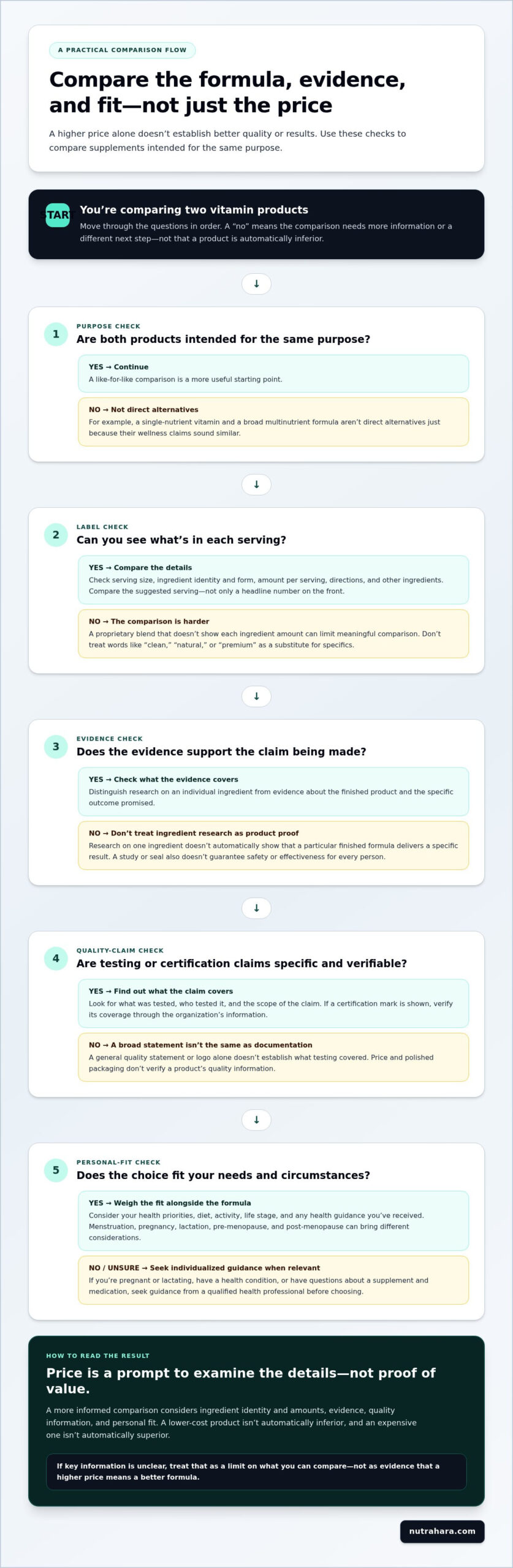
A higher price alone doesn’t establish better quality or results. If you’re asking, “are expensive vitamins really better,” price is only one piece of the picture. A supplement’s value depends on whether its ingredients are relevant to your needs, provided in clearly stated amounts, supported by evidence, backed by meaningful quality information, and suited to your circumstances.
Price and value aren’t interchangeable. A lower-cost product isn’t automatically inferior, just as an expensive one isn’t automatically superior. Before comparing formulas, it can help to revisit What are Vitamins? and the essential roles these nutrients play. Then look for label details and supporting information that give you a clear basis for comparison.
Price alone can’t prove a vitamin is better; value comes from the formula, evidence, quality information, and fit for the person taking it.
A higher price may reflect ingredient sourcing, formulation choices, manufacturing processes, testing, packaging, or brand positioning. Some of these factors could matter to quality, but the price tag doesn’t verify that they’re present or meaningful. Clear information about the formula is more useful than an elevated price or a broad word such as “premium.”
Separate the formula from its presentation. Ingredient forms, amounts, and a thoughtfully designed combination may be relevant to how a supplement suits a particular need. A polished bottle, elaborate branding, or persuasive promotional language can make a product feel more valuable without showing that its contents are better. Treat price as a prompt to examine the details, not as proof of them.
Women’s needs and supplement considerations can change over time. Menstruation, pregnancy, and lactation each bring different considerations, while pre-menopause and post-menopause may shape what you’re looking for in your broader wellness routine. These stages don’t mean that every woman needs a supplement, or that the most expensive formula is the most suitable.
Start with your own context. Consider your diet, activity, health priorities, and any guidance you’ve received. If you’re pregnant or lactating, have a health condition, or have questions about how a supplement may relate to medication, seek individualized guidance from a qualified health professional before choosing. A clear, personal reason for taking a supplement is a stronger starting point than price or marketing pressure.
To judge a supplement, look past the front-of-bottle promise and examine what’s in each serving. Ingredient identity tells you which nutrient or form is included. The amount per serving helps you understand how much you’d take, while a transparent formula makes products easier to compare and ingredients easier to assess. These details offer a more useful starting point than a premium label or a claim that a formula is “complete.”
Make sure the evidence matches the claim. Research on an individual ingredient may help explain what has been studied, but it doesn’t automatically prove that a particular finished product delivers a specific outcome. Evidence about an ingredient is not proof that a specific supplement, in its finished formula, produces a promised result. That distinction matters whether you’re considering a product for everyday wellness, exercise recovery, or a concern related to women’s health.
Start with the Supplement Facts panel. Check the serving size, listed ingredients, ingredient forms, and amounts. Compare the amount in the suggested serving, not just a headline number on the front. Then read the directions and other ingredients so you understand what taking the product as labeled involves.
A proprietary blend that lists several ingredients without showing each amount can make meaningful comparison harder. Words such as “natural,” “clean,” or “premium” may describe a brand’s positioning, but they don’t tell you exactly what’s in the formula or establish its quality. Look for specific, understandable label information rather than relying on a wellness phrase alone.
A general statement about quality is not the same as documented, independent testing of a finished product. If a brand refers to testing or a certification, look for clear information about what was tested, by whom, and what the claim covers. USP and NSF International are examples of organizations whose marks consumers may encounter. A logo alone doesn’t establish what a particular product’s testing covered, so verify the claim through the organization’s information.
The FDA explains that dietary supplements are regulated differently from drugs, and manufacturers are responsible for ensuring their products meet applicable requirements. Its overview of FDA Regulation of Dietary Supplements can help clarify the agency’s role. Neither a seal nor a study of one ingredient guarantees safety or effectiveness for every person. If you’re comparing options and want a women’s health supplement approach informed by Ayurvedic principles and modern nutritional research, learn about Nutrahara.
For a fair comparison, start with products intended for the same purpose. A single-nutrient vitamin and a broad multinutrient formula aren’t direct alternatives, even if both bottles make similar wellness claims. Compare each label against the need you’re considering, then focus on differences that could affect usefulness, clarity, or your daily routine.
Use this worksheet to compare details from the label and any documentation you can verify, rather than relying on front-of-bottle language.
| What to compare | Questions to ask |
|---|---|
| Formula | Do both products contain the ingredient or nutrient relevant to your goal? |
| Amount | Are the amounts listed clearly, and are you comparing the same serving basis? |
| Evidence | Does the information relate to an ingredient, the finished product, or a specific outcome? |
| Quality documentation | Are testing or sourcing statements specific and verifiable, or only broad marketing claims? |
| Serving instructions | How many capsules, tablets, or other units make up a serving, and how often is it directed? |
| Total daily use | What does the full recommended daily routine involve, including any other supplements you take? |
First, match the intended ingredient and serving basis. One label may list an amount per capsule while another gives an amount per multi-unit serving, so compare like with like. Next, note whether ingredient names, amounts, and directions are clear. Finally, record documented testing or sourcing details separately from language such as “advanced” or “premium.” If a product uses a proprietary blend without individual amounts, note that it’s harder to compare rather than assuming it’s better or worse.
To compare cost, divide the package price by the number of servings it contains. If the directions call for more than one serving daily, multiply the cost per serving by the number of daily servings to estimate the daily cost. This calculation helps clarify value, but a lower cost per serving isn’t useful if the formula doesn’t suit your needs or the serving instructions don’t fit your routine.
A higher price may be easier to justify when the difference is concrete, relevant to your goal, and supported by clear documentation. If two products have similar formulas, amounts, intended use, and quality information, paying more may add little practical value. Ask yourself: what does the extra cost correspond to, and does that difference matter to me?
Personal accounts can show how a supplement fits into someone else’s routine, but an individual experience isn’t proof of a general result. When considering a testimonial, focus on what the person actually describes and whether it reflects your own circumstances. Don’t treat a persuasive story as a substitute for clear label information or relevant evidence. Use your comparison to make a considered choice, not to chase the highest price or the most compelling claim.
A supplement decision is most useful when it starts with your circumstances, not a trend or a crowded wellness shelf. Age, life stage, diet, exercise habits, and existing health guidance can all shape what’s appropriate. The question “are expensive vitamins really better” matters less once you identify what you need from a product and whether it fits your daily life.
Use this sequence to make a considered choice:
There’s a difference between investigating a specific concern and adding a product simply because it promises broad support. Neither a supplement nor a balanced diet alone tells the whole story of health. Aim for nourishing meals and a routine that supports your well-being, then consider a supplement only if it makes sense for your personal context. A broader women’s wellness supplement guide can be a starting point for exploring questions to consider.
Before introducing something new, write down the supplements you already take and any relevant health guidance. This inventory can help you notice overlap and prepare focused questions for a qualified healthcare professional. Discuss supplement choices with a professional if you’re pregnant or lactating, take medication, or have a medical condition. Revisit your decision as your health needs or life stage changes.
Keep the rest of your routine steady and supportive. Regular movement, including exercise that suits your body, can sit alongside nutritious meals and restorative sleep. Yoga can make space for mindful movement, while meditation offers a way to pause and settle your attention. These practices can support general well-being, but they don’t replace individualized care or answer every nutritional question.
Choose an option with a clear purpose that feels manageable in your day. Thoughtful selection isn’t about collecting more products; it’s about making choices that reflect your needs. To explore women’s health supplements as part of that process, discover Nutrahara’s approach.
Choosing a women’s health supplement can be part of a considered wellness routine, but it’s still worth weighing each option by the same standards. Nutrahara’s supplements bring Ayurvedic principles together with modern nutritional research and use natural, clean ingredients. This describes the brand’s formulation approach; it doesn’t, by itself, establish that a supplement has proven outcomes or suits every woman.
So, are expensive vitamins really better? The most confident answer comes from looking beyond price and asking whether a product’s ingredients, label information, supporting evidence, and intended use align with your needs. That applies whether you’re comparing supplements during menstruation, pregnancy, lactation, pre-menopause, or post-menopause.
Traditional principles can offer a perspective on how a formula is conceived, while modern nutritional research provides another lens for evaluating ingredients and claims. One doesn’t replace the other. Consider both in context, and look for clear information about what a supplement contains and what the evidence actually supports. Broad promises aren’t a substitute for transparent labeling or relevant research.
For example, if you’re considering a vitamin B complex supplement, assess it as you would any option: review its label, intended use, and supporting information, then consider whether it fits your personal circumstances. A familiar nutrient name or a traditional philosophy alone can’t tell you whether a particular formula is right for you.
Before settling on any product, return to a few practical questions: Is it relevant to a need you’ve identified? Is the label clear? Is the evidence appropriate to the product or claim? Are quality statements specific and verifiable? Does it fit your diet, life stage, routine, and existing health guidance? If you’re pregnant or lactating, take medication, or have a health condition, discuss supplement choices with a qualified healthcare professional.
Testimonials can help readers understand another woman’s individual experience, but they aren’t proof of a general result. Your own decision can be quieter and more personal: choose what makes sense for your circumstances, and don’t feel pressured to add a supplement simply because it costs more or carries a persuasive promise.
Nutrahara’s women’s health supplements offer one approach to consider, informed by Ayurvedic principles and modern nutritional research. Take time to review relevant options and apply the same thoughtful criteria to each. Explore Nutrahara’s women’s health supplements.
Your needs can shift as your health, routines, and priorities change. Give yourself permission to pause before buying: a supplement doesn’t have to be the most expensive, or part of every wellness routine, to be the right choice for you. If you’re still asking, “are expensive vitamins really better,” let the answer rest on fit and clear information rather than pressure or promises.
A useful next step is to write down what you hope a supplement will support and any questions you want to discuss with a qualified healthcare professional. That pause can help turn a crowded shelf into a more personal, considered decision. Wellness is built over time through choices that feel thoughtful and sustainable for your life.
Explore women’s health supplements from Nutrahara and review the options at your own pace: Explore women’s wellness supplements. Trust yourself to make an informed choice, and keep moving forward with care.
Not necessarily. A higher price doesn’t guarantee a better experience or a formula that suits you. To decide whether expensive vitamins really are better for your situation, compare products intended for the same purpose and look for meaningful differences you can verify. A clearly documented feature may matter to you, while upgraded packaging may not. Choose based on your priorities, not on the assumption that cost predicts results.
It can be a reasonable option, but compare the products rather than judging by price alone. Check that they’re intended for the same purpose, then compare the same ingredient forms, amounts per serving, and daily directions. Also consider whether either product has relevant, verifiable quality information. If important details differ or are hard to assess, you may not be comparing equivalent formulas, so avoid drawing a broad conclusion from cost alone.
Look for a label that lets you identify what’s in each serving and how the product is meant to be used. Then check whether claims are supported by evidence relevant to the product, not just appealing language. Specific, verifiable information about quality processes or independent testing can add context. If the only support is a vague promise or an unexplained seal, treat it as incomplete information and keep comparing.
No. “Natural” describes how a product is presented, but the word alone doesn’t establish how it was made, how well it works, or whether it’s appropriate for you. A natural ingredient can still be unsuitable in a particular situation, and a label’s wording doesn’t replace evidence or careful review. Consider the full formula and your personal circumstances, and seek professional guidance if you’re unsure about taking it.
Supplement considerations can vary, but there isn’t one formula every woman needs at a particular age. Menstruation, pregnancy, lactation, and the transition through menopause may lead to different questions about diet and health. Your individual needs matter more than a general life-stage label. If you’re pregnant, lactating, managing a health condition, or uncertain about what’s appropriate, discuss your situation with a qualified healthcare professional.
That depends on the specific ingredients, amounts, and your health circumstances. Before adding a product, make a list of everything you take, including multivitamins and supplements included in powders or other wellness products. This can help a qualified healthcare professional review possible overlap and answer questions about your routine. Get guidance before combining supplements if you take medication, have a health condition, or are pregnant or lactating.
Not necessarily. A balanced diet can provide a foundation for nutrition, but whether a supplement is appropriate depends on your individual circumstances and health needs. Avoid starting one simply because it’s popular or marketed as essential for all women. If you have a specific concern, keep track of what you eat and the questions you have, then discuss them with a qualified healthcare professional before deciding whether a supplement makes sense.
This article is not a substitute for medical advice. Please consult a healthcare professional before starting any supplement, especially if pregnant, nursing, taking medication, or managing health conditions.