Does the monthly arrival of bloating, cramps, and unpredictable moods leave you feeling powerless and at odds with your own body? If you’re tired of relying on painkillers that only mask the issue, or feel that conventional advice falls short, please know you are not alone. It’s time to move beyond temporary fixes and address the root cause of your discomfort. The journey toward a more harmonious cycle is possible, and it begins with a holistic approach to managing pms symptoms naturally.
This guide is your partner on that wellness journey. Here, we bridge ancient wisdom with modern, evidence-based research to offer you a clear, actionable plan. You will discover how to balance your hormones and find lasting relief using the power of targeted nutrition, supportive herbs, and mindful lifestyle changes. Prepare to feel more in control, understood, and empowered to reclaim your well-being throughout your entire cycle, starting today.
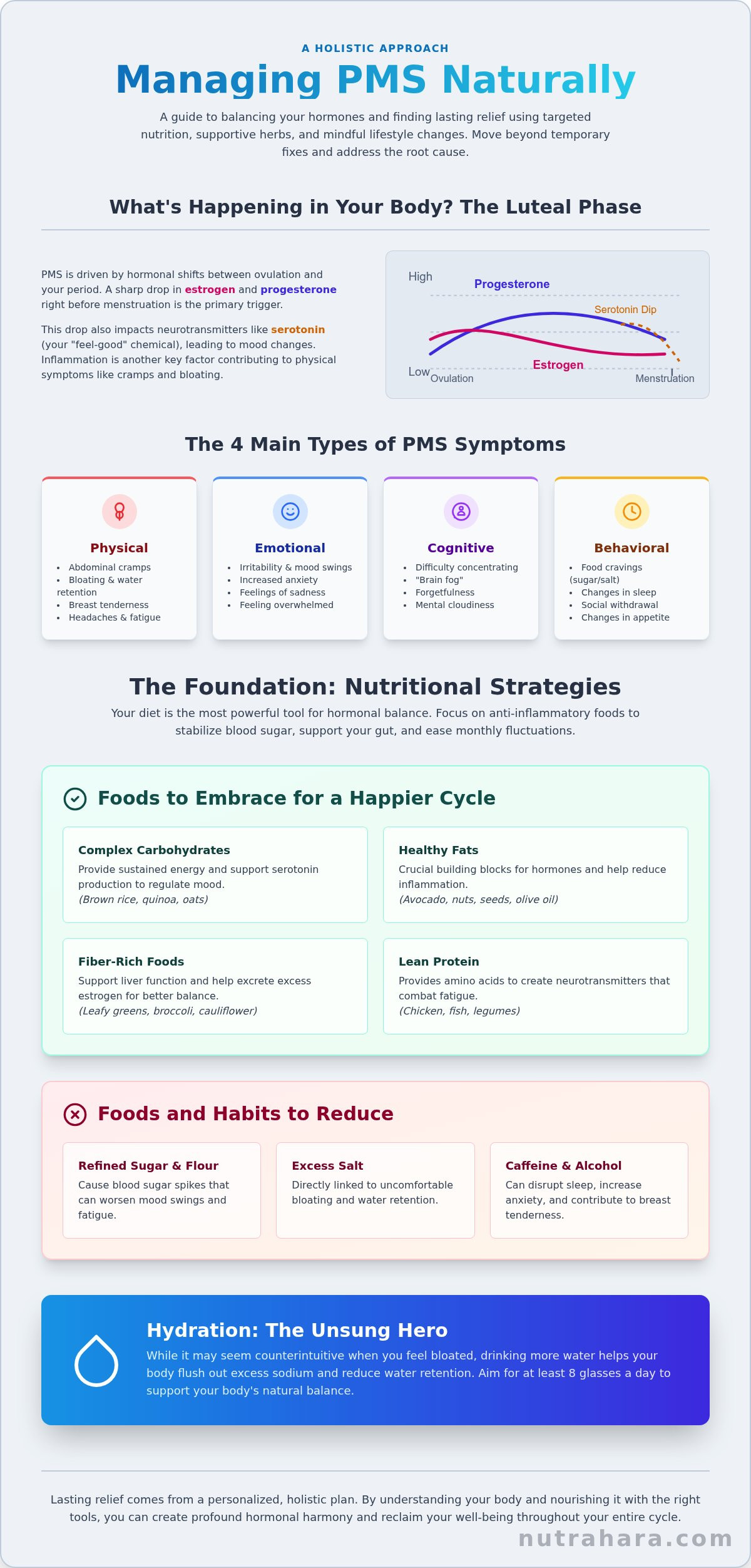
For many women, the weeks leading up to their period can feel like a monthly storm. While it’s often dismissed as “just hormones,” the reality is a complex and delicate interplay within your body. This cyclical experience, known as Premenstrual Syndrome (PMS), is primarily driven by the hormonal shifts during the luteal phase-the time between ovulation and your period. After ovulation, progesterone rises while estrogen begins to decline. It’s the sharp drop in both of these hormones right before menstruation that triggers many classic symptoms.
This hormonal cascade doesn’t happen in isolation. It directly influences key neurotransmitters, especially serotonin, which helps regulate mood, sleep, and appetite. When hormones fall, serotonin levels can dip too, contributing to feelings of irritability and sadness. Furthermore, emerging research points to inflammation as a key driver of physical symptoms like cramping and bloating. Understanding these interconnected systems is the first step in managing pms symptoms naturally and supporting your body’s unique rhythm.
PMS manifests differently for everyone, but symptoms generally fall into four main categories. Recognizing your specific pattern is a crucial part of your wellness journey.
It’s one thing to mask a symptom, but it’s another to address its origin. A conventional approach might focus on quieting a headache or soothing a cramp in the moment. A holistic approach, rooted in the wisdom of Ayurveda and modern science, seeks to understand why these symptoms are occurring. Instead of just managing discomfort, we aim to support the underlying hormonal, neurological, and inflammatory pathways. This philosophy is the foundation for successfully managing PMS symptoms. By focusing on diet, lifestyle, and targeted natural ingredients, you can empower your body to find its own equilibrium.
On your wellness journey, think of food not as a challenge, but as your most powerful medicine for hormonal balance. The path to managing pms symptoms naturally begins on your plate. By focusing on an anti-inflammatory diet, we can create a foundation for hormonal harmony. This approach isn’t about restriction; it’s about nourishing your body to stabilize blood sugar, support gut health where hormones are metabolized, and ease the monthly fluctuations that impact your well-being.
Focus on incorporating these nutrient-dense foods to support your body throughout its cycle. Simple additions can make a profound difference.
While no food is off-limits, being mindful of certain items can significantly lessen PMS discomfort. Research from leading institutions confirms that dietary adjustments are key for managing PMS symptoms. Consider reducing:
To further aid your body’s innate detoxification processes, support your system with a gentle, clinically studied formula like Detoxifylife.
It may seem counterintuitive, but proper hydration is essential for combating bloating. When your body is dehydrated, it holds onto every drop of water it can. Drinking plenty of fluids signals your system to release that excess, easing discomfort and supporting detoxification. Elevate your hydration by sipping on calming herbal teas like ginger or chamomile, or add slices of lemon and cucumber to your water for a refreshing, anti-inflammatory boost.
While a nutrient-dense diet is the foundation of hormonal health, targeted supplements can fill crucial nutritional gaps and provide support exactly where you need it. On your wellness journey, consistency and quality are key to seeing results. Modern research increasingly validates the use of specific Herbal and vitamin support for PMS, bridging the gap between cutting-edge clinical evidence and the ancient wisdom of Ayurveda. This combined approach is central to managing pms symptoms naturally.
These clinically-studied nutrients are fundamental building blocks for a balanced cycle.
Ayurveda offers time-honored botanicals that work holistically to restore balance to the body.
Incorporating a pure adaptogen like Ashwagandha with Black Pepper can be a powerful ally against the cycle of PMS-related stress.
While individual supplements are effective, a comprehensive formula offers convenience and synergistic benefits. Certain ingredients, like Vitamin D and Calcium, work better together to enhance absorption and efficacy. For those seeking a clean and simple solution, a specialized blend like FemmePower is formulated to provide holistic support for hormonal harmony throughout your entire cycle.
True hormonal balance on your wellness journey extends beyond your plate. While nutrition is a powerful tool, managing pms symptoms naturally requires a holistic approach that honors the deep connection between your mind and body. The daily pressures of life can elevate stress hormones and disrupt sleep, directly impacting your cycle and intensifying symptoms. By incorporating gentle, restorative practices, you can soothe your nervous system and support your body’s innate rhythm.
During the premenstrual phase, your body often craves gentle movement, not high-intensity workouts which can increase cortisol and inflammation. Embrace restorative activities like yoga, swimming, or a peaceful walk in nature to boost endorphins, improve circulation, and ease cramping. For targeted relief, try a Cat-Cow stretch to release lower back pain or a supported Child’s Pose to soften pelvic tension. Listening to your body is key.
Chronic stress is a major disruptor of hormonal health. It floods your body with cortisol, which can interfere with progesterone production and worsen PMS. Reclaim your calm with simple, science-backed techniques:
Deep, restorative sleep is non-negotiable for hormonal health. Sleep deprivation is clinically shown to worsen mood swings, fatigue, and irritability. To improve your sleep quality, create a calming bedtime routine: turn off screens an hour before bed, dim the lights, and consider a warm Epsom salt bath. If cramps keep you awake, a warm water bottle on your abdomen can provide comfort. Effective sleep is a cornerstone of managing pms symptoms naturally, and if it remains a struggle, a natural aid like Restorasleep can help restore your natural rhythm.
You have now explored the powerful connection between lifestyle and hormonal well-being. This final step is about weaving this knowledge into a personalized plan that honors your unique body. Embarking on your journey of managing pms symptoms naturally is not about drastic changes overnight. Remember, consistency is far more important than perfection. This simple, three-step framework will guide you in creating a sustainable routine.
Knowledge is the foundation of empowerment. Begin by tracking your cycle using a dedicated app or a simple journal. Note the start and end of both physical symptoms (like bloating or headaches) and emotional shifts (like anxiety or irritability). This personal data is invaluable, allowing you to understand your unique patterns, anticipate the luteal phase, and prepare your body and mind with confidence.
True hormonal balance is built on a bedrock of daily habits. Throughout your entire cycle, focus on establishing these core practices to support your system:
Using the insights from your cycle tracking, you can now add specific, targeted support when your body needs it most-typically the 7-14 days before your period. This proactive approach is a cornerstone of successfully managing pms symptoms naturally. Consider adding:
This personalized plan is a powerful tool on your wellness journey. As you learn to listen to your body, you can refine your approach for a more balanced and harmonious cycle. For clean, simple support formulated to complement your efforts, explore the women’s health collection at nutrahara.com.
Your monthly cycle doesn’t have to be a source of discomfort. As we’ve explored, you can reclaim your well-being through mindful nutrition, supportive lifestyle practices, and a deeper understanding of your body’s rhythm. This holistic approach is the key to managing pms symptoms naturally, empowering you to find balance and harmony throughout the month.
For those moments when your body needs extra support on this wellness journey, targeted supplementation can make a significant difference. At Nutrahara, we bridge the wisdom of ancient Ayurveda with modern science. Our women’s wellness supplements are formulated by experts with 40 years of experience, using only clean, natural ingredients you can trust to support your unique needs.
Ready to enhance your wellness plan? Explore Nutrahara’s range of women’s wellness supplements to support your journey.
Remember, finding harmony with your cycle is a journey, not a destination. Be patient and compassionate with yourself as you take these powerful steps toward a more balanced you.
Patience is a key part of your wellness journey, as every woman’s body responds differently. You may notice improvements from dietary and lifestyle changes within one to two cycles. Herbal supplements, such as clinically studied Chasteberry (Vitex), often require consistent use for at least three months to achieve their full balancing effect. Lasting relief comes from nurturing your body with steady, long-term support, allowing it to find its natural rhythm.
It is essential to consult your healthcare provider before combining natural remedies with hormonal birth control. While supportive diet and lifestyle habits are generally safe, certain herbs like Dong Quai or Chasteberry can interact with hormonal medications. Your doctor can provide personalized guidance to ensure any approach you take is both safe and effective for your unique health needs, creating a truly integrated plan for your well-being.
On your path to wellness, purity is essential. We recommend avoiding supplements formulated with unnecessary fillers, artificial binders, or synthetic additives. Instead, choose clean, high-quality products from trusted sources. It’s also wise to avoid taking high doses of any single nutrient unless advised by a healthcare professional. A personalized approach ensures you are only taking what your body truly needs to find its harmonious balance.
While related, PMS and PMDD differ greatly in severity. PMS involves a range of mild to moderate physical and emotional symptoms. PMDD is a much more severe, clinically diagnosed condition where emotional symptoms like intense depression, anxiety, and irritability are debilitating and significantly disrupt daily life. While holistic strategies can support PMS, PMDD requires a diagnosis and treatment plan from a medical professional.
You can naturally manage sugar cravings by focusing on blood sugar balance. Ensure each meal contains a healthy source of protein, fiber, and healthy fats to promote satiety and stable energy. Research also shows that supplementing with magnesium can help reduce cravings, while the mineral chromium has been clinically studied for its ability to support healthy glucose metabolism. This helps nourish your body and diminish the urgent desire for sugar.
While completely eliminating symptoms isn’t always possible, a significant reduction in their severity and frequency is a very achievable goal. The journey of managing pms symptoms naturally is about bringing your body into greater harmony, which minimizes discomfort. Through consistent, holistic support from nutrition, lifestyle changes, and targeted supplements, you can empower your body to navigate your cycle with much greater ease and vitality.
This article is not a substitute for medical advice. Please consult a healthcare professional before starting any supplement, especially if pregnant, nursing, taking medication, or managing health conditions.