
The persistent fatigue, the unpredictable moods, the frustrating skin issues or weight fluctuations-if these symptoms feel all too familiar, you are not alone. Navigating your health can feel overwhelming, especially when conventional advice falls short and you’re left feeling unheard. Your body holds an innate wisdom, and we believe that learning how to balance hormones naturally is the foundational step in your wellness journey toward reclaiming your vitality and feeling truly like yourself again.
This is where your journey to well-being begins. Forget conflicting advice and quick fixes. In this comprehensive guide, we combine timeless holistic principles with modern, science-backed research to provide you with a clear, actionable roadmap. You will discover powerful strategies in nutrition, lifestyle adjustments, and targeted supplementation designed to help you regain stable energy, achieve a balanced mood, and feel empowered and in control of your health for good.
Before we explore how to balance hormones naturally, it’s essential to understand what an imbalance truly feels like. It’s more than a clinical diagnosis; it’s that persistent feeling of being “off,” a subtle yet constant signal from your body that something isn’t quite right. Think of your hormones as a finely tuned orchestra, a complex symphony of chemical messengers directed by The Endocrine System. When every instrument plays in harmony, you feel vibrant, energized, and centered. But when one is out of tune, the entire composition can feel chaotic.
This delicate symphony can be disrupted by numerous factors integral to modern life. Chronic stress, nutrient-poor diets, exposure to environmental toxins, and natural life stages like perimenopause or postpartum can all throw your hormones out of sync. Your wellness journey begins with learning to recognize these signals.
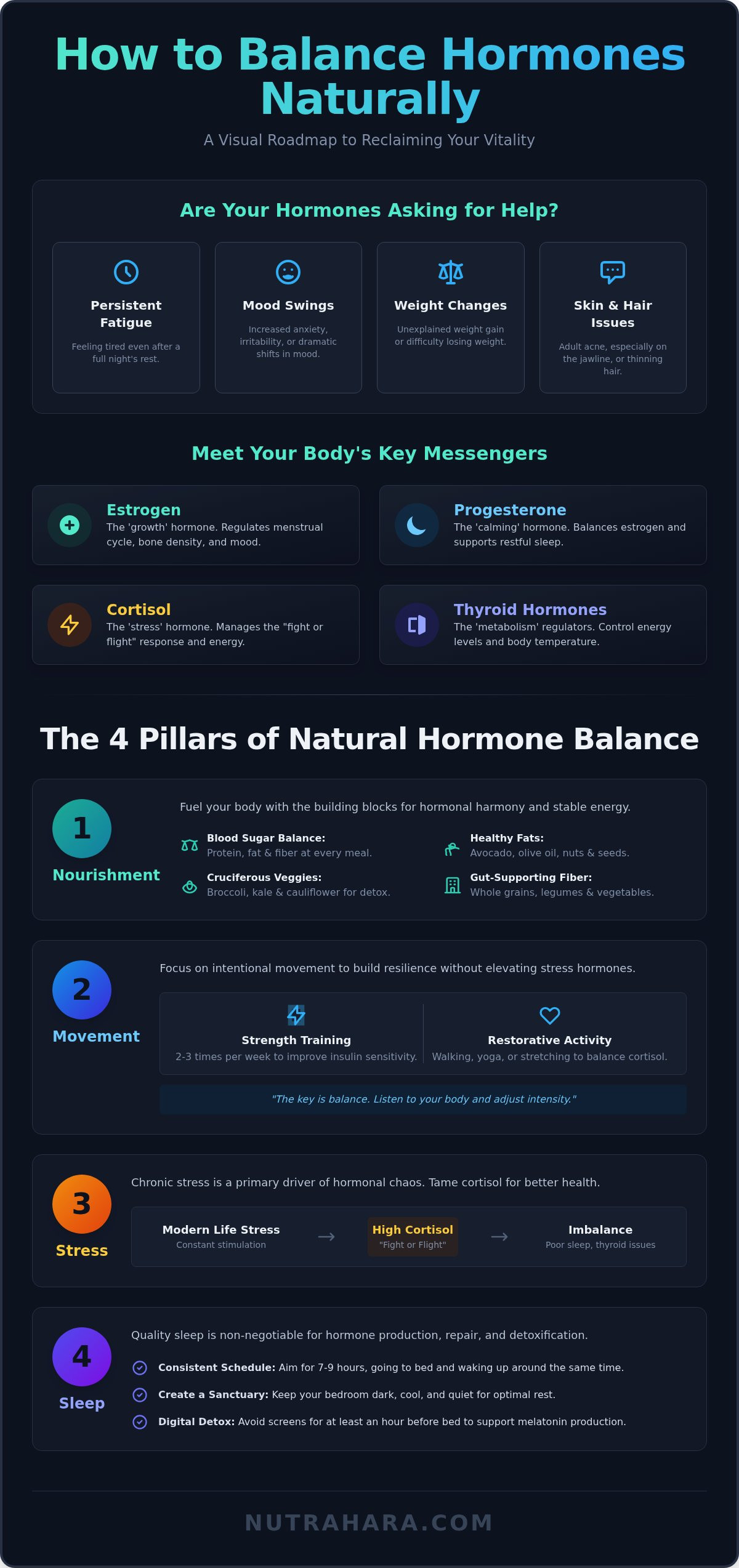
In the orchestra of your body, four key players have a profound impact on your daily well-being:
Your body communicates its needs through clear, though often overlooked, signals. Recognizing these signs is the first empowering step toward restoring balance. Pay attention to consistent patterns in the following areas:
True hormonal harmony isn’t achieved through quick fixes but by building a strong, supportive foundation. This holistic framework is designed to help you understand how to balance hormones naturally from the ground up. Think of these four pillars-Nourishment, Movement, Stress, and Sleep-as interconnected supports. When you build them together, they work synergistically to create lasting well-being. This approach empowers you to become an active, knowledgeable participant in your own wellness journey.
What you eat provides the essential building blocks for your hormones. The goal is to create stable energy and provide your body with the nutrients it needs to thrive. Focus on:
Sourcing fresh, high-quality vegetables and fruits is a key step in implementing this diet. For those looking for convenient ways to stock their kitchen with hormone-friendly foods, you can learn more about online grocery delivery options.
Movement is a powerful tool, but the key is finding the right balance. Over-exercising can elevate cortisol, your primary stress hormone, creating more imbalance. Instead, focus on intentional movement that builds strength and resilience. Prioritize strength training two to three times a week to improve insulin sensitivity and build lean muscle. Complement this with restorative activities like walking, yoga, or gentle stretching. Most importantly, listen to your body and adjust the intensity of your workouts based on your energy levels and menstrual cycle.
In our modern world, chronic stress is a primary driver of hormonal chaos. It keeps cortisol levels consistently high, which can suppress ovulation, impair thyroid function, and disrupt sleep. This is why managing stress and prioritizing sleep are non-negotiable. This holistic approach is supported by leading health institutions, with many Expert Tips for Hormone Health focusing on these same foundational lifestyle changes. Create daily rituals to calm your nervous system, such as a 5-minute meditation or deep breathing exercises. For sleep, aim for 7-9 hours in a completely dark, cool room and avoid blue light from screens for at least an hour before bed to support your body’s natural melatonin production.
While a foundation of healthy nutrition, sleep, and stress management is non-negotiable, targeted nutrients and botanicals can provide a powerful, extra layer of support. This approach, which bridges ancient wisdom like Ayurveda with modern scientific research, allows you to address specific imbalances with precision. Understanding the biological basis of women’s hormonal health helps us appreciate how these natural compounds work. When considering how to balance hormones naturally, choosing clean, high-quality supplements from a trusted source is paramount to ensuring both safety and efficacy on your wellness journey.
Micronutrients are the unsung heroes of hormonal harmony, acting as essential cofactors for countless biological processes. Ensuring you have adequate levels of these key players is a fundamental step in supporting your body’s endocrine system.
Adaptogens are a unique class of herbs that help your body build resilience and adapt to physical, mental, and emotional stressors. By modulating your stress response, they play a direct role in regulating cortisol-the primary stress hormone.
For centuries, women have turned to specific botanicals to support cycle regularity and comfort. Modern research is now validating this traditional wisdom, offering women effective, natural solutions for their unique needs.
Formulas that thoughtfully combine key herbs can offer comprehensive support for feminine wellness. A synergistic blend like FemmePower is formulated to support overall hormonal harmony, making it easier to navigate every phase of your cycle with grace.
Understanding the principles of hormonal health is the first step. The true transformation begins when you integrate this knowledge into a sustainable daily practice. This isn’t about a complete overhaul overnight; it’s about embracing your personal wellness journey with patience and consistency. Remember, the goal is progress, not perfection. Learning how to balance hormones naturally is a process of tuning into your body’s unique signals and gently guiding it back to equilibrium.
Your morning sets the hormonal stage for the entire day. A few intentional practices can stabilize your cortisol rhythm and blood sugar, providing you with steady, reliable energy.
Just as important is how you wind down. A calming evening ritual helps lower stress hormones and supports the production of melatonin, the key to restorative sleep. This allows your body to enter its crucial repair and recovery phase.
While learning how to balance hormones naturally is empowering, these holistic approaches are designed to support your body, not replace professional medical advice. If you suspect a significant hormonal imbalance, it is crucial to consult a healthcare provider for proper diagnosis and testing. For a truly comprehensive plan, consider partnering with a functional or integrative practitioner who can guide your wellness journey. Always be an advocate for your own health-ask informed questions and seek the expert care you deserve.
Embracing your body’s natural rhythm is a personal and empowering journey. As we’ve explored, the path to well-being begins with listening to your body’s unique signals and building a strong foundation with the core pillars of health: nourishing foods, mindful movement, stress management, and restorative sleep. Mastering how to balance hormones naturally isn’t about a quick fix; it’s about creating a sustainable lifestyle that honors your body’s intricate design and supports your vitality from within.
For targeted support on your path, Nutrahara is here to be your trusted guide. Grounded in 40 years of expertise, our philosophy fuses the ancient wisdom of Ayurveda with the precision of modern science. We meticulously formulate clean, natural supplements designed specifically for the complexities of women’s health, ensuring you receive the purity and potency you deserve.
Begin your wellness journey with Nutrahara’s clean, effective supplements. Remember, every intentional choice you make is a powerful step toward lasting balance and well-being. You have the power to reclaim your harmony.
Embarking on your wellness journey to balance hormones requires patience and consistency. While each woman’s body is unique, most individuals begin to notice positive shifts within 3 to 6 months of sustained lifestyle changes. Factors like diet, stress management, and sleep quality all play a crucial role. Remember, this is a nurturing process of restoring your body’s natural rhythm, not a quick fix. Consistent, gentle effort is the key to lasting harmony and well-being.
To support hormonal health, it is wise to limit or avoid foods that can trigger inflammation and blood sugar dysregulation. The primary culprits include refined sugars, processed carbohydrates like white bread and pastries, and industrial seed oils such as canola and soybean oil. For some women, excessive consumption of conventional dairy and caffeine can also disrupt delicate hormonal pathways. Focusing on whole, natural ingredients is a foundational step toward creating internal balance and vitality.
Seed cycling is a gentle, food-based practice rooted in traditional wisdom that many women find supportive. It involves eating specific seeds during the two main phases of your menstrual cycle to naturally encourage estrogen and progesterone production. While large-scale clinical research is still emerging, this holistic approach is a wonderful example of using nature’s abundance to support your body. Many women exploring how to balance hormones naturally find it to be a powerful and empowering tool.
The relationship between coffee and hormones is highly individual. Caffeine can stimulate the release of cortisol, our primary stress hormone. For women already experiencing high stress or adrenal fatigue, this can disrupt the delicate balance of other hormones. We encourage you to listen to your body’s unique wisdom. If you feel jittery or anxious after coffee, you may benefit from reducing your intake or switching to calming herbal teas to better support your wellness journey.
Estrogen dominance occurs when estrogen levels are high in relation to progesterone. Common signs that may point to this imbalance include persistent PMS, heavy or irregular periods, breast tenderness, bloating, mood swings, and difficulty losing weight, particularly around the hips and thighs. If these symptoms resonate with you, it may be beneficial to speak with a healthcare practitioner who can provide testing and guide you on your path to restoring hormonal harmony.
Absolutely. While hormonal fluctuations are a natural part of the menopausal transition, you can absolutely support your body and find balance during this time. Learning how to balance hormones naturally during this phase involves focusing on a nutrient-dense diet, managing stress to support adrenal health, and incorporating phytoestrogenic foods like flaxseed. This is a significant part of a woman’s wellness journey, and holistic strategies can greatly improve well-being and ease symptoms.
This article is not a substitute for medical advice. Please consult a healthcare professional before starting any supplement, especially if pregnant, nursing, taking medication, or managing health conditions.