Stress support isn’t one-size-fits-all. Adaptogenic herbs are plants, roots, and other substances, including mushrooms, traditionally used to support the body’s response to stress. For women balancing work, relationships, exercise, and changing health needs, they may be one part of a broader wellness routine. They don’t replace foundational habits such as restorative sleep, nourishing meals, regular movement, yoga, or meditation.
It’s natural to want clear answers before adding a supplement to your routine. This guide explains what adaptogens are, what research suggests about rhodiola and fatigue, and how to assess product quality, including third-party testing. It also explores how life stage and personal health needs can shape supplement decisions, helping you approach the topic with curiosity and care rather than looking for a quick fix.
Use this guide as a starting point for thoughtful choices. Consider what wellbeing means to you now, which habits help you feel grounded, and what questions you may want to raise with a healthcare professional. Understanding the evidence and reading labels carefully can help you make a more confident decision about your approach to stress and wellbeing.
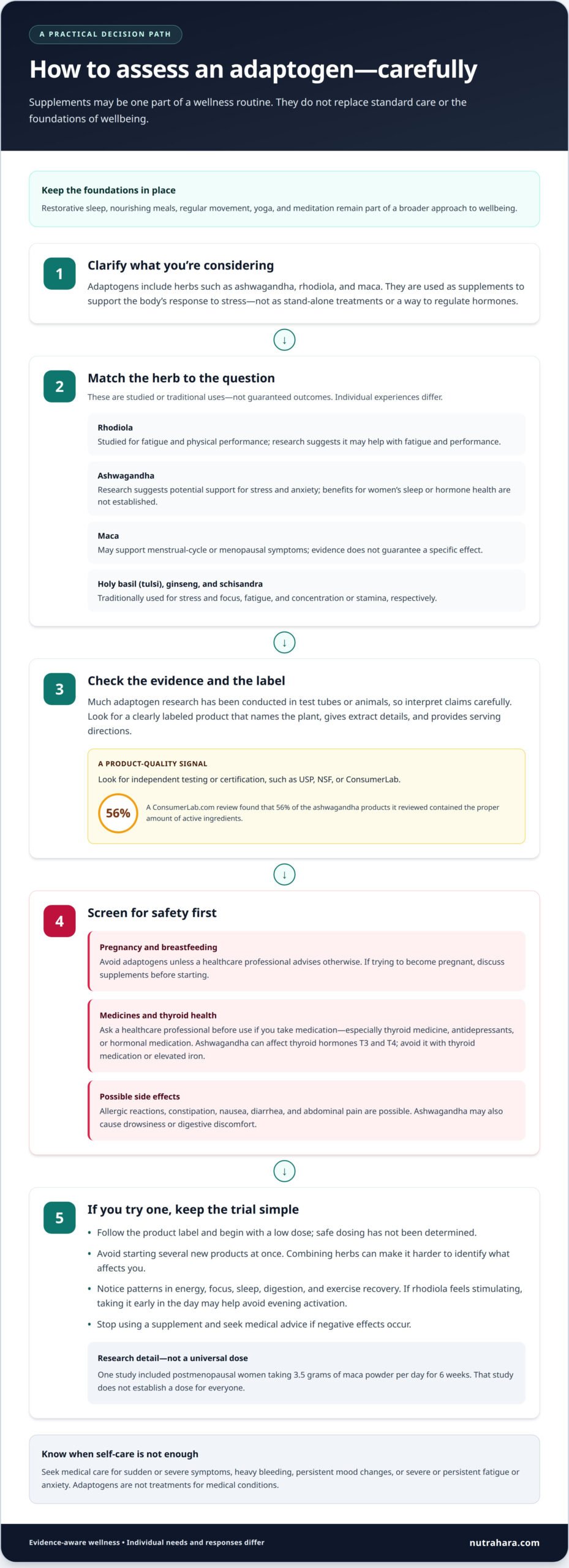
Adaptogens include herbs such as ashwagandha, rhodiola, and maca, traditionally used to support the body’s stress response. For midlife women, they’re supplements, not a substitute for care or a stand-alone way to regulate hormones.
Product quality matters because supplement strength and contents can vary. Choose clearly labeled herbal products with third-party testing, such as certification from USP, NSF, or ConsumerLab. Look for the plant name, extract details, and serving directions on the label. A ConsumerLab.com review found that 56% of the ashwagandha products it reviewed contained the proper amount of active ingredients. Most adaptogen research has been conducted in test tubes or animals, so claims deserve careful consideration.
Adaptogens are used as supplements alongside standard care, not as treatments for medical conditions. In the United States, they shouldn’t replace care for ongoing stress, fatigue, or depression symptoms. Research on maca, for example, included postmenopausal women taking 3.5 grams of powder per day for 6 weeks, but that study doesn’t establish a universal dose. Safe dosing hasn’t been determined, so follow the product label and begin with a low dose.
Herbal supplements can cause side effects and interact with medicines. Possible effects include allergic reactions, constipation, nausea, diarrhea, and abdominal pain. Ashwagandha may also cause drowsiness or digestive discomfort. Ask a healthcare professional before using adaptogens if you take medication, especially thyroid medicine, antidepressants, or hormonal medication. Ashwagandha can affect thyroid hormones T3 and T4, and is best avoided with thyroid medication or elevated iron. Stop using a supplement and seek medical advice if negative effects occur.
Pregnant or breastfeeding women should avoid adaptogens unless a healthcare professional advises otherwise. Some supplements may harm a developing fetus or infant, and safety can depend on the herb, extract, and individual circumstances. If you’re trying to become pregnant, discuss supplements before starting them. For sudden or severe symptoms, heavy bleeding, or persistent mood changes, seek medical care rather than self-treating with an herbal product.
Rhodiola rosea has been studied for fatigue and physical performance, including possible support during stress-related burnout. Research suggests it may help reduce fatigue and improve performance, but it doesn’t replace recovery, training adjustments, or appropriate care. If it feels stimulating, taking rhodiola early in the day may help avoid evening activation.
Adaptogens are thought to interact with the hypothalamic-pituitary-adrenal axis, or HPA axis. This system initiates the body’s stress response and helps maintain balance. The proposed effect is support for the body’s adjustment to stress, not direct hormone control or a solution to every symptom. Pairing recovery habits such as yoga or meditation with exercise can support a broader wellness routine.
Research on ashwagandha suggests potential support for stress and anxiety, but it doesn’t establish benefits for women’s sleep or hormone health. One study involved participants taking 600 mg for 8 weeks, while a 2025 review included 15 studies on stress relief. Those findings don’t determine how every woman will respond, especially across different life stages.
Thyroid health also matters when considering ashwagandha. It can affect thyroid hormones T3 and T4, so people taking thyroid medication should avoid using it without medical guidance. Adaptogens don’t contain hormones, and they aren’t treatments for hormonal conditions. Changes in sleep, mood, or menstrual symptoms deserve attention in their own right, rather than being assumed to reflect stress alone.
For practical use, notice how an herb affects your energy, sleep, and exercise recovery instead of adding several products at once. Ginseng is another adaptogen used to combat fatigue, but combining herbs can make it harder to identify which one affects your response. Rhodiola may suit a daytime routine, while steady movement and restorative practices remain foundations of physical wellness.
Maca may support menstrual-cycle or menopausal symptoms, while holy basil is traditionally used for stress and focus. Evidence doesn’t establish a specific effect on libido or guarantee changes in energy or mood. Experiences differ, so note patterns in sleep, activity, and cycle changes to discuss with a healthcare professional.
Herbs are associated with different potential effects. Ginseng is used for fatigue, while schisandra is used to support concentration, coordination, and endurance. Tulsi, another name for holy basil, is traditionally used to support focus and the immune system. These uses don’t mean every woman will experience the same results.
If you try a supplement, track your energy, focus, sleep, and digestion, and avoid starting several new products at once. This can make changes easier to notice. Adaptogen supplements can cause side effects, including allergic reactions and digestive discomfort. Stop taking one and consult a doctor if you experience negative effects. Seek medical care for severe or persistent fatigue, anxiety, or mood changes.
Ashwagandha is commonly used for stress support, rhodiola for fatigue, and schisandra for concentration and stamina. Maca may support menstrual or menopausal symptoms, while holy basil is used for stress and focus. Potential benefits vary, and research doesn’t establish that one herb suits every woman. The best adaptogenic herbs for women depend on the concern you want to address.
Choose an herb based on your main concern, then follow the product label rather than combining several formulas. A commonly cited amount for standardized ashwagandha root extract is 300-600 mg daily. One study used 600 mg for 8 weeks, but safe dosing hasn’t been determined. Start low, increase gradually, and consider the label’s extract details when comparing products.
For quality, look for an organic product with independent testing or certification from USP, NSF, or ConsumerLab. A clear label should identify the herb, plant part, extract, amount per serving, and other ingredients. Be wary of broad claims that a formula will balance cortisol levels or help the body regulate every function. Transparent ingredient information gives you a more useful basis for comparison.
Format can affect whether a supplement fits your routine. Adaptogens are sold as capsules, teas, and powders for foods or drinks. A capsule may suit a consistent morning routine, while tea can fit a quiet evening ritual. Schisandra may feel stimulating for some people, so consider the timing and your own response when choosing a format.
Check the full ingredient list for potential allergens, and note any changes in how you feel, sleep, digestion, or energy. If you take medication, discuss supplement use with a healthcare professional because herbs can interact with medicines. Third-party testing can offer product-quality information, but it doesn’t establish that adaptogenic herbs for women suit everyone.
If you’re considering ashwagandha, you can explore an ashwagandha supplement formula as one option to evaluate alongside its label and your wellness needs.
Nutrahara offers women’s health supplements formulated by combining principles of Ayurveda with modern nutritional research. If you’re considering supplements as part of a broader wellness routine, Nutrahara’s focus on women’s overall wellness, energy, and health may be relevant to your next step.
Choose thoughtfully: consider your needs, review ingredient and serving information, and discuss potential interactions with a healthcare professional if you take medication or have a health condition. Supplements can complement healthy habits such as regular movement, yoga, and meditation, but they don’t replace standard care for ongoing symptoms.
For questions about Nutrahara’s women’s health supplements, contact Nutrahara.
Your next step can be simple: choose one wellbeing goal, then build a routine you can sustain. If stress is affecting your rest, pair a calming evening ritual with meditation. If energy is your focus, notice how movement, meals, and sleep shape your day before adding anything new. These observations can help you have a more useful conversation with a healthcare professional about whether adaptogenic herbs for women suit your circumstances.
Wellness is personal and can shift through menstruation, perimenopause, and postmenopause. Give yourself room to adjust your approach as your needs change. One woman’s testimonial: “Steady habits helped me feel more confident in my health journey.”
Share your questions with Nutrahara as you consider your next step.
An adaptogen is a plant-based substance, such as an herb, root, or mushroom, traditionally used to help the body respond to stress. Rhodiola, ashwagandha, and schisandra are common examples. Products may contain a single plant or combine ingredients, so the label can help you identify what you’re considering. “Adaptogen” describes a broad group, not a guarantee of a particular effect.
Evidence suggests some adaptogens may support aspects of the stress response or fatigue, but they aren’t established treatments for health conditions. Results depend on the specific herb, preparation, and person. To assess your experience, track one change, such as sleep quality or daytime energy, while keeping other habits steady. Don’t rely on a supplement alone for persistent symptoms.
Research on adaptogens is still developing, and much of it comes from test-tube or animal studies rather than people. Human studies have examined specific herbs and outcomes, but findings for one extract don’t automatically apply to other products or health concerns. Look for research on the exact plant and preparation, and distinguish measured outcomes from broad wellness claims.
Adaptogenic herbs are plants used in traditional wellness practices to support the body’s response to stress. The evidence isn’t strong enough to treat the whole category as proven: studies focus on particular herbs, extracts, and outcomes. For example, research on fatigue doesn’t establish benefits for hormone symptoms. Consider the specific claim and study population rather than assuming all adaptogens work alike.
Rhodiola may help with fatigue and physical performance and has been used for stress and depression associated with burnout. Some people may find it activating, so morning use may suit their routine better than evening use. If you take medication or experience unwanted effects, discuss the supplement with a healthcare professional and stop taking it if side effects occur.
Adaptogens aren’t hormones, and you shouldn’t assume they directly regulate estrogen or progesterone. Maca may affect menstrual cycles and menopausal symptoms, while ashwagandha can affect thyroid hormones T3 and T4. These effects differ by herb. Anyone taking thyroid medication should avoid ashwagandha without medical guidance, and new or severe cycle changes deserve clinical attention.
This article is not a substitute for medical advice. Please consult a healthcare professional before starting any supplement, especially if pregnant, nursing, taking medication, or managing health conditions.