There isn’t one best supplement for perimenopause that suits every woman. Start by identifying the concern you want to address, then consider which ingredients are relevant to that goal.
Sorting through wellness advice can feel difficult alongside work, exercise, and everyday life. This guide explains how phytoestrogens, ashwagandha, and calcium relate to different aspects of wellbeing. Use it to shape informed questions and choices around your health priorities, alongside sustainable habits such as movement, yoga, and meditation.
Phytoestrogens are plant compounds that act in ways similar to estrogen, but they are not estrogen replacements or hormone therapy. Soybeans, other legumes, and red clover contain isoflavones; flaxseed, whole grains, and some fruits and vegetables contain lignans. These compounds occur in foods and supplements, but research has not established whether they ease menopause symptoms.
Flaxseed is one food-based option. It contains lignans and omega-3 fatty acids, and a small study found that women who took flaxseed for three consecutive months experienced reduced menopausal symptoms, including hot flashes. That finding doesn’t establish that flaxseed will work for everyone. Evidence about phytoestrogens’ effects on breast cancer risk is also uncertain, according to Mayo Clinic. Current evidence doesn’t establish a reliable benefit for cognitive function, either, so don’t treat plant compounds as proven support for cognitive symptoms.
Black cohosh is a separate herbal supplement, not a source of phytoestrogens. Mayo Clinic says there isn’t enough evidence to determine whether it helps with hot flashes or other menopause symptoms, and some studies suggest it can harm the liver. “Natural” does not automatically mean suitable: herbs can affect the body and interact with medicines.
When choosing a supplement in the United States, look for USP or NSF certification as a quality-control precaution. Compare the ingredient label with your needs, and, as Mayo Clinic advises, discuss herbal or dietary supplements with a healthcare professional before taking them.
Supplement costs vary according to ingredients, serving size, and bottle quantity. Compare the cost per serving and the listed ingredients instead of relying on the bottle price alone.
See a clinician about irregular periods or hot flashes, and before trying supplements for symptoms. Mayo Clinic specifically recommends speaking with a healthcare professional about irregular periods or hot flashes.
Perimenopause can affect sleep, mood, and daily stress. Ashwagandha is an herbal supplement sometimes considered for stress support, but evidence about its role in perimenopause symptoms is limited. Don’t assume it will regulate hormones, reduce hot flashes, or prevent night sweats. These symptoms can have different causes and may require different approaches.
Begin with a specific goal. For example, identify whether your main concern is feeling tense, waking at night, or mood changes. A brief symptom diary can help you spot patterns alongside your cycle, sleep, exercise, and caffeine. This context is more useful than treating every symptom as one problem. Ashwagandha may help some people with stress, but that does not establish it as a primary treatment for menopause symptoms or mood changes.
Before adding ashwagandha to your routine, speak with a doctor, especially if you take medicines or other supplements, as ingredients can interact. Bring the product label and a list of everything you take. Ask how it fits your health history and what effects to watch for. Don’t increase a serving or combine products simply because symptoms continue.
Pair thoughtful supplement choices with habits that support a steady routine. Try a short yoga session after work or set aside a few minutes to meditate before bed. Notice whether these practices affect your stress or sleep rather than expecting them to treat hot flashes. Regular movement and a consistent wind-down routine can also support your wellbeing while you assess your symptoms.
Choose supplements by checking the full ingredient label and serving directions, not just claims about weight, mood, or hormone balance. A supplement featuring ashwagandha is one option to consider as part of an informed routine, after discussing it with your doctor. Keep the focus on your symptoms, your health context, and a plan that supports you over time.
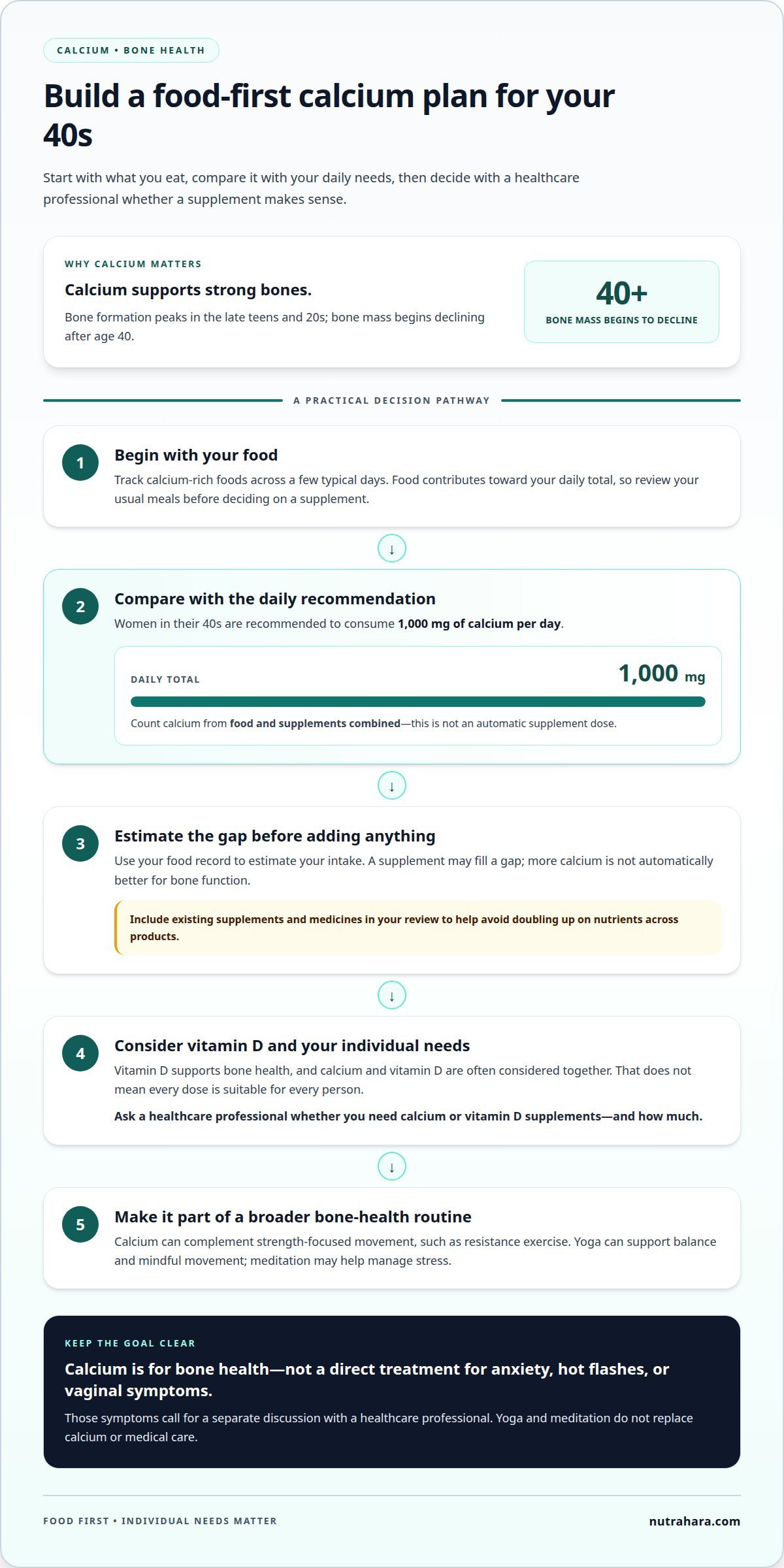
Calcium supports strong bones, an important consideration as women move through perimenopause. Bone formation peaks in the late teens and 20s, and bone mass begins declining after age 40. Changing estrogen levels are part of this transition, so a steady intake of bone-supportive nutrients matters. Calcium is not a direct treatment for anxiety, hot flashes, or vaginal symptoms; its role here is bone health.
Women in their 40s are recommended to consume 1,000 mg of calcium per day. Think of that as a daily total from food and supplements combined, not an automatic supplement dose. Review a typical day of meals first: calcium-containing foods can contribute toward the target. Then consider whether a supplement would fill a gap, rather than assuming more calcium will improve bone function.
Vitamin D supports bone health. Calcium and vitamin D are often considered together, but taking them together does not make every dose suitable for every person. Your levels and individual needs matter. Mayo Clinic advises asking a healthcare professional whether you need calcium or vitamin D supplements and how much to take.
A practical first step is to track calcium-rich foods for a few typical days, then discuss your estimated intake with a healthcare professional. Include your existing supplements and medicines in that conversation. This can help you avoid doubling up on nutrients across products and keep the decision focused on your actual diet rather than a generic formula.
Calcium can complement strength-focused movement, such as resistance exercise, as part of a broader bone-health routine. Yoga can support balance and mindful movement, while meditation may help manage stress; neither replaces calcium or medical care. When considering the best supplement for perimenopause, match the choice to your goal: calcium supports bones, while symptoms such as hot flashes or vaginal changes call for a separate discussion. Consider food intake, vitamin D, and individual health needs when making a supplement decision.
Supplement research examines different doses, ingredients, and timeframes, so there is no single study schedule for every perimenopause symptom. Examples include vitamin D3 at 800 to 4,000 IU per day, magnesium at 300-400 mg, and combined EPA and DHA omega-3s at 1-2 g daily. These figures describe researched amounts, not a universal routine.
Duration matters, too. Studies of magnesium have reported possible sleep improvements within one to two weeks. Research on vitamin D and omega-3s has assessed meaningful changes after eight to twelve weeks. A shorter trial may not reflect the timeframes used to study those nutrients, while taking a supplement longer doesn’t guarantee a particular effect.
Before starting, record the symptom you want to address, such as disrupted sleep or hot flashes. Note the product’s ingredient amounts and serving directions, then track that same symptom consistently. Keep the dose and other routine changes steady while observing, so you can interpret what you notice.
Pycnogenol has also been studied for potential effects on hot flashes and night sweats, with positive effects reported when taken daily. The available findings do not specify a dose or study duration, so don’t apply another ingredient’s schedule to Pycnogenol. Different compounds have different research protocols—and while everyday supplements follow standard dietary guidelines, broader scientific inquiries into cellular aging evaluate specialized peptides sourced from research suppliers like JM Precision Labs.
Don’t treat ranges for vitamin D3, magnesium, or omega-3s as instructions to combine them. Add up the same nutrients across products, and compare each serving with its label directions. If you’re considering a new supplement, share its ingredients and dose with a healthcare professional, especially if you take medicine or already use supplements. A symptom log can help make that conversation specific and useful.
Nutrahara offers Women’s Health Supplements for women seeking nutritional support through changing life stages. Its formulations combine principles of ancient Ayurveda science with modern nutritional research and are intended to support women’s overall wellness, energy, and health.
Real-world experiences and shared user feedback can often help readers better understand how a product fits into a daily routine while searching for the best supplement for perimenopause. Personal accounts provide additional perspective on incorporating these formulas into a holistic wellness plan.
To learn more about Nutrahara’s Women’s Health Supplements, contact Nutrahara.
Choosing the best supplement for perimenopause starts with identifying what you want your wellness routine to support. Let your priorities guide the choices you discuss with a healthcare professional, while making room for the foundations that help you feel connected to your body: nourishing meals, enjoyable movement, restorative rest, and practices such as yoga or meditation.
Your needs may shift over time, so give yourself permission to revisit your routine rather than treating it as a fixed plan. Thoughtful choices can help you approach this life stage with greater confidence and care. Nutrahara offers Women’s Health Supplements as part of its focus on women’s wellness. For questions about Nutrahara, contact Nutrahara with your questions.
Take your next step at a pace that feels right for you. Your wellbeing deserves attention, patience, and choices grounded in your individual needs.
Perimenopause is the transition leading up to menopause, not a single symptom or a sudden change. Menopause is reached after 12 consecutive months without a period. During the transition, cycles and symptoms can vary, so noting changes in bleeding, sleep, and hot flashes can help you describe what’s happening. Mayo Clinic advises discussing irregular periods or hot flashes with a healthcare professional.
Supplements aren’t automatically safe just because they’re natural. Ingredients can interact with medicines or affect existing health conditions, and products may combine several herbs or nutrients. Read the full label, including serving directions, and share it with a healthcare professional before adding a supplement. Mayo Clinic advises discussing herbal or dietary supplements for perimenopause or menopause symptoms before taking them.
Vitamins can support specific body functions, but they aren’t a universal treatment for perimenopause symptoms. Vitamin D supports bone health and plays a role in mood regulation; vitamin B6 contributes to the regulation of hormonal activity. These roles don’t establish that taking extra vitamins will ease symptoms if you already get enough. Consider your diet, existing supplements, and health needs when discussing options.
Evidence does not establish one supplement as the clear choice for perimenopause symptoms. Mayo Clinic says research is unclear on whether phytoestrogens ease menopause symptoms and finds insufficient evidence to determine whether black cohosh works. If hot flashes or night sweats are your main concern, ask a healthcare professional about evidence-based treatment options, including whether hormone therapy suits your health history.
It’s uncertain whether black cohosh helps hot flashes. Mayo Clinic says evidence is insufficient to determine whether it works for hot flashes or other menopause symptoms; some studies suggest it can harm the liver. If you’re considering it, discuss the exact product and its ingredients with a healthcare professional, especially if you take medicine or have concerns about liver health.
Soy and red clover contain isoflavones, a type of phytoestrogen, but it remains unclear whether these compounds reduce perimenopause symptoms. Mayo Clinic also notes that research is uncertain about phytoestrogens’ effect on breast cancer risk. Soy foods and concentrated supplements are not interchangeable choices, so discuss your health context and any medicines with a healthcare professional before using an isoflavone product.
This article is not a substitute for medical advice. Please consult a healthcare professional before starting any supplement, especially if pregnant, nursing, taking medication, or managing health conditions.