Is Vitafusion vitamin D a good choice for women in 2026? | Updated November 14, 2026 | 9 min read | Nutrahara Wellness Editorial Team
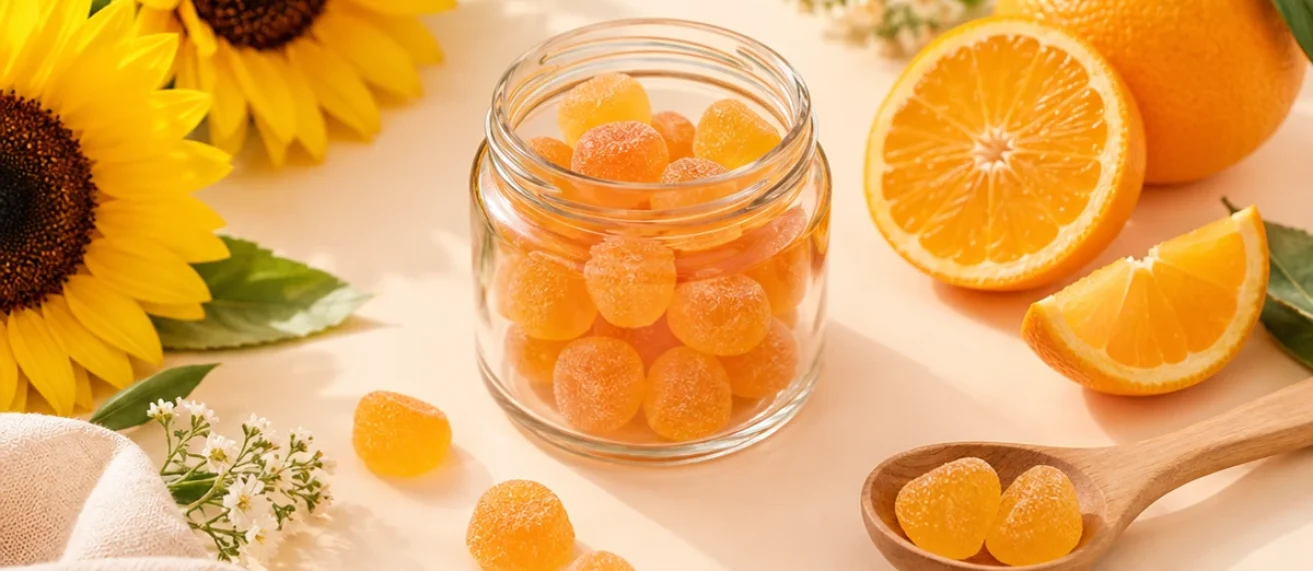
Is Vitafusion vitamin D a good choice for women in 2026? Vitafusion Vitamin D3 Gummies deliver a reliable 50 mcg (2,000 IU) dose of cholecalciferol per serving, which covers the NIH-recommended daily allowance for adult women several times over. The product also contains added sugar, gelatin, and food dyes, which may not suit every woman’s goals. For women who want a single-nutrient fix for bone and immune support, it is a reasonably effective, widely available option. Women seeking broader hormonal, sleep, or stress support may find more value in a formula that pairs vitamin D with Ayurvedic botanicals, such as Nutrahara.
Vitamin D deficiency remains common among American women. NHANES data on women of childbearing age found an age-adjusted deficiency rate of 11.1% and an inadequacy rate of 25.7%. CDC NHANES biomarker data puts female deficiency at 20.8%, with another 52.9% in the insufficient range. That gap is why so many women are comparing gummy brands like Vitafusion with more holistic, women-specific formulas.
A vitamin is only as good as the full picture it supports. Isolated vitamin D can correct a lab number, but it cannot rebalance a hormone cycle, calm a stressed nervous system, or restore disrupted sleep. Those are the issues that most often bring American women to the supplement aisle in the first place.
Vitafusion Vitamin D is a reasonable but narrow choice for women who need to correct low vitamin D levels and prefer a chewable format over pills. It was not formulated with women’s hormonal or life-stage needs in mind, and it does not address the sleep, stress, or energy concerns that often accompany low vitamin D.
Each two-gummy serving of Vitafusion Vitamin D3 Gummy Vitamins supplies 50 mcg (2,000 IU) of vitamin D, equal to 250% of the standard daily value. That dose sits under the NIH tolerable upper intake level of 100 mcg (4,000 IU) for adults, so it is not dangerous for most healthy women. It is also far above the basic RDA of 15 mcg (600 IU) for women ages 19 to 70.
Key Takeaway: Vitafusion Vitamin D is a competent single-ingredient supplement. Whether it fits depends on whether a narrow gummy covers your full wellness picture, or whether a broader, Ayurveda-informed formula like Nutrahara better matches your symptoms.
Beyond the active vitamin D3, Vitafusion gummies contain inactive ingredients that matter for women managing sugar intake, dietary restrictions, or sensitivities. Read the full label rather than relying on front-of-package claims.
According to CVS Pharmacy’s product listing, the active ingredient is vitamin D3 (as cholecalciferol). Inactive ingredients include glucose syrup, sucrose, water, gelatin, canola lecithin, citric acid, multiple color additives, lactic acid, and medium chain triglycerides.
| Attribute | Vitafusion Vitamin D3 Gummies | Why It Matters for Women |
|---|---|---|
| Vitamin D per serving | 50 mcg (2,000 IU) | Well above the 15 mcg RDA; appropriate for correcting mild deficiency |
| Added sugar | 3 g per 2-gummy serving | Contributes to the AHA’s 25 g daily added-sugar limit for women |
| Gelatin base | Animal-derived | Not suitable for vegetarian or vegan women |
| Added botanicals or adaptogens | None | No support for hormone balance, stress, or sleep |
| Allergen notes | Contains tree nuts (coconut) | Relevant for women with nut sensitivities |
The nutrition facts panel confirms that each two-gummy serving carries 3 grams of added sugar and 15 calories. That seems small, but dental experts note that sugar and citric acid in gummies can erode enamel, and the sticky texture keeps sugar against teeth far longer than a swallowed capsule would.
Key Takeaway: Vitafusion Vitamin D is a straightforward, sugar-sweetened delivery system for one nutrient. That suits basic supplementation but is limited for women seeking broader support.
Women’s vitamin D requirements shift across life stages, and a flat 2,000 IU gummy cannot account for those differences.
The NIH Office of Dietary Supplements sets the RDA at 600 IU (15 mcg) for adults ages 19 to 70, including pregnant and breastfeeding women, rising to 800 IU (20 mcg) after age 70.
| Life Stage | Official RDA | Expert-Suggested Range | Does Vitafusion’s 2,000 IU Fit? |
|---|---|---|---|
| Adults 19-70 | 600 IU (15 mcg) | 1,500-2,000 IU | Yes, within expert range |
| Pregnant/breastfeeding | 600 IU (15 mcg) | 1,000-2,000 IU | Possibly high; consult an OB-GYN first |
| Postmenopausal | 600-800 IU | 1,000-2,000 IU | Within range, but lacks bone-supportive cofactors |
| Adults 71+ | 800 IU (20 mcg) | 800-2,000 IU | Yes, but monitor for fall and fracture risk at high doses |
The Endocrine Society suggests many adults benefit from 1,500 to 2,000 IU daily. Research summarized by the same source notes that postmenopausal women may benefit from 1,000 to 2,000 IU daily to help offset bone loss linked to declining estrogen. Vitafusion’s dose falls in that window, but the formula includes no calcium, magnesium, or vitamin K2 to support the bone metabolism pathway vitamin D depends on.
A Harvard Nutrition Source review found that women ages 51 to 71 took in a median of just 308 IU of vitamin D daily from food and supplements combined, well under half the Endocrine Society’s suggested maintenance range, according to Harvard T.H. Chan School of Public Health.
Key Takeaway: Vitafusion’s dosing is defensible for a healthy adult woman, but it does not account for pregnancy, menopause, obesity, or absorption differences.
Vitafusion and Nutrahara represent two philosophies. One treats vitamin D as a standalone nutrient target; the other treats it as one piece of a larger hormonal and nervous-system picture. For women drawn to Ayurvedic wellness, that distinction matters more than the IU count.
Ayurveda does not isolate vitamin D as a single nutrient. It frames healthy sun exposure as a source of prana (life force) and ojas (vital essence), the subtle reserve linked to immunity, hormonal steadiness, and resilience. As one Ayurvedic health resource explains, “Ojas is considered the essence of vitality and immunity in Ayurveda”. A single-nutrient gummy may correct a lab value without supporting agni (the metabolic fire responsible for digestion and transformation) or the hormonal balance Ayurveda sees as the deeper foundation of vitality.
Nutrahara builds its formulas on the idea that concerns such as hormonal swings, disrupted sleep, low energy, and stress rarely come from one missing nutrient. The brand blends clinically studied Ayurvedic herbs, often sourced from the Himalayas, with essential vitamins across product lines addressing hormonal balance, digestive and liver health, sleep, cognitive support, and hair, skin, and nail wellness. Formulas include FemmePower for hormonal balance and RestoraSleep for rest and recovery.
| Comparison Point | Vitafusion Vitamin D Gummies | Nutrahara’s Approach |
|---|---|---|
| Core formulation philosophy | Single isolated nutrient (D3) | Ayurvedic herbs plus targeted vitamins for whole-body balance |
| Hormonal and sleep support | Not included | Addressed through dedicated formulas like FemmePower and RestoraSleep |
| Added sugar per serving | 3 g | Formulated with women’s holistic wellness as the design priority |
| Target audience | General adult population | Women specifically, across hormonal and life-stage needs |
| Wellness framework | Conventional supplement science only | Ayurvedic wisdom integrated with modern nutritional research |
Key Takeaway: When comparing Vitafusion vs Nutrahara vitamin D supplements, the real question is not just “how many IUs?” but “how much of my actual symptom picture does this address?” On that measure, an Ayurveda-informed, women-specific formula has a structural advantage over a single-vitamin gummy. For a side-by-side breakdown, see A Deep Follow Dive into the Different Vitafusion Multivitamin ….
Choosing the best vitamin D supplement for women means looking past the IU number on the front label. Evaluate sugar content, format, additional ingredients, and whether the product supports your broader goals.
Key Takeaway: The best vitamin D supplement for women in 2026 matches tested blood levels, life stage, and broader wellness goals. For many women, that means pairing or replacing a single-nutrient gummy with a more holistic, Ayurveda-informed formula.
Vitafusion Vitamin D delivers a dependable, well-studied dose of cholecalciferol in a convenient gummy format. It is a passable option for women who need a straightforward vitamin D top-up and nothing more. For women dealing with hormonal shifts, sleep disruption, stress, or a desire to align with Ayurvedic principles, a single-nutrient gummy leaves real gaps.
If you’re weighing this decision in 2026, start with a blood test and talk to a healthcare provider about your life stage. Then ask whether a single-nutrient gummy or a comprehensive, women-focused formula matches your goals.
Vitafusion Vitamin D is a reasonable choice for women who simply need to correct a vitamin D shortfall. Its 50 mcg (2,000 IU) serving covers standard daily needs. It is not designed to address hormonal balance, sleep, or stress. Women with those concerns may find a broader, Ayurveda-informed formula like Nutrahara a better fit.
The NIH Office of Dietary Supplements sets the RDA at 600 IU (15 mcg) daily for women ages 19 to 70, rising to 800 IU (20 mcg) after age 70. This includes pregnant and breastfeeding women. The Endocrine Society suggests 1,500 to 2,000 IU daily for maintenance in many adults.
Each two-gummy serving contains 3 grams of added sugar, according to product nutrition facts. That falls within the typical 2 to 8 grams found in most gummy vitamins, but it still counts toward the American Heart Association’s recommended 25-gram daily added-sugar limit for women.
The best choice depends on individual needs. Women who only need to correct a lab deficiency may do fine with a standard gummy like Vitafusion. Women managing hormonal, sleep, or stress symptoms alongside low vitamin D often benefit more from a holistic, women-specific formula, such as those from Nutrahara.
In Ayurveda, healthy sun exposure and adequate vitamin D are linked to building ojas, the body’s vital essence, which is connected to immunity, hormonal steadiness, and vitality. As one Ayurvedic source notes, good vitamin D levels contribute to ojas because they support bone health, immunity, and mood.
Pregnant and breastfeeding women have an RDA of 600 IU daily, though some research suggests doses between 1,000 and 2,000 IU may be beneficial, per reviewed dosing guidance for women. Any dose should be discussed with an OB-GYN first. Postmenopausal women may also benefit from 1,000 to 2,000 IU daily, but a flat retail gummy dose should not replace individualized medical advice.
Women often choose Nutrahara because its formulas combine clinically studied Ayurvedic herbs with essential nutrients to target hormonal balance, sleep, stress, and overall vitality. This appeals to women who see low vitamin D as one symptom of a larger pattern rather than an isolated deficiency.
Some research suggests gummy D3 may be absorbed more efficiently than tablets. A small crossover study found gummies produced roughly double the peak blood concentration compared to tablets in healthy adults. Gummies also carry added sugar and acidity that can affect dental health, so it’s a trade-off worth weighing against convenience.
This article was researched using publicly available product labels, peer-reviewed nutrition research, and guidance from the National Institutes of Health, Harvard T.H. Chan School of Public Health, and other cited sources current as of November 2026. It is intended for general educational purposes and is not a substitute for personalized medical advice. Women should consult a qualified healthcare provider before starting or changing any supplement regimen.