
Mental wellbeing is shaped by more than what happens in your mind; it can shift with your body, relationships, and stage of life. Women’s mental health matters because emotional wellbeing is part of overall health, from the years of menstruation and pregnancy to menopause and beyond.
If stress, low mood, or anxiety feel difficult to manage, you’re not alone. This guide explains common signs of mental health concerns and how life-stage changes, including menopause, may affect how you feel. It also covers practical ways to care for yourself, from movement, yoga, and meditation to nourishing routines and seeking professional help when symptoms persist or disrupt daily life.
Find grounded guidance to help you notice changes without judging yourself, build habits that support wellbeing, and recognize when additional care may help. Small, steady steps can bring you closer to your needs and help you feel more confident in your wellness journey.
Pregnancy, postpartum recovery, and perimenopause can bring changes in mood, sleep, and daily demands. Recognizing persistent distress helps women seek support before symptoms disrupt wellbeing or caregiving.
Perinatal depression and anxiety are mental health concerns that can arise during pregnancy or after birth. About 20% of pregnant women experience postpartum anxiety or postpartum depression. Symptoms can include ongoing sadness, anger or irritability, guilt, persistent worry, appetite or sleep changes beyond newborn care, difficulty concentrating, trouble bonding with the baby, and feeling constantly overwhelmed. Notice patterns that persist or affect daily life, and share them with a health professional; therapy is one possible form of care.
Postpartum depression involves persistent emotional symptoms after birth, while postpartum psychosis can include seeing or hearing things others don’t, extreme behavior, or thoughts of harm. These symptoms matter because they can affect the parent’s safety and the baby’s safety. Thoughts of suicide or harming the baby, or a loss of contact with reality, call for urgent help. In a life-threatening situation in the United States, call 911, according to the National 911 Program.
Research into perimenopausal depression examines how hormonal changes, disrupted sleep, and life stress may relate to mood. Mood changes during this transition deserve attention, especially if low feelings or anxiety persist or interfere with work, relationships, or self-care. Tracking mood, sleep, and cycle changes can make patterns easier to discuss when you seek support.
In the United States, therapy and psychiatric care costs depend on insurance coverage, plan benefits, provider networks, and the type of care. Without insurance, fees vary by provider and service. Medication safety during pregnancy or breastfeeding depends on the specific medicine and individual circumstances. Before changing treatment, a clinician weighs potential benefits and risks, including pregnancy stage and breastfeeding.
For emotional distress or suicidal crisis in the United States, call or text 988; the Substance Abuse and Mental Health Services Administration says the 988 Suicide & Crisis Lifeline provides support 24 hours a day, 7 days a week.
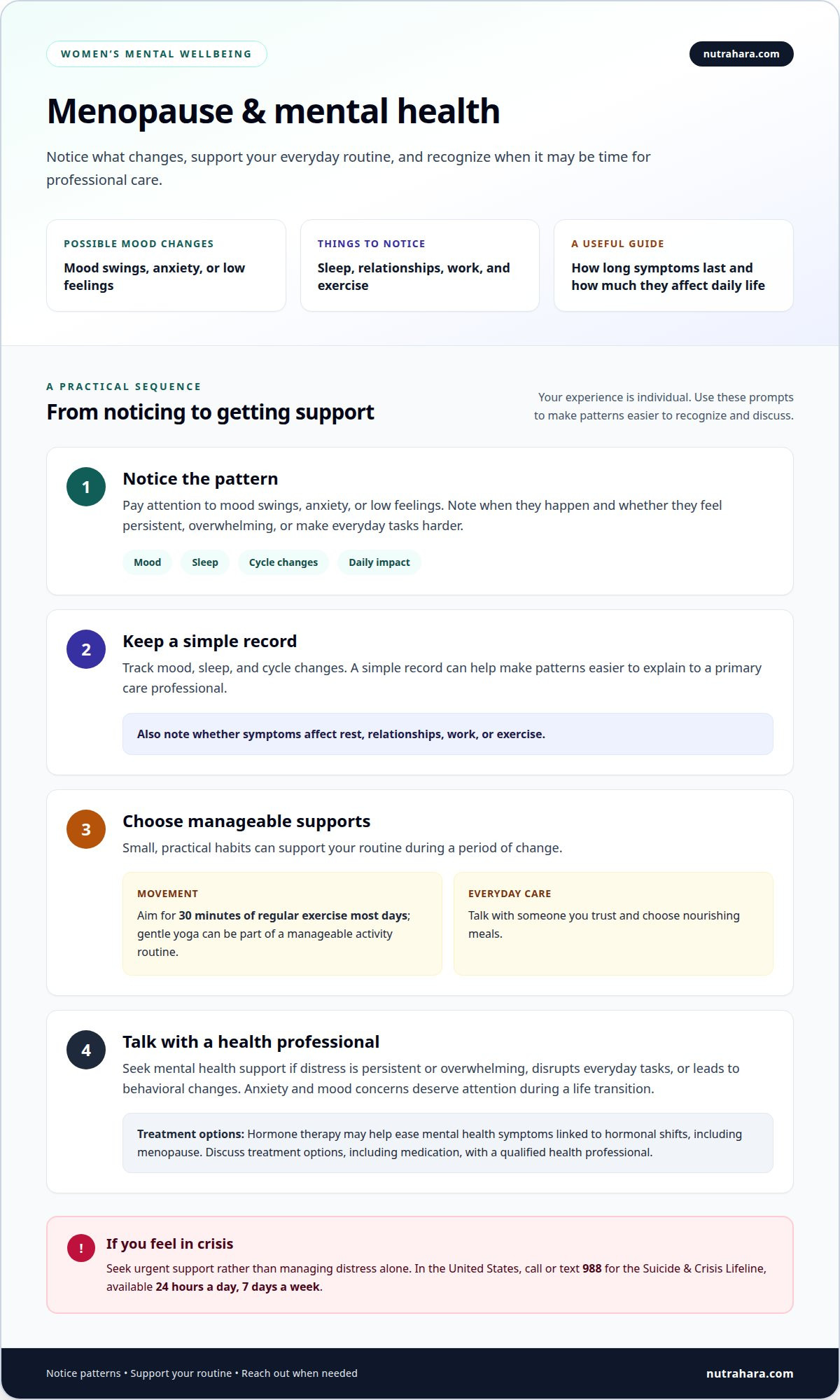
Menopause can bring emotional changes alongside physical symptoms, affecting everyday routines. Understanding what may shift and when to seek support can help you respond with care.
Mood swings, anxiety, and low feelings can accompany menopause. Pay attention when they persist, feel overwhelming, or make everyday tasks harder. Note when they occur and whether they affect sleep, relationships, work, or exercise. A simple record of mood and symptoms can help you explain the pattern to a primary care professional.
Menopause-related stress can involve physical discomfort and emotional strain during a period of change. When symptoms disrupt rest or make usual activities harder, stress may build and affect your mood. Try talking with someone you trust, maintaining a manageable activity routine, and choosing nourishing meals. Regular exercise, including gentle yoga, can also support your routine.
Menopausal symptoms may include mood swings, anxiety, and low feelings, alongside physical changes. Their effects vary, so note which symptoms interfere with daily life. If distress becomes overwhelming or persistent, disrupts everyday tasks, or leads to behavioral changes, seek mental health support. Anxiety and mood concerns deserve attention even when they arise during a major life transition.
For a practical foundation, aim for 30 minutes of regular exercise most days, and make time to talk about how you feel. Eating well and staying active can also support wellbeing. Hormone therapy may help ease mental health symptoms linked to hormonal shifts, including menopause; discuss treatment options, including medication, with a qualified health professional. If you feel in crisis, seek urgent support rather than managing distress alone.
Symptoms can affect mood, sleep, concentration, relationships, and physical comfort. Their timing, persistence, and impact on daily life can help guide a conversation about mental health care.
Premenstrual syndrome (PMS) describes recurring emotional or physical symptoms before a period. Premenstrual dysphoric disorder (PMDD) involves severe mood symptoms linked to the menstrual cycle. Tracking feelings and symptoms across cycles can help clarify whether they follow a pattern. If recurring distress affects work, relationships, or self-care, discuss it with a health professional instead of dismissing it as ordinary stress.
Some physical conditions can cause symptoms that resemble psychiatric concerns, so an assessment should consider both mental and physical health. Bringing psychiatry, primary care, and medical specialties together can help clinicians identify whether psychiatric symptoms may be related to an underlying medical condition. Share when symptoms began, changes in sleep or energy, and any physical concerns to support a more complete evaluation.
Depression may involve hopelessness or loneliness, low energy, reduced interest, sleep problems, or appetite changes. Anxiety more often involves persistent worry, dread, irritability, difficulty concentrating, avoidance, or physical symptoms such as headaches or an upset stomach. The experiences can overlap, and women may have both. Thoughts of suicide or not wanting to be alive need urgent attention.
Trauma, violence, and discrimination can contribute to distress and make seeking support harder. Sexual violence can cause PTSD, and women are more likely than men to experience physical and sexual abuse. Poverty, caregiving burdens, and intimate partner violence are also mental health risk factors.
Before pregnancy, discuss psychiatric conditions and current medication with a qualified clinician. Planning may include reviewing symptoms, treatment needs, and how care could change during pregnancy or postpartum. Don’t stop prescribed medication without professional guidance. Anxiety, depression, OCD, bipolar disorder, ADHD, and trauma-related disorders can affect women. ADHD may be overlooked when coping strategies mask inattentive symptoms.
Hormonal changes during puberty, pregnancy, after childbirth, and menopause can affect emotional wellbeing. Tracking symptoms alongside life events can help you describe what has changed and when.
During your reproductive years, note whether mood changes follow your menstrual cycle, pregnancy, or major stress. A brief record of sleep, energy, feelings, and daily functioning can give a care provider useful context. It may also help distinguish a recurring pattern from a new concern that needs attention.
Pregnancy and the postpartum period bring changes in routine as well as reproductive hormones. The baby blues can involve emotional changes after birth, but typically resolve within a few weeks and don’t interfere with caring for or bonding with the baby. Discuss symptoms that persist or make everyday care difficult with a health care professional.
Maternal mental health care can be tailored to symptoms and personal needs. Perinatal depression treatment may include talking therapy, medication, or specialist services. If you’re pregnant, lactating, or planning a pregnancy, describe your symptoms and current treatment to your care provider. Don’t change medication without professional guidance.
Menopause can coincide with mood swings, anxiety, or low feelings. Record emotional changes alongside physical symptoms and sleep disruptions, then discuss persistent distress with a health professional. This can make conversations about care options more focused.
At every life stage, steady routines can create moments of balance. Try gentle yoga, a walk, or meditation, and notice how your mood responds. Regular meals, rest, and connection with trusted people can support wellbeing. Persistent symptoms may call for professional care.
At Nutrahara, we believe that understanding your body through every transition is a vital step toward reclaiming your balance and long-term wellness.
Nutrahara offers Women’s Health Supplements as one option within a thoughtful wellness routine. Its supplements combine principles of ancient Ayurveda science with modern nutritional research, using natural, clean ingredients. They may suit women seeking to complement everyday habits that support overall wellness, energy, and health through changing life stages.
Supplements aren’t a treatment for depression, anxiety, or other mental health conditions, and they don’t replace professional care. If emotional symptoms persist or disrupt daily life, prioritize appropriate mental health support; consider supplements as a separate part of your broader routine. For questions about adding women’s health supplements to your wellness journey, contact Nutrahara.
Your wellbeing deserves attention as your needs change. Choose a supportive practice you can return to, whether it’s a calm morning walk, a few mindful breaths, or a conversation with someone you trust. Notice what helps you feel steadier and let that guide your next step. Seeking professional care for persistent distress is also an act of self-respect.
Supporting women’s mental health isn’t about doing everything perfectly. It’s about listening to yourself, allowing your priorities to evolve, and building a routine that reflects your life today. If women’s health supplements feel like a useful part of your wider wellness approach, explore that option thoughtfully.
Explore Nutrahara’s women’s wellness support as you shape a routine that feels right for you. Every considered step is a way to invest in your wellbeing, and you can keep moving forward with confidence.
Women are more likely than men to experience depression, anxiety, and post-traumatic stress disorder, though each person’s experience is different. Biology and social conditions can shape symptoms and access to support. Reproductive transitions, caregiving, trauma, and financial strain may all matter in an individual assessment. Describe your own history and concerns rather than assuming a diagnosis based on gender alone.
Consider seeking support when emotional distress persists, makes everyday responsibilities difficult, or changes how you relate to others. You can start by writing down what feels different, when it occurs, and what activities it affects. Bring those examples to a health professional to make the conversation more specific. In the United States, call or text 988 for emotional distress or suicidal crisis.
Depression may involve persistent sadness or hopelessness, loneliness, low energy, loss of interest, sleep changes, or appetite changes. Some women also find it harder to concentrate or manage familiar routines. Notice whether these changes affect work, relationships, or self-care, and explain how long they have been present when seeking support. Thoughts of suicide or not wanting to be alive require urgent attention.
Anxiety can involve ongoing worry, dread, irritability, difficulty concentrating, avoidance, sleep problems, or physical discomfort such as headaches or an upset stomach. It may overlap with depression, so describing both emotional and physical experiences can help clarify what’s happening. Note which situations intensify worry, such as work demands or family responsibilities, and whether it interferes with daily routines.
Treatment may involve therapy, medication, or both, depending on symptoms and personal circumstances. To begin, tell a health professional what has changed, how it affects daily life, and what support you’ve already tried. Ask what treatment involves, how you’ll discuss progress, and what to do if symptoms change. These questions can make care collaborative and focused on your needs.
Common mental health conditions affecting women include anxiety disorders, depression, obsessive-compulsive disorder, bipolar disorder, ADHD, and trauma- and stressor-related disorders. This list doesn’t tell you which condition any one person has. Symptoms can overlap, and life transitions, trauma, or family history may inform an assessment. Share examples of how symptoms affect your routines, relationships, and wellbeing to support a clearer conversation about care.
This article is not a substitute for medical advice. Please consult a healthcare professional before starting any supplement, especially if pregnant, nursing, taking medication, or managing health conditions.