Do supplements and vitamins for pre-menopausal women ease perimenopause symptoms, or are they mainly useful when you have a nutrient deficiency? Supplements may support specific needs, but no single option works for everyone or replaces a balanced approach to health. Choosing thoughtfully matters more than taking a long list.
It’s understandable to want practical support when changes in sleep, mood, energy, or menstrual cycles affect how you feel and exercise. This guide explains what phytoestrogens may offer, why calcium matters for bone health, and how magnesium fits into discussions about sleep and mood. It also covers what blood work can reveal about nutrient levels, and what it cannot.
You’ll find a clear, grounded way to consider each option, alongside everyday foundations such as nourishing food, regular movement, yoga, and meditation. The aim isn’t to chase a perfect routine, but to make informed choices that support your well-being through this changing stage of life.
Plant phytoestrogens are compounds found in soy products and some fruits and vegetables. Isoflavones, a type of phytoestrogen, occur in soybeans, other legumes, and red clover. Lignans are found in flaxseed, whole grains, and some fruits and vegetables. Menopause is the point 12 months after a woman’s last period, according to the National Institute on Aging. Symptoms can arise before that milestone, so a changing cycle alone doesn’t define when menopause has occurred.
Food sources and concentrated supplements aren’t interchangeable. Research is unclear on whether phytoestrogens from foods or supplements ease menopause symptoms or affect breast cancer risk. Flaxseed contains omega-3 fatty acids and lignans, and it may help reduce hot-flash intensity and frequency. A small study followed women who took flaxseed for three consecutive months, but that finding doesn’t establish a reliable effect for every person. Track symptoms such as hot flashes, anxiety, or changes in cognitive function rather than assuming a botanical will improve them.
For PMS and fatigue, evidence does not establish a reliable benefit from phytoestrogen supplements; calcium is more directly relevant to bone health. The right choice depends on the nutrient and concern, not a general promise to improve function or protect health. Supplements are most useful when they address a specific dietary shortfall or identified need, not simply because a symptom appears during the menopause transition.
For food sources, try soybeans or lentils for isoflavones, and ground flaxseed or whole grains for lignans. Supplements may be considered when food intake doesn’t meet a specific need, with professional guidance to assess the reason and safe use. Black cohosh is a botanical, not a phytoestrogen source; evidence is insufficient to determine whether it helps hot flashes or other menopausal symptoms. Its risks aren’t fully understood, and it can affect liver enzymes. Some studies suggest possible liver harm, so discuss herbal products with a healthcare professional before using them.
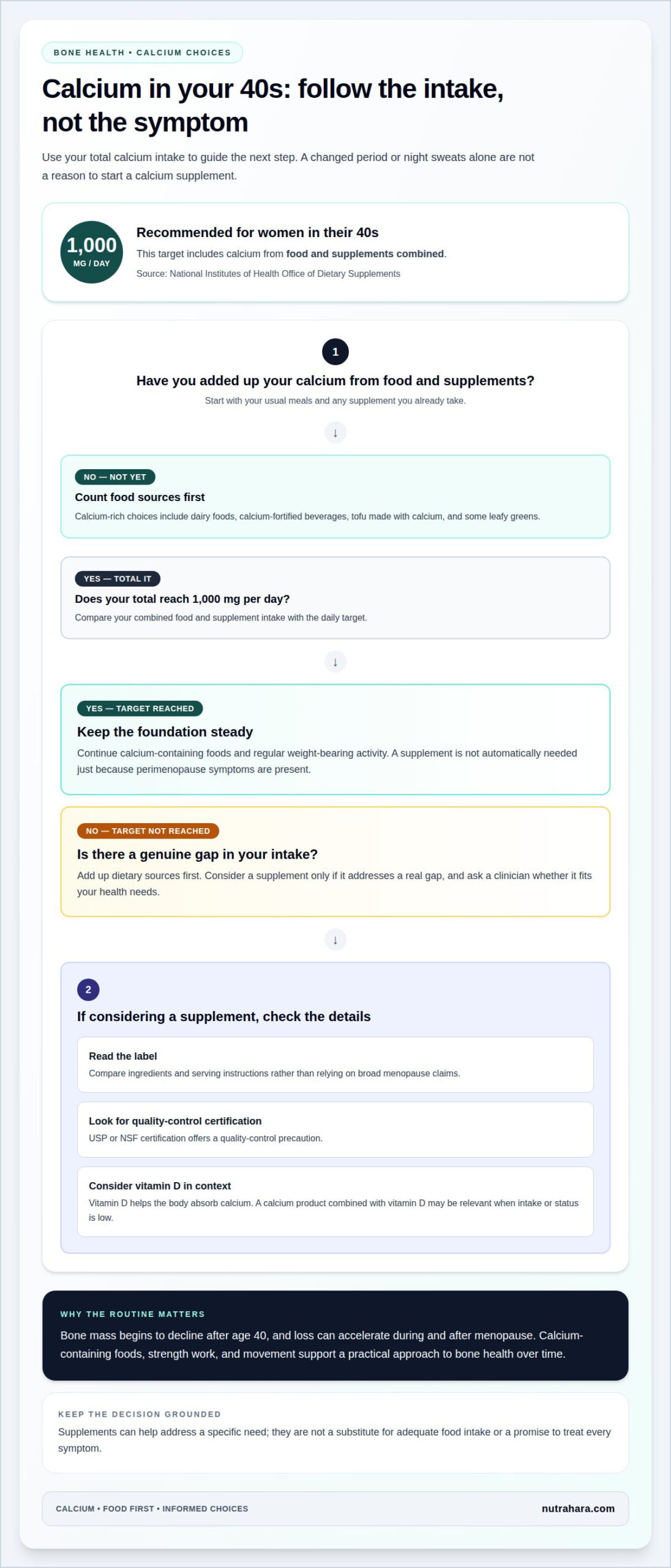
Women in their 40s are recommended to consume 1,000 mg of calcium per day, according to the National Institutes of Health Office of Dietary Supplements. This target includes calcium from food and supplements combined. Calcium-rich choices include dairy foods, calcium-fortified beverages, tofu made with calcium, and some leafy greens. Pairing varied meals with regular weight-bearing activity supports a practical approach to bone health.
Bone mass begins to decline after age 40, and loss can accelerate during and after menopause. Changing estrogen levels are part of this transition, while night sweats and disrupted sleep may affect energy for exercise. Calcium supplements can help prevent bone loss and reduce fracture risk during perimenopause, but they aren’t a substitute for adequate food intake. Add up dietary sources first, then consider whether a supplement addresses a genuine gap.
Vitamin D supports bone health and plays a role in mood regulation. It also helps the body absorb calcium, so a calcium product combined with vitamin D may be relevant when intake or status is low. Interpret supplement evidence in context: a nutrient can support normal function without treating every symptom or replacing medicine. For supplement quality, USP or NSF certification offers a quality-control precaution. Compare the label’s ingredients, serving instructions, and certification rather than choosing based on broad menopause claims.
Recommended amounts of iron, vitamin D, folate, and other nutrients depend on life stage and individual needs; the clear daily figure here is for calcium. To compare prices, assess the specific nutrient, formulation, and serving count, since products differ in these details. Don’t use night sweats or a changed period alone as a reason to start calcium. A steady routine of calcium-containing foods, strength work, and movement can support bone health over time, while a clinician can help assess whether supplements fit your health needs.
Magnesium supports more than 300 enzymatic reactions, including processes involved in muscle and nerve function. During perimenopause, changing sleep patterns and daily stress can make it harder to feel balanced. Magnesium may promote relaxation and improve sleep quality, but it isn’t a stand-alone treatment for persistent insomnia, anxiety, or low mood.
Among supplements and vitamins for pre-menopausal women, magnesium is often considered for sleep support. An evening amount of 300-400 mg is often suggested. Check the amount of elemental magnesium on the supplement label, since compound weight and elemental magnesium differ. Magnesium is also found in leafy greens, nuts, seeds, beans, and whole grains. Adding these to meals can support intake while offering fiber and other nutrients.
Some people may notice sleep changes within one to two weeks, though responses vary. Keep a simple sleep log and note bedtime, waking during the night, mood, and next-day energy. This can help distinguish a possible supplement effect from changes in caffeine, exercise, or stress. Don’t increase a dose simply because sleep remains unsettled.
When reviewing supplements and vitamins for pre-menopausal women, consider your whole evening routine, not just a capsule. Try gentle evening yoga, a short meditation, and a consistent wind-down time to support relaxation. Aim for eight hours of quality sleep each night, and notice whether late workouts or screen time disrupt your rest. Magnesium supplements can also cause digestive discomfort, so pay attention to your response and discuss use with a healthcare professional, especially if you take medicine or have a health condition. Magnesium can be one part of a natural wellness plan, not a promise of significant changes in every perimenopause symptom.
Fatigue, reduced exercise capacity, or changes in concentration can have several causes. Blood work can help identify nutrient levels that may contribute and guide a more focused supplement decision. More than one-third of women are iron deficient. Heavy periods can be relevant when discussing iron, so describe your bleeding pattern and symptoms clearly.
Vitamin D is another nutrient to discuss, especially if muscle weakness affects training or daily movement. Vitamin D levels below 29 ng/ml are linked with poor lower body function, particularly in women. An optimal serum vitamin D level is around 40-60 ng/mL for most people. These figures provide context, but one result should be considered alongside your health history and symptoms.
Iron, calcium, vitamin D, folate, and magnesium are nutrients to discuss before starting a supplement routine. The priority depends on your diet, symptoms, life stage, and existing test results. Supplements may complement nutrition or prescribed therapy, but taking more nutrients doesn’t automatically help. A targeted plan can avoid adding products that don’t address a real need.
Pregnancy, trying to conceive, and heavy periods can change which nutrients deserve attention. Tell your healthcare professional about pregnancy plans, bleeding patterns, medicines, and current supplements. These details help shape a relevant assessment rather than relying on a general formula.
Ask which blood tests could clarify suspected deficiencies, what each result means, and whether a supplement could interact with medicine. Iron and vitamin D levels may be assessed when symptoms or health history point to them. Ask how the results relate to your energy, exercise capacity, and any plan to reduce symptoms. Bring a list of supplements and note when fatigue or weakness occurs. Blood work offers useful clues; a complete review connects those levels with food, menstrual history, and overall health.
Nutrahara offers Women’s Health Supplements for women seeking nutritional support as part of a thoughtful wellness routine. Its formulations bring together principles of ancient Ayurveda science and modern nutritional research, with natural, clean ingredients. If you’re considering supplements alongside nourishing food, movement, and rest, explore options with your needs and current routine in mind. Supplements can complement healthy habits, but they don’t replace blood work or individualized medical advice when symptoms or suspected deficiencies need attention. A steady approach helps you make choices that fit your personal health journey. For questions about Nutrahara’s Women’s Health Supplements, contact Nutrahara.
Your next step can be small and intentional: identify what you want support with, then choose a routine that fits daily life. Choosing supplements and vitamins for pre-menopausal women is more grounded when you consider your diet, symptoms, health history, and goals together. A simple log of sleep, energy, mood, and movement can help you spot patterns and have a clearer conversation with a healthcare professional.
Keep the foundations steady, too. Nourishing meals, strength-focused exercise, restorative yoga, and a few quiet minutes for meditation can support well-being alongside thoughtful supplement choices. You don’t need to change everything at once. Give yourself room to learn what feels sustainable, and adjust your approach as your needs evolve.
Many women find that sharing their experiences and listening to others navigating the same life stage provides reassurance and practical insights for daily wellness.
For support exploring women’s health supplements as part of your wellness routine, Contact Nutrahara for support. Your health journey is your own, and each informed step can help you move forward with confidence.
Some supplements may support a specific need, but effects depend on the ingredient and symptom. To assess your routine, choose one goal, such as steadier sleep, and note what changes alongside your meals, activity, and stress. If symptoms persist or interfere with daily life, discuss other options with a healthcare professional rather than relying on supplements alone.
Safety depends on the ingredients, dose, health conditions, and medicines in your routine. Read the full label, including serving directions and combined ingredients, and keep a current list of everything you take. USP or NSF certification can offer a quality-control precaution, but it doesn’t establish that a product is right for everyone. Review the label with a healthcare professional if you have concerns.
Vitamins can help address a nutrient shortfall, but they don’t treat every cause of symptoms such as fatigue or mood changes. Consider the pattern: note whether tiredness follows poor sleep, heavy bleeding, a demanding workout, or a change in eating habits. Sharing that context can help a healthcare professional decide whether testing or a dietary change is more appropriate than adding a general multivitamin.
Use the daily intake recommendation discussed above as a guide, counting food and supplements together. Check labels on fortified drinks, yogurt, and calcium products, then total the amounts you typically consume. If you already take a multivitamin, include its calcium too. This simple tally can help you identify whether your usual meals contribute meaningfully before considering another product.
Possible effects vary by ingredient, dose, and individual health factors. For example, black cohosh has been associated with possible liver harm, and herbal products may interact with medicines. Avoid combining products with overlapping ingredients without reviewing their total amounts. Ask a healthcare professional which upper limits apply to your supplements and what signs of an unwanted reaction should prompt you to stop and seek advice.
Yes, some supplements can interact with medicines, and pregnancy can change which nutrients are appropriate. Tell your healthcare professional about birth control, prescriptions, over-the-counter medicines, pregnancy plans, and breastfeeding. Bring the product label or a clear photo of its ingredients. This gives them the details needed to consider possible interactions and whether the supplement fits your current life stage.
This article is not a substitute for medical advice. Please consult a healthcare professional before starting any supplement, especially if pregnant, nursing, taking medication, or managing health conditions.