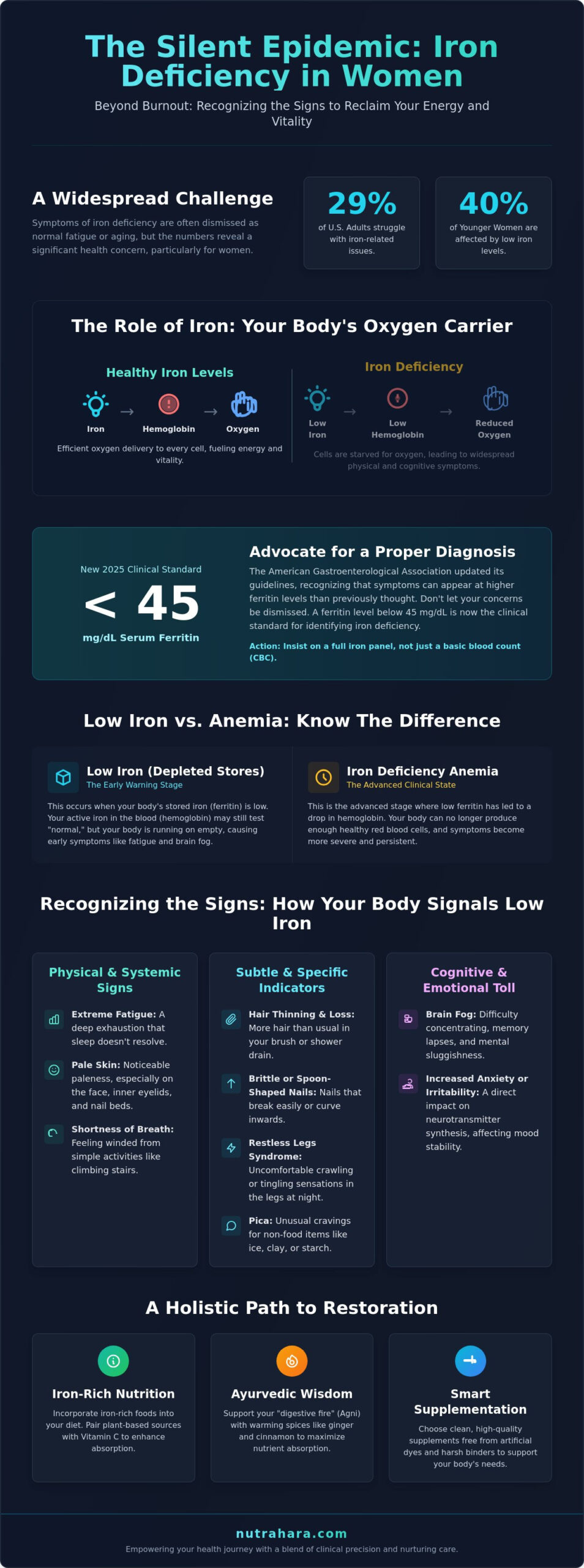
A 2024 study revealed that approximately 29% of U.S. adults struggle with iron issues, yet for many women, the symptoms are often dismissed as simple burnout or the natural effects of aging. You might find yourself waking up exhausted after eight hours of sleep or noticing more hair in your brush than usual. It’s deeply frustrating to feel your vitality slipping away when you’re dedicated to a healthy lifestyle. Recognizing the signs of iron deficiency in women is the first step toward reclaiming your natural rhythm and inner strength.
We believe that your health journey deserves a blend of clinical precision and nurturing care. This guide promises to help you bridge the gap between modern science and ancient holistic wisdom. You’ll learn why the American Gastroenterological Association updated its diagnostic standards in 2025 to a serum ferritin level of less than 45 mg/dL. We’ll also provide an actionable list of physical and emotional symptoms to discuss with your doctor, alongside Ayurvedic-inspired strategies to boost absorption. It’s time to clear the brain fog and restore the vibrant energy you deserve.
Iron deficiency is a state where your body lacks the essential mineral needed to produce hemoglobin, the protein in red blood cells that carries oxygen to your organs. In the tradition of Ayurveda, we look at the blood tissue, known as Raktha Dhatu, as the primary vehicle for your life force. When your blood is healthy and rich, your energy is vibrant; when it’s depleted, your vitality fades. This condition has become a “silent epidemic,” affecting nearly 40% of younger women and countless others navigating the hormonal shifts of perimenopause. Many women suffer for years because their persistent exhaustion is dismissed as a normal part of a busy life. Iron deficiency anemia is a clinical state where hemoglobin levels drop due to insufficient mineral stores, leaving the body struggling to function at its most basic level.
For those seeking a comprehensive overview of iron deficiency, it’s clear that the impact reaches far beyond a simple lab value. It affects your mental clarity, your physical endurance, and your emotional resilience. Recognizing the signs of iron deficiency in women is the first step toward restoring your internal balance and reclaiming your strength.
Iron acts as the primary vehicle for oxygen in your bloodstream. It binds to oxygen in the lungs and delivers it to every cell, from your heart to your fingertips. When iron levels are low, cellular oxygenation suffers. This lack of oxygen is why you might feel winded after climbing stairs or find your usual yoga practice unusually taxing. It often feels like a subtle, internal “suffocation” where your body is gasping for the fuel it needs to thrive and repair itself.
Understanding the distinction between low iron and clinical anemia is crucial for your wellness journey. Hemoglobin represents the iron actively working in your blood, while ferritin measures the iron you have in storage. You can experience the signs of iron deficiency in women even when your hemoglobin is technically within the “normal” range. If your ferritin stores are low, your body is already struggling to keep up with daily demands. Don’t settle for a basic Complete Blood Count (CBC); insist on a full iron panel to get a clear picture of your long-term health progression.
Your body has a language of its own. When it speaks through persistent exhaustion, it’s often signaling a deeper mineral imbalance. The “Big Three” physical signs of iron deficiency in women include extreme fatigue, noticeably pale skin, and shortness of breath during routine activities. This isn’t just about feeling tired after a long day; it’s a deep-seated lack of energy that sleep doesn’t fix. When your cells are starved for oxygen, even the simplest tasks can feel like a climb up a steep mountain.
Beyond basic energy, iron is necessary to maintain healthy cells, skin, hair, and nails. You might notice your nails becoming brittle or developing a concave, spoon-like shape. Significant hair thinning can also occur, which is often a source of anxiety for many women. Supporting your body with a Vitamin B Complex can help manage the metabolic side of fatigue while you work to address the underlying mineral shortage. This dual approach ensures you’re nurturing your system from multiple angles.
Some indicators are less obvious but equally telling for your health progression. You might experience pica, which is a strange craving for non-food items like ice, dirt, or starch. Restless legs syndrome, that uncomfortable crawling sensation in your limbs at night, is another common signal that your stores are low. For a deeper look at these clinical markers, the Office on Women’s Health provides detailed Iron-deficiency anemia information for women to help you understand the diagnostic landscape.
Low iron doesn’t just affect your muscles; it alters your mind. Brain fog can make it difficult to focus at work or find stillness during your morning meditation. Because iron is essential for neurotransmitter synthesis, a shortage can lead to increased anxiety or irritability. When your brain receives less oxygen, your mood stability often falters, making daily stressors feel significantly more overwhelming than usual.
If you’re an active woman, you’ll likely feel these changes in your yoga practice. Poses that were once effortless might now leave you trembling or breathless. Your recovery time after exercise may slow down, leaving you feeling depleted for days. You might also notice chronically cold hands and feet, as your body prioritizes sending oxygen-rich blood to your core organs. Heart palpitations are another sign, as your heart works harder to pump limited oxygen throughout your system. To support your body’s journey back to balance, consider exploring how targeted wellness support can help restore your natural vitality and inner calm.
A woman’s relationship with iron is a lifelong dialogue that shifts through every decade. In your 30s, the primary challenge often stems from menstruation. Conditions like uterine fibroids or simply heavy cycles can quietly drain your stores month after month. During pregnancy, your body undergoes a massive physiological expansion. It requires significantly more iron to support the developing fetus and the increased blood volume needed for a healthy delivery. After birth, the postpartum period demands even more support to recover from blood loss and sustain lactation.
The “Perimenopause Pivot” is perhaps the most overlooked stage in a woman’s iron journey. As you enter your 40s, hormonal fluctuations can lead to erratic, heavy periods known as “flooding.” These sudden, intense cycles often cause a rapid decline in iron levels that catches many women off guard. It’s during this transition that the signs of iron deficiency in women frequently emerge, yet they’re often mistaken for general aging or stress. According to the Office on Women’s Health, understanding these shifts is vital for maintaining long-term vitality and preventing chronic depletion.
Once you reach post-menopause, your daily requirement drops. However, the challenge doesn’t disappear; it simply changes shape. While you no longer lose blood monthly, your body’s ability to absorb minerals may decrease due to changes in digestive health or lower stomach acid levels. Maintaining awareness of the signs of iron deficiency in women remains important even after your cycles have stopped.
The biological reality is straightforward: women lose blood regularly, but their dietary intake rarely compensates for this loss. Societal factors also play a role. Many women suffer from “busy woman syndrome,” where they ignore early symptoms of fatigue to keep up with work and family demands. This often leads to a significant gap in routine medical screenings, as many practitioners don’t prioritize full iron panels for non-pregnant women unless a major issue arises. This lack of proactive testing leaves many women living in a state of sub-optimal health for years.
The Recommended Dietary Allowance (RDA) provides a baseline, but it isn’t always a map for your personal “optimal” state.
If you follow a vegetarian or vegan lifestyle, your needs might be nearly double these figures because plant-based iron is harder for the body to utilize. Achieving your personal best requires looking beyond these standard averages. For those navigating these complex transitions, supporting your system with a high-quality targeted wellness supplement can help bridge the gap and maintain your inner equilibrium as you age gracefully.
Addressing the signs of iron deficiency in women involves more than just a single pill; it’s about a complete lifestyle shift that honors your body’s unique needs. Restoring your vitality requires a “Wise Guide” approach to nutrition. This means combining heme iron from animal sources with non-heme iron from plants. For instance, ground beef averaged $6.75 per pound in May 2026, providing a highly bioavailable source of minerals. If you prefer plant-based options, lentils are incredibly budget-friendly at approximately $0.15 per pound, while fresh spinach costs about $2.91 per pound. To maximize these nutrients, always pair your meals with Vitamin C. A simple squeeze of lemon or a side of citrus acts as a powerful partner, significantly boosting your body’s ability to absorb iron.
Ayurvedic wisdom teaches us that health begins with Agni, or digestive fire. You can eat the most nutrient-dense foods in the world, but they won’t help if your digestion is sluggish. Incorporating warming spices like ginger and black pepper into your meals can stoke this internal fire and improve nutrient uptake. This ancient philosophy aligns perfectly with modern nutritional science. To support your journey toward balance, exploring Ashwagandha with Black Pepper can help enhance your overall resilience and vitality. Gentle yoga also plays a vital role by improving circulation, ensuring that oxygen-rich blood reaches every cell in your body.
Building a vibrant “blood bank” starts in your kitchen. Focus on a diverse array of iron-dense foods to keep your stores topped up:
In Ayurveda, Raktha Dhatu represents the red blood tissue that carries the vital life force, or Prana, to every corner of your being.
Your daily habits are just as important as your diet. High levels of cortisol from chronic stress can interfere with how your body absorbs and uses nutrients. Practicing daily meditation can help reduce the “emotional fatigue” that often accompanies low iron, giving your nervous system a chance to rest. It’s also wise to be mindful of your beverage timing. Avoid drinking tea or coffee immediately after an iron-rich meal, as the tannins and polyphenols can block mineral absorption. By making these small, intentional changes, you’re not just treating a symptom; you’re nurturing a long-term progression toward total wellness.
Reclaiming your energy after noticing the signs of iron deficiency in women is a journey of patience and self-compassion. It’s important to view your health as a long-term progression rather than a quick fix. While diet and lifestyle form the foundation, targeted support from science-backed brands like Shop-Satisfied can often bridge the gap more efficiently. When selecting a supplement, the quality of ingredients is paramount. Many standard options contain artificial dyes, harsh binders, and synthetic additives that can irritate a sensitive digestive system. Choosing a clean formula ensures that you’re nurturing your body without adding unnecessary stress to your gut.
The Nutrahara philosophy centers on fusing ancient botanical wisdom with modern clinical validation. We believe that your supplements should be as pure as the intentions behind your wellness practice. For many women, managing the physical toll of low iron also requires addressing the emotional fatigue and stress that come with it. Integrating Nutrahara’s Ashwagandha with Black Pepper into your daily routine can support your energy levels and enhance your resilience. Sarah, a 42-year-old marathon runner and yoga enthusiast, shared that adding adaptogenic support helped her maintain focus during her recovery when her iron stores were at their lowest.
Advocating for yourself in a clinical setting is a vital skill. Many women find their symptoms dismissed as “normal” stress, but your intuition is a powerful diagnostic tool. During your next physical, use this checklist to guide the conversation:
Understanding your lab results is empowering. While hemoglobin shows what’s currently in your blood, ferritin reveals your long-term “savings account” of iron. If your stores are low, you’ll feel the effects long before you’re technically anemic.
Clean ingredients matter because your body recognizes and utilizes natural forms more effectively. Our synergistic formulas are designed to enhance bioavailability, ensuring that every nutrient serves a purpose in your health progression. We avoid the fillers that often lead to the gastrointestinal upset associated with cheaper iron salts. You have the power to reclaim your vitality, your mental clarity, and your confidence. By combining scientific precision with holistic care, you’re not just restoring a mineral; you’re reviving your life force.
Restoring your vitality is a deeply personal journey that requires both clinical awareness and holistic care. Understanding how your iron needs shift from your 30s through perimenopause and beyond allows you to stay ahead of depletion. By recognizing the signs of iron deficiency in women, you can take proactive steps to nourish your blood and your spirit. Integrating nutrient-dense whole foods with the wisdom of Ayurvedic digestion ensures your body actually utilizes the minerals you consume.
We’re here to act as your wise guide on this path toward long-term health progression. Our formulas are crafted with a commitment to purity, combining modern nutritional research with traditional natural philosophies. We use clean ingredients without artificial additives to provide nurturing support for every stage of your life. Ready to reclaim your vitality? Explore Nutrahara’s range of women’s health supplements and begin your transformation today. You don’t have to settle for feeling depleted. You possess the inner strength to restore your balance and live with vibrant, lasting energy.
Yes, you can be iron deficient without being clinically anemic. This occurs when your ferritin stores are low, but your hemoglobin levels haven’t yet dropped below the diagnostic threshold. Many women experience the subtle signs of iron deficiency in women like brain fog and fatigue long before an anemia diagnosis. The 2025 clinical guidelines now recognize a ferritin level below 45 mg/dL as a key diagnostic marker for this state.
Most women begin to notice an improvement in their energy levels within two to four weeks of starting consistent support. However, it can take three to six months to fully replenish your ferritin stores. Your personal health progression depends on the severity of your initial deficiency and your body’s absorption efficiency. Consistency is the key to reclaiming your natural vitality and ensuring your cells receive the oxygen they need.
While yoga cannot replace minerals, restorative poses like Viparita Karani (Legs-Up-the-Wall) and Adho Mukha Svanasana (Downward-Facing Dog) help improve circulation and oxygen delivery. These gentle movements support your vitality by calming the nervous system and reducing the physical fatigue associated with low iron. Meditation also helps manage the emotional toll that often accompanies mineral depletion. Integrating these practices creates a supportive environment for your body to heal and recover.
Iron is a critical component of an enzyme called ribonucleotide reductase that helps cell growth, including hair follicle cells. When your body identifies a shortage, it prioritizes oxygen delivery to vital organs over non-essential functions like hair production. This shift often results in noticeable thinning or increased shedding. Restoring your iron levels helps signal to your body that it’s safe to resume healthy hair growth and maintain your natural beauty.
Menopause generally helps iron levels rise because monthly blood loss ends, but the perimenopause transition often causes sudden drops. The erratic, heavy cycles common in your 40s can drain your stores quickly. It’s important to monitor the signs of iron deficiency in women during this shift to ensure your energy remains stable as you transition into a new life stage. Awareness during this pivot allows you to maintain your strength and inner calm.
Taking your supplement on an empty stomach, ideally an hour before or two hours after a meal, maximizes absorption. For the best results, pair it with a source of Vitamin C and avoid taking it at the same time as calcium or caffeine. If you have a sensitive stomach, a gentle, clean formula can be taken with a small amount of food to prevent discomfort. Proper timing ensures you get the most benefit from your support.
High cortisol levels from chronic stress can negatively impact your digestive fire and overall nutrient absorption. Stress also increases inflammation, which can trigger the production of hepcidin, a hormone that blocks iron from entering your bloodstream. Practicing daily meditation helps lower stress and supports your body’s natural healing rhythm. Reducing emotional strain is a vital part of your holistic recovery plan and helps your body utilize the minerals you provide.
Yes, it’s possible to have too much iron, a condition known as iron overload that can damage your organs. This is why it’s vital to monitor your levels through regular blood tests rather than guessing. A wise guide always balances clinical data with holistic intuition to find the right path. Regular testing ensures your levels remain in the optimal range for long-term health and safety while you work toward restoring your vitality.
This article is not a substitute for medical advice. Please consult a healthcare professional before starting any supplement, especially if pregnant, nursing, taking medication, or managing health conditions.