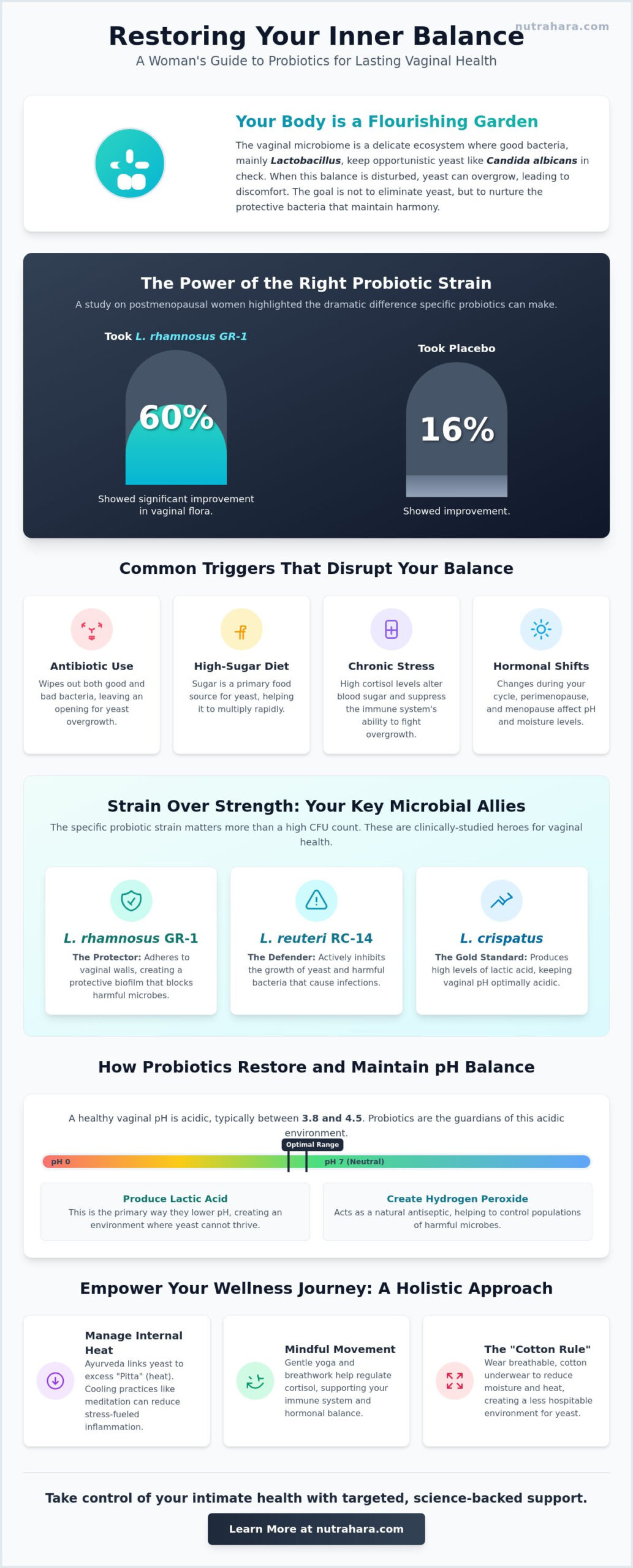
Did you know that in a study of postmenopausal women, 60% of those taking specific strains like Lactobacillus rhamnosus GR-1 showed a significant improvement in vaginal flora compared to only 16% in the placebo group? It’s a powerful reminder that your body has an incredible capacity for balance when given the right botanical and scientific support. If you’ve struggled with the discomfort of recurring cycles, you aren’t alone. Many women find that standard treatments offer only a temporary pause rather than a permanent solution. Understanding how to use probiotics for yeast infection is often the missing piece in a truly holistic wellness journey.
We understand the frustration of discomfort during intimacy and the confusion of choosing between endless supplement brands. This guide will help you discover how specific probiotic strains, ancient Ayurvedic wisdom, and modern research work together to end the cycle of infections and restore your confidence. We’ll explore the science behind Lactobacillus plantarum P17630, explain the “why” behind your symptoms, and help you create a daily routine that supports your hormonal and vaginal health for lasting comfort.
Imagine your body as a flourishing garden. Within this landscape, the vaginal microbiome exists as a delicate, self-regulating ecosystem where trillions of microorganisms live in a state of dynamic equilibrium. While we often think of yeast as an outsider, Candida albicans is actually a natural resident of this environment. It’s an opportunistic fungus that stays quiet as long as your “good” bacteria, primarily Lactobacillus, remain in charge. When these protective bacteria numbers drop, the environment shifts, allowing a Vaginal yeast infection to take root. This is why many women seek out probiotics for yeast infection support to help restore their natural internal guard.
As you move through life stages like perimenopause or menopause, your internal climate changes significantly. A decline in estrogen often leads to thinner vaginal tissues and reduced moisture. This isn’t just a matter of comfort; it directly impacts the survival of your beneficial flora. Without enough moisture and glycogen, Lactobacillus struggles to thrive. This causes the pH to rise and gives yeast the perfect opening to dominate the ecosystem.
Vaginal pH serves as your body’s primary defense mechanism against harmful pathogens by maintaining a naturally acidic environment, typically between 3.8 and 4.5. It’s a common misconception that “clean” means “sterile.” Over-washing or douching can actually strip away the acidic mantle that keeps you safe. Throughout your menstrual cycle, fluctuating hormones create windows of vulnerability. For instance, just before your period, your pH may rise slightly. This makes it easier for yeast to flourish if your microbiome isn’t robust enough to handle the shift.
Modern life introduces several disruptors that can throw your garden out of sync. High-sugar diets and frequent antibiotic use are well-known culprits. From an Ayurvedic perspective, this is often seen as an imbalance of “Pitta,” or excess heat, which creates an inflammatory environment where yeast thrives. Stress is another major factor that many women in their 40s and 50s face daily. High cortisol levels can alter your blood sugar and suppress your immune response. This is where holistic tools like breathwork and meditation become essential. By regulating your physiological stress, you reduce the inflammation that feeds yeast overgrowth. Supporting your system with a targeted supplement like FemmePower can provide the specific probiotics for yeast infection prevention that your body needs during these demanding decades.
When you’re searching for probiotics for yeast infection, it’s easy to get lost in the sea of high numbers on supplement labels. Many products boast 50 or 100 billion colony-forming units (CFUs), but scientific research suggests that the specific strain matters far more than the total count. Think of it like a garden; you don’t just need more seeds, you need the right species that are native to the soil. In the vaginal ecosystem, certain Lactobacillus strains are the undisputed leaders in maintaining harmony and preventing fungal overgrowth.
Clinical studies have identified Lactobacillus rhamnosus (GR-1) and Lactobacillus reuteri (RC-14) as two of the most effective allies for women’s health. GR-1 is particularly remarkable for its ability to adhere to the vaginal walls, creating a protective layer that keeps opportunistic fungi at bay. Meanwhile, RC-14 focuses on inhibiting the growth of harmful yeast and bacteria. A deep dive into Understanding the Vaginal Microbiome reveals that Lactobacillus crispatus is the “gold standard” for a healthy environment. It produces high levels of lactic acid, ensuring the pH remains too acidic for yeast to thrive.
These beneficial bacteria don’t just occupy space; they actively defend their territory. They produce lactic acid and hydrogen peroxide, which act as natural disinfectants to keep the environment acidic. Beyond these chemical defenses, probiotics create “biosurfactants.” These are natural compounds that form a physical shield, making it nearly impossible for Candida to latch onto vaginal tissues. You might wonder how a capsule you swallow can help your vaginal health. Oral probiotics survive the digestive journey and naturally migrate from the rectum across the perineum to colonize the vaginal tract, providing a steady supply of reinforcements where they’re needed most.
Don’t be fooled by the myth that more CFUs always lead to better results. Bioavailability and survival are the real priorities. A probiotic is only effective if the bacteria are still alive when they reach their destination. This is why shelf-stability and delayed-release capsules are critical. These specialized delivery systems protect the delicate live cultures from harsh stomach acid. To help your internal garden grow, consider the role of prebiotics. These specialized fibers act as “food” for your probiotics, helping them colonize more effectively. For a balanced approach to your daily wellness, FemmePower provides a scientifically validated blend of these essential strains to support your long-term vaginal health.
Living with recurring discomfort takes a toll that goes far beyond physical symptoms. It affects your self-esteem, your comfort during intimacy, and your overall sense of vitality. In Ayurveda, this vitality is known as “Ojas,” the essence of your reproductive and immune strength. When your Ojas is depleted by stress or poor nutrition, your body’s natural defenses weaken. This often manifests as a “Pitta” imbalance, where excess internal heat creates an inflammatory environment that invites fungal overgrowth. Restoring harmony requires a fusion of ancient wisdom and modern clinical insight.
Scientific evidence increasingly validates this holistic approach. A scientific review on probiotics for yeast infection demonstrates that while targeted strains are essential, the overall environment of the host matters immensely. Using probiotics for yeast infection is most effective when paired with practices that lower cortisol. High stress is a known disruptor of vaginal flora, as it raises blood sugar and suppresses the immune response. Integrating adaptogens like Ashwagandha with Black Pepper can help stabilize your nervous system, providing a foundation for your microbiome to thrive.
To manage excess Pitta, focus on cooling foods that soothe inflammation. Incorporate hydrating elements like coconut water, cucumber, and cilantro into your daily meals. Avoid “heating” triggers such as excessive caffeine, alcohol, and very spicy foods, which can fuel yeast dominance. Bitter herbs like neem or turmeric are also prized in traditional wellness for their ability to support gut and vaginal harmony by purifying the blood and supporting a healthy immune response.
Physical stagnation in the pelvic region can contribute to recurring issues. Specific yoga poses, such as Malasana (Yogi Squat), help improve blood flow to the reproductive organs and encourage lymphatic drainage. This movement supports the Muladhara, or Root Chakra, which is tied to your feelings of physical security and health. Just 10 minutes of daily mindfulness or meditation can significantly boost your immunity by shifting your body from a “fight or flight” state into a “rest and digest” mode, allowing your internal garden to flourish.
Deciding between oral capsules and vaginal suppositories often depends on where you are in your wellness journey. If you’re currently experiencing a flare-up, you likely want the fastest relief possible. Suppositories deliver beneficial bacteria directly to the site of the imbalance, making them an excellent choice for acute relief. However, for women seeking to end the cycle of recurring issues, a daily oral supplement is the gold standard for long-term colonization. By supporting your gut health, oral probiotics for yeast infection help create a systemic balance that prevents future overgrowth from taking hold.
Research shows that combining these approaches with traditional antifungal treatments can significantly improve outcomes. For example, a study involving women with vulvovaginal candidiasis found that adding probiotic lactobacilli to fluconazole treatment reduced discharge symptoms to just 10.3% after four weeks, compared to 34.6% in the placebo group. This synergistic approach ensures you aren’t just killing the yeast, but also replanting the protective bacteria your body needs to stay healthy and resilient.
Suppositories are most effective when you notice immediate signs of a pH shift, such as a change in odor or intense itching. Many women find success with a “reset and replant” strategy. This involves using boric acid to clear the environment before following up with probiotic suppositories to restore the flora. It’s a powerful way to reclaim your comfort quickly. To understand how these shifts happen, you can explore A Complete Guide to Vaginal pH Balance for deeper insights into your body’s natural harmony.
Consistency is the secret to success with oral supplements. For the best results, take your probiotic at the same time each day, ideally with a meal to help the live cultures survive the digestive process. During the first 30 days, your body is working to shift the microbial balance. You might not notice an overnight change, but by week four, most women report increased comfort and a renewed sense of confidence. Integrating a targeted formula like BlossomBliss into your morning routine provides the specific probiotics for yeast infection prevention that busy women need. It’s a simple, mess-free habit that supports your health from the inside out.
“I felt like I was losing a part of myself,” shared Sarah, a 42 year old yoga instructor who struggled with recurring symptoms for years. “The constant discomfort made me withdraw from my partner and stop my daily practice.” Sarah’s story is a common one among women in their 40s. Her turning point came when she stopped viewing her body as a problem to be solved and started seeing it as a garden to be nurtured. By integrating probiotics for yeast infection into a broader holistic routine, she regained her confidence and returned to the mat with a renewed sense of vitality.
Long-term freedom often comes down to the small, daily choices that support vaginal breathability. The “Cotton Rule” is a simple but essential practice: always choose 100% cotton underwear. Synthetic fabrics trap moisture and heat, creating the perfect breeding ground for opportunistic fungi. If you take your fitness seriously, make it a priority to change out of damp leggings immediately after your session. These habits, combined with the consistent use of probiotics for yeast infection, create a resilient environment that is much harder for yeast to disrupt.
Post-intimacy rituals are another critical piece of the puzzle. Simple actions, such as urinating after sex and gently cleansing with plain water, help maintain your pH balance and prevent “honeymoon cystitis” or sudden yeast flares. These practices protect the delicate colonies of Lactobacillus you’ve worked so hard to cultivate through your supplement routine and mindful living.
One of the most effective ways to support your flora is by sleeping without underwear. This allows for natural thermoregulation and prevents the excess heat that can trigger a Pitta imbalance. Additionally, be mindful of your menstrual products. Many standard pads and tampons contain synthetic fragrances or plastics that disrupt your delicate ecosystem. Switching to organic cotton or “clean” options ensures you aren’t introducing irritants. For comprehensive support across all life stages, integrating FemmePower into your routine provides the necessary balance for both hormonal health and vaginal resilience.
It’s vital to recognize when your symptoms might indicate something other than a fungal overgrowth. A “fishy” odor or thin, grayish discharge often points toward Bacterial Vaginosis (BV) rather than yeast. If your symptoms don’t improve after a week of consistent care, check with a healthcare provider. When you do, approach the conversation as an empowered partner in your health. Mention your preference for holistic options and the specific probiotic strains you’ve been using. Nutrahara is here to be your wise and caring guide on this lifelong health progression. You are the ultimate expert on your own body. Trust your intuition and remember that true harmony is a journey, not a destination.
You’ve discovered how the vaginal microbiome functions as a self-regulating garden and why specific strains like Lactobacillus rhamnosus GR-1 are vital for defense. By merging Ayurvedic wisdom with mindful movement and targeted supplementation, you move beyond temporary fixes toward a life of sustained comfort. Choosing the right probiotics for yeast infection is more than just managing a symptom; it’s an empowering act of self-care that honors your body’s changing needs through every stage of life. Your journey toward lasting harmony is a personal progression that deserves the highest quality support.
We believe in the fusion of traditional medicine and modern research to create a foundation of scientific legitimacy. Our Ayurvedic-inspired formulas use clean, non-GMO ingredients and clinically studied Lactobacillus strains to support your long-term wellness. Restore your natural rhythm with BlossomBliss – Our targeted formula for vaginal harmony. Trust the wisdom of your body as you continue your path toward total health and longevity. You deserve to feel confident, empowered, and harmonious in your own skin every single day.
Yes, you can take them, but it’s best to space your doses properly. Take your probiotic two to four hours after your antibiotic to ensure the medication doesn’t neutralize the beneficial bacteria. This strategy helps replenish your flora as the antibiotic works to clear the infection. It’s a supportive way to maintain your internal equilibrium during treatment.
Most women notice a shift in comfort within one to two weeks of consistent use. For deeper, systemic balance, a full 30 day cycle is often required to allow the new colonies to thrive. A clinical trial noted that daily intake of 5 billion CFU of Lactobacillus plantarum P17630 significantly helped restore flora. Consistency is your greatest ally in this health progression.
The choice depends on your immediate needs and preferences. Suppositories offer fast, localized relief for acute itching or pH shifts. Oral probiotics for yeast infection support long-term, systemic harmony by naturally colonizing the vaginal tract from the inside out. Many women find success using suppositories for a quick “reset” while relying on daily oral supplements for permanent maintenance.
Prioritize strains with strong clinical backing, such as Lactobacillus rhamnosus GR-1 and Lactobacillus reuteri RC-14. These are specifically known for their ability to inhibit yeast and adhere to vaginal tissues. Another “gold standard” is Lactobacillus crispatus, which is essential for maintaining the acidic pH that keeps your ecosystem protected and balanced.
Probiotics don’t typically make an infection worse, though your body might experience a short adjustment phase. You may notice minor digestive changes as your microbiome recalibrates. If your symptoms seem to escalate, it might be an indication that the infection is actually Bacterial Vaginosis or requires an antifungal treatment first to clear the path for probiotic colonization.
Daily supplementation is an excellent preventative habit for long-term vaginal health. Just as you might practice yoga to maintain physical flexibility, taking a daily probiotic keeps your internal defenses strong. This consistent support prevents yeast from finding an opening during stressful times or hormonal shifts. It’s about staying ahead of the cycle to maintain your confidence.
Try to reduce your intake of refined sugars, processed carbohydrates, and alcohol, as these can provide the fuel yeast needs to overgrow. In Ayurvedic terms, it’s also helpful to avoid “heating” foods like hot peppers or heavy vinegars when you feel an imbalance. Focus instead on a clean, whole-food diet that encourages a cooling and tranquil internal environment.
Probiotics are generally safe and highly beneficial during these transitions. Research shows that 60% of postmenopausal women experienced significant improvements in their vaginal flora when using specific Lactobacillus strains. During pregnancy, they help maintain the delicate balance necessary for your comfort. Always speak with your healthcare provider to ensure any new supplement aligns with your personal wellness plan.
This article is not a substitute for medical advice. Please consult a healthcare professional before starting any supplement, especially if pregnant, nursing, taking medication, or managing health conditions.