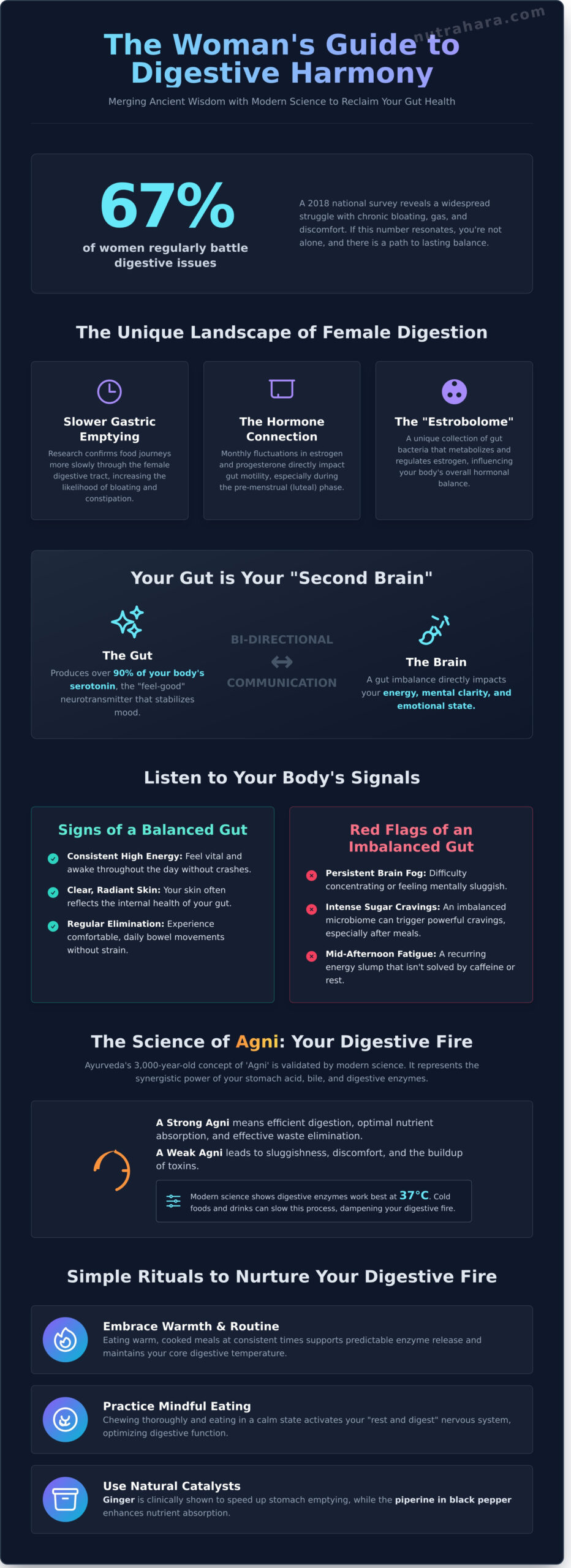
A 2018 national survey revealed a startling fact: 67% of women regularly battle digestive issues like chronic bloating, gas, and discomfort. What if you didn’t have to be one of them? If that number resonates, you understand the daily frustration. You’ve likely navigated the confusing world of conflicting diet advice and perhaps felt dismissed when suggesting your gut issues feel deeply connected to your hormones or stress levels. It’s an exhausting cycle that can leave you feeling powerless over your own body.
This guide is your path to empowerment. We’re here to help you achieve lasting, predictable digestive health, not through another restrictive diet, but through a powerful fusion of ancient Ayurvedic wisdom and cutting-edge nutritional science. You will learn the true root causes of your discomfort and gain the knowledge to create lasting balance from within. Get ready to discover a simple, holistic daily routine that supports your body’s unique needs and sets you on a wellness journey toward sustained vitality.
Your wellness journey often begins in a place you might not expect: your gut. True digestive health is far more than the simple absence of bloating or indigestion. It is a state of profound efficiency where your body expertly absorbs vital nutrients from food and seamlessly eliminates waste. At its core, the human digestive system is designed for this rhythm, but for women, the story has unique complexities.
A woman’s digestive experience is fundamentally different from a man’s. Research from 2009 in the Gastroenterology & Hepatology journal confirmed that women have a slower gastric emptying time. This, combined with the influence of pelvic anatomy and the monthly ebb and flow of hormones, means food takes a longer journey through the female digestive tract, which can contribute to common issues like bloating and constipation.
Your gut is also intimately connected to your mind. The enteric nervous system, a complex network of over 100 million nerve cells lining your gastrointestinal tract, is often called the ‘second brain.’ It’s responsible for producing over 90% of the body’s serotonin, a key neurotransmitter that stabilizes mood and promotes feelings of well-being. When your gut is out of balance, it can directly impact your energy levels, mental clarity, and emotional state.
As we look toward 2026 and beyond, the scientific approach to gut wellness is evolving. The old model of simply ‘fixing symptoms’ with temporary aids is being replaced by a more holistic, nurturing perspective. The focus is now on cultivating a thriving and diverse microbiome, viewing your gut not as a machine to be fixed, but as a delicate ecosystem to be supported.
The intricate dance between your hormones and your gut is central to female wellness. Fluctuations in estrogen and progesterone throughout your menstrual cycle directly impact gut motility. For instance, the surge in progesterone during the luteal phase (the week before your period) can slow down intestinal contractions, often leading to bloating and constipation. This is also where the ‘estrobolome’ comes into play-a collection of gut bacteria with the unique ability to metabolize and regulate estrogen, influencing hormone balance throughout your entire body.
Learning to read your body’s signals is a vital step in nurturing your gut. The signs of harmony or imbalance are often clear once you know what to look for.
Achieving gut homeostasis is not merely about digestion; it is the foundational pillar upon which total body wellness is built.
In the ancient science of Ayurveda, the concept of Agni, or digestive fire, is the very foundation of well-being. A strong Agni allows you to efficiently break down food, absorb nutrients, and eliminate waste. When it’s weak, digestion becomes sluggish, leading to discomfort and imbalance. This isn’t just ancient poetry; it’s a principle mirrored by modern nutritional science. Your Agni is the synergistic action of stomach acid, bile, and thousands of digestive enzymes working in harmony.
Cutting-edge research validates what Ayurvedic practitioners have known for over 3,000 years: digestion has an optimal temperature. Your body’s digestive enzymes, such as pepsin and lipase, function most effectively at our core body temperature of approximately 37°C. Consuming excessively cold foods and drinks can require your body to expend extra energy to warm them, temporarily slowing enzymatic activity. As we look toward the 2026 wellness landscape, the focus is shifting from simply adding probiotics to cultivating a robust internal ecosystem. A balanced Agni is the first step, creating the ideal environment for a diverse microbiome to flourish, which is central to long-term digestive health.
Stoking your Agni is a gentle, daily practice. It begins with mindful habits that honor your body’s natural rhythms. Ancient wisdom and modern research suggest a few key principles for optimal digestive function:
Your gut doesn’t operate in isolation. It’s in constant communication with your brain via the gut-brain axis. During periods of high stress, the hormone cortisol can disrupt this communication, impacting gut motility and even increasing intestinal permeability, often called “leaky gut.” This is where adaptogenic herbs offer holistic support. Formulations like Ashwagandha with Black Pepper are clinically studied to help the body manage stress, which in turn helps maintain a balanced gut environment. While a whole-foods diet is the cornerstone of wellness, as detailed by Johns Hopkins Medicine in their guide on 5 foods to improve your digestion, targeted supplementation can address specific imbalances. We believe in a ‘clean and simple’ approach, preventing digestive overwhelm with focused, high-purity formulas. Supporting your body on its unique wellness journey means providing what it needs, and nothing it doesn’t.
Your wellness journey is deeply personal, and understanding what disrupts your body is just as crucial as knowing what heals it. In our modern world, many factors can silently challenge your gut balance, impacting everything from your energy levels to your hormonal harmony. From the food on your plate to the stress in your day, these elements can alter the delicate ecosystems in your gut and vaginal flora, which are intrinsically linked.
Let’s explore the primary disruptors and the powerful, natural agents that can restore balance. A 2021 study published in The American Journal of Clinical Nutrition found that ultra-processed foods now constitute over 57% of calories consumed in the average American diet. These foods, often packed with emulsifiers, artificial sweeteners, and preservatives, can reduce microbial diversity. This creates an environment where less beneficial bacteria can thrive, leading to bloating, inflammation, and discomfort. At the same time, chronic stress triggers the release of cortisol, a hormone that puts your body in ‘fight or flight’ mode. This response diverts blood flow away from your digestive system, effectively shutting down proper digestion and nutrient absorption.
Many women believe a simple probiotic supplement is the answer. While beneficial, just taking a probiotic is like planting seeds in dry, nutrient-poor soil. Without addressing the underlying environment and providing the right nourishment, those beneficial bacteria won’t flourish. True, lasting digestive health requires a more holistic approach.
You can’t properly digest a meal while rushing between meetings or answering emails. This is your ‘fight or flight’ gut in action. This state of chronic, low-grade stress is compounded by environmental toxins. Endocrine-disrupting chemicals like BPA, found in plastics, and pesticides used in conventional agriculture have been linked in a 2020 Toxins journal review to significant disruptions in the microbiome. To support your body’s natural purification processes, you can gently reset your system from these modern pollutants with a clinically studied formula like DetoxifyLife.
As nutritional science advances toward 2026, the focus is shifting from high dosages to high bioavailability. Your body needs nutrients it can actually absorb. This is why whole-food-based supplements and natural protocols are so effective. Instead of just adding probiotics, start by building a healthy foundation.
By understanding these dynamics, you can thoughtfully remove the disruptors and embrace the healing agents that will truly support your long-term well-being.
Your body thrives on rhythm. Ancient wellness systems like Ayurveda have long understood that aligning our daily activities with the body’s natural cycles is fundamental to vitality. Modern science now validates this wisdom, showing how our internal clocks regulate everything from hormone release to digestive enzyme secretion. By creating a 24-hour ritual, you can work with your body’s innate intelligence to cultivate exceptional digestive health and overall well-being.
This daily rhythm isn’t about rigid rules; it’s a gentle framework for your wellness journey.
True wellness is built through small, consistent actions. The ‘Chew to Liquidity’ rule is a powerful starting point; aim to chew each bite around 30 times. Digestion begins in the mouth with salivary enzymes, not in the stomach. Proper chewing drastically reduces the burden on the rest of your system. Also, ensure adequate magnesium intake through leafy greens and nuts. This essential mineral helps relax intestinal muscles and maintain regularity. To ensure the gut-brain axis fully benefits from this overnight repair cycle, incorporating a natural supplement like RestoraSleep can support the deep, restorative sleep necessary for cellular renewal.
Stress is a primary disruptor of gut function. Before each meal, take three deep belly breaths to activate your vagus nerve. This simple act shifts your body from a “fight-or-flight” state to a “rest-and-digest” state, significantly improving digestive capacity. Support your gut’s mucosal lining by ‘eating your water’ through hydrating foods like cucumber, celery, and berries. Finally, embrace the psychological link between gratitude and digestion. A 2015 study in the journal Appetite found that positive emotions during meals can enhance nutrient absorption. A moment of gratitude can literally help you get more from your food.
By harmonizing your daily habits with your body’s natural rhythms, you create a powerful foundation for lasting digestive wellness. Explore our full range of clinically-studied supplements to support every step of your health journey.
Your path to wellness is a personal journey, and at its core lies the delicate balance of your gut. At Nutrahara, we don’t just create supplements; we cultivate a partnership with you, your body, and the Earth. Our philosophy is rooted in a simple, powerful vision: Bridging Earth, Nature, and Humanity. This means every formula is a thoughtful blend of ancient Ayurvedic wisdom and cutting-edge nutritional science, designed to bring you back to a state of natural harmony.
This commitment is backed by over 40 years of collective expertise in sourcing the world’s most pure and potent Ayurvedic herbs. We work directly with generational farmers in the pristine Himalayan foothills, ensuring that ingredients like Ashwagandha and Shatavari are harvested at peak potency. This deep-rooted knowledge allows us to deliver on our promise of clean, effective support for your digestive health.
We built Nutrahara with a ‘Women First’ philosophy because your biology is unique. Hormonal cycles, stress responses, and metabolic rates are different for women, and your supplements should reflect that. Generic formulas often miss the mark. We formulate specifically to address the intricate connections within the female body, recognizing that true wellness comes from supporting these interconnected systems, not just isolated symptoms.
Taking the next step on your wellness journey means creating synergy. For women seeking to align their hormonal cycles with their digestive rhythm, we recommend integrating FemmePower into your daily routine. It’s formulated with clinically-backed ingredients to support both hormonal balance and gut comfort, creating a foundation for total well-being.
Our promise of “clean and simple, delivered” is our bond with you. Every capsule is free from artificial additives, fillers, and common allergens. We exclusively use clinically studied ingredients, like KSM-66 Ashwagandha, which was shown in a 60-day clinical trial to reduce cortisol by 27.9%. To guarantee this standard, every batch is third-party tested by independent labs for purity and potency, ensuring what’s on the label is what’s in the bottle. Your trust is non-negotiable.
Beginning is simple. We offer curated kits designed for specific goals, whether you’re looking to ease bloating, improve regularity, or enhance nutrient absorption. You can also join our community of over 50,000 women for ongoing education and support through our newsletter and blog. Remember, your journey to better digestive health is a powerful act of self-care. Your gut is the gateway to your most vibrant, energized, and balanced self, and we are honored to guide you.
Your wellness journey is deeply personal, and achieving gut balance is more than a single fix; it’s a holistic practice. By understanding the unique factors affecting women and merging the ancient wisdom of Ayurveda’s Agni with modern nutritional science, you can create lasting harmony. The daily rituals we’ve explored aren’t just tasks. They are powerful acts of self-care that build a foundation for vibrant digestive health.
You don’t have to navigate this path alone. For 40 years, Nutrahara has bridged nature and science, formulating solutions specifically for women’s well-being. Trusted by thousands of healthy women, our products are crafted with clinically studied natural ingredients, reflecting our unwavering commitment to purity and efficacy. We’re here to be your guide on this important journey.
Ready to feel energized and balanced from within? Start your gut wellness journey with Nutrahara’s natural solutions and discover the support your body deserves.
Digestive issues are often linked to hormones if they appear cyclically with your menstrual cycle. A 2014 study in BMC Women’s Health found that 73% of women experience symptoms like bloating or changes in bowel habits just before or during their period. Tracking your symptoms alongside your cycle for 2-3 months can reveal a clear pattern. This information is a valuable first step on your personal wellness journey toward hormonal and digestive balance.
Yes, digestive enzymes can be highly effective for reducing bloating and gas. These proteins, such as amylase for carbs and lipase for fats, help your body break down food more efficiently. A 2018 review in Current Drug Metabolism confirmed their role in improving nutrient absorption and easing discomfort. Our formulations are based on this modern research to support your body’s natural digestive processes, helping you feel lighter and more comfortable after meals.
Ayurvedic tradition offers several powerful herbs for gut health, most notably Triphala, Ginger, and Licorice Root. Triphala, a blend of three fruits, has been used for over 1,000 years to support gentle detoxification and regularity. Ginger (Zingiber officinale) is clinically studied for its ability to speed up stomach emptying. This ancient wisdom, combined with modern research, provides a holistic approach to nurturing your digestive system and overall well-being.
Chronic stress is unlikely to cause permanent structural damage, but it can create long-term functional digestive problems. The American Psychological Association confirms that stress directly impacts the gut-brain axis, potentially altering gut bacteria and increasing intestinal permeability. This can lead to persistent conditions like IBS. Managing stress through practices like meditation and targeted nutrition is a critical part of any holistic plan for long-term digestive health.
Initial improvements like reduced bloating can often be felt within 2-4 weeks of starting a natural protocol. However, creating deep, lasting balance is a journey. Since the cells lining your gut completely regenerate approximately every 21 days, it can take 3-6 months to establish a resilient microbiome and see more profound benefits. Consistency is the key to achieving your long-term wellness goals.
The best time to take gut supplements depends on their function. For instance, research from 2011 suggests taking probiotics containing Lactobacillus and Bifidobacterium up to 30 minutes before a meal for optimal survival. In contrast, digestive enzymes must be taken with food to help break it down effectively. Always check the product label for specific, research-backed instructions to ensure you receive the full benefit from your chosen supplement.
The gut and skin are connected through the gut-skin axis, where gut imbalances can directly trigger skin issues like acne and eczema. A 2021 review in the International Journal of Molecular Sciences explains how gut dysbiosis can increase intestinal permeability. This allows inflammatory molecules to enter the bloodstream, leading to systemic inflammation that manifests on the skin. Nurturing your gut is a foundational step for achieving clear, radiant skin from within.
Absolutely. You don’t need a complete dietary overhaul to improve your digestive health. Start with small, powerful habits. For example, adding just one tablespoon of chia seeds to your daily routine can increase your fiber intake by 5 grams. Another simple practice is chewing each bite 20-30 times to support enzymatic action. These focused adjustments can create a significant positive impact on your wellness journey without feeling overwhelming.
This article is not a substitute for medical advice. Please consult a healthcare professional before starting any supplement, especially if pregnant, nursing, taking medication, or managing health conditions.