You’ve spent another morning cleaning a concerning amount of hair from your brush, feeling that familiar knot of anxiety. You’ve tried the salon-grade shampoos and the viral hair masks, but the shedding and dullness persist, especially during times of stress or hormonal change. It’s completely valid to feel frustrated when your outer appearance doesn’t reflect the vitality you feel inside. The search for a solution can feel overwhelming, with countless products all promising the same miracle cure.
This guide is different. We’re going beyond the surface to empower you with a clear understanding of your hair’s true foundation. You will discover how to restore shine and strength from within by nurturing the biological and Ayurvedic roots of genuine hair health. We will explore the crucial link between your nutrition and hormones, providing you with a simple, actionable plan for achieving the vibrant, resilient hair you deserve on your wellness journey.
On your personal wellness journey, it’s easy to view your hair as a purely aesthetic feature. But true hair health is a profound reflection of your body’s internal harmony. It’s a direct indicator of your metabolic and hormonal homeostasis, offering clues about your overall well-being long before other symptoms may appear. Think of your hair as the body’s ‘canary in the coal mine’.
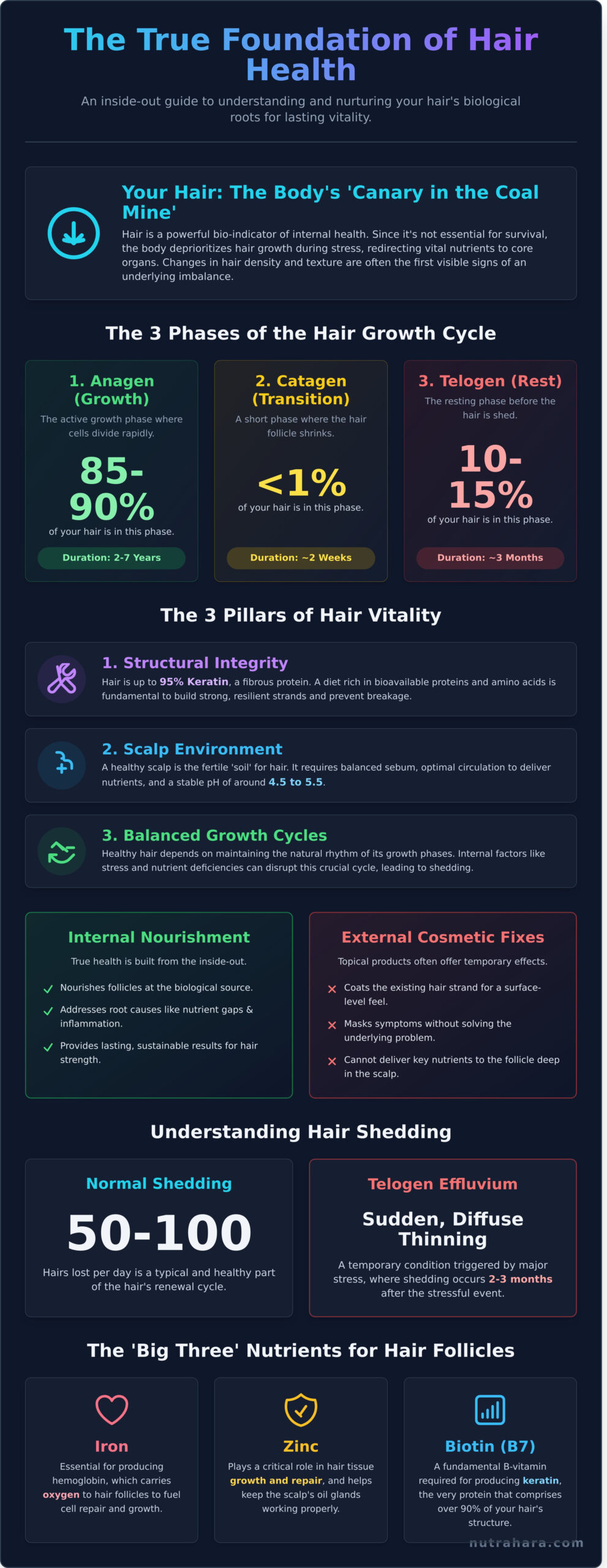
Because hair growth is not essential for survival, it’s one of the first processes the body deprioritizes during times of internal stress. When faced with nutrient scarcity, illness, or significant hormonal shifts, your body wisely redirects vital resources like iron, zinc, and protein away from your hair follicles and toward critical organs. This is why changes in your hair’s texture, density, or growth can be an early signal of an underlying imbalance. The visible signs of truly healthy hair are clear and measurable: strong elasticity allowing a strand to stretch, a smooth, sealed cuticle that reflects light and creates shine, and consistent follicle density across the scalp.
Achieving and maintaining vibrant hair is grounded in three core biological principles. Understanding them empowers you to nurture your hair from the inside out, bridging the gap between ancient wisdom and modern science.
Finding strands in your brush or the shower drain is a normal part of a healthy hair cycle. Losing between 50 and 100 hairs per day is completely typical as resting hairs make way for new growth. However, a sudden, noticeable increase in shedding that leads to diffuse thinning can be unsettling. This is often a condition called Telogen Effluvium.
This type of hair loss is triggered by a significant physiological or emotional stressor, such as a high fever, major surgery, childbirth, or extreme emotional distress. The shedding doesn’t happen immediately; it typically begins 2 to 3 months *after* the stressful event. Telogen Effluvium is a temporary, stress-induced shift where a large number of hairs prematurely enter the resting (telogen) phase of the growth cycle. While distressing, it’s important to remember that this condition is a temporary response, and understanding its cause is the first step toward restoring balance and promoting healthy regrowth.
Lush, vibrant hair isn’t born from a bottle; it’s built from within. Your hair is a direct reflection of your internal ecosystem, a living record of your nutritional intake and hormonal harmony. Think of each hair follicle as a tiny, complex factory. To function optimally, it requires a precise supply of raw materials and the right operational signals. When these elements are in balance, the result is strong, resilient growth. When they’re not, the factory slows down, leading to thinning, shedding, and loss of vitality.
At the core of this biological process are the building blocks you consume. The ‘Big Three’ for hair-Biotin, Zinc, and Iron-are non-negotiable for robust follicle synthesis. Iron is essential for producing hemoglobin, which carries oxygen to your scalp to fuel cell repair and growth. Zinc plays a critical role in hair tissue growth and repair, keeping the oil glands around the follicles working correctly. Biotin, a B-vitamin, is fundamental to producing keratin, the very protein that makes up over 90% of your hair structure.
This modern understanding of micronutrients finds a powerful partner in ancient Ayurvedic wisdom. Ayurveda identifies an excess of the ‘Pitta’ dosha, associated with heat and inflammation, as a primary cause of premature thinning and greying. Cooling this internal fire through diet and botanicals supports a balanced scalp environment. It’s this beautiful synergy-where clinical nutrition validates ancient knowledge-that provides a truly holistic path to lasting hair health.
While the ‘Big Three’ get most of the attention, other key nutrients are vital. Vitamin D, often called the ‘forgotten’ hair nutrient, helps create new follicles and awaken dormant ones. A deficiency can directly impact hair density. Equally important are the B-complex vitamins, which are crucial for creating red blood cells that transport oxygen and nutrients to the scalp. A steady supply ensures your follicles have the energy they need. Supporting this foundational energy production with a high-quality Vitamin B Complex can be a cornerstone of your hair wellness journey.
Your hormonal landscape directly dictates your hair’s life cycle. During perimenopause and menopause, a decline in estrogen can shorten the anagen (growth) phase of your hair, leading to finer, thinner strands. Conversely, high levels of the stress hormone cortisol can shock the system, pushing a significant number of follicles into a premature ‘hibernation’ phase known as telogen effluvium. While many external products make bold claims, the most credible scientific facts about hair care reveal that internal balance is paramount. Nurturing this equilibrium with targeted botanicals, like those found in FemmePower, can help you gracefully manage the hormonal shifts that impact your hair’s vitality.
True, sustainable hair health begins by honoring these deep biological connections. By nourishing your body with the right nutrients and supporting your hormonal balance, you empower your hair to grow to its fullest, most beautiful potential. Understanding your unique internal needs is the first step, and we invite you to explore our wellness resources to continue your journey.
We’ve all been captivated by commercials promising to “repair” damaged hair with a single wash. The beauty aisle is filled with bottles that claim to feed, mend, and resurrect lifeless strands. But here is the scientific truth, grounded in biology: the hair you see is not living. It’s a fiber composed of dead keratin protein cells. It cannot be “fed” from the outside any more than a silk scarf can. While premium shampoos and masks can coat the hair cuticle with silicones and oils to make it feel smoother and look shinier, this is a temporary cosmetic effect, not a true restoration of health.
This cycle of external fixes often masks deeper issues. When hair is brittle or thin due to internal imbalances, many turn to harsh chemical treatments like coloring or straightening to improve its appearance. This creates a dangerous loop: the over-processing further damages the hair’s structure, making its underlying weakness even more apparent once the cosmetic effects wear off. The only part of your external routine that truly influences new growth is your scalp care. A clean, well-circulated scalp provides the fertile ground from which strong hair can grow. According to the American Academy of Dermatology, gentle handling and focusing on the scalp are key, and their dermatologist tips for healthy hair emphasize protecting the hair you have, not magically repairing it.
Understanding where to focus your efforts is key. Topical treatments, like the ancient Ayurvedic practice of head massage with oils like Bhringraj, are excellent for improving scalp circulation and moisture. They create an optimal external environment. Systemic treatments, like clinically formulated supplements, work internally to provide the raw materials. Our ‘Inside-Out’ philosophy is built on a simple fact: over 90% of your hair’s strength and vitality is determined by the nutrition delivered to the follicle before the hair ever leaves the scalp. Be wary of misleading labels you’ll see by 2026, such as:
The belief that biotin is the single magic pill for hair growth is one of the most persistent myths in wellness. While Biotin (Vitamin B7) is essential for keratin production, true clinical biotin deficiency is rare. For most women, lackluster hair isn’t caused by a lack of biotin alone. It’s caused by a lack of the supporting nutrients biotin needs to do its job. Think of biotin as a single musician. It needs a full orchestra of co-factors like Zinc to aid in follicle cell division, Iron to carry oxygen for growth, and amino acids like L-cysteine, which are the direct building blocks of the keratin protein itself. Without them, biotin can’t perform. True hair health is a symphony of nutrients, not a solo performance by a single vitamin.
Reclaiming your hair’s vitality isn’t about finding a single magic product; it’s a holistic journey that addresses the root causes of dullness and thinning. True, lasting results come from a conscious fusion of modern nutritional science and ancient wellness wisdom. By focusing on these five foundational steps, you can create the optimal internal and external environment for your hair to flourish, moving from a state of stress to one of strength.
Your hair is primarily made of a protein called keratin. Providing your body with the right building blocks is non-negotiable for robust growth. We recommend focusing on a diet rich in amino acids, vitamins, and minerals. Key foods include:
From an Ayurvedic perspective, scalp inflammation, or an excess of “Pitta,” can disrupt follicles. A traditional calming ritual is Abhyanga, or self-massage with warm oil. Simply warm a tablespoon of coconut or sesame oil, apply it to your scalp with your fingertips, and use gentle, circular motions for 5-10 minutes before washing. This practice cools inflammation and boosts circulation directly to the roots. For deep structural support, a bioavailable Premium Collagen Complex can supply the specific amino acids your body needs to construct resilient keratin fibers.
The connection between your nervous system and hair follicles is scientifically proven. A 2021 study published in Nature confirmed that the stress hormone cortisol can force a significant number of hair follicles into a prolonged resting (Telogen) phase, effectively halting new growth. Managing systemic stress is therefore a critical component of any effective plan for better hair health.
This is where adaptogens, natural botanicals that help your body adapt to stressors, become invaluable. Ashwagandha is a clinically-studied adaptogen revered in Ayurveda for its ability to help regulate cortisol levels. By promoting a state of calm, it helps keep your follicles in the active growth (Anagen) phase longer. For targeted support on your wellness journey, our Ashwagandha with Black Pepper is formulated to help your body manage its stress response, creating a healthier internal ecosystem for hair to thrive.
Finally, Step 5 is optimizing scalp circulation and maintaining a clean follicular environment. The Abhyanga massage is a perfect start. Complement it by using clean, non-toxic hair care products free from sulfates and silicones that can clog pores and inhibit growth. By nourishing from within and caring for your scalp, you create a complete, 360-degree approach to restoring your hair’s natural brilliance.
Ready to build your holistic hair care ritual? Explore our full range of women’s wellness supplements designed to support you from the inside out.
Your hair isn’t just hair. It’s a living record of your internal well-being, a direct reflection of your body’s harmony or stress. That’s why at Nutrahara, we don’t formulate for a single symptom; we formulate for the ‘Total Woman.’ We recognize that your hair health is deeply intertwined with your endocrine, nervous, and digestive systems. Thinning strands, a lack of luster, or excessive shedding aren’t isolated problems. They are signals from your body asking for deeper support. Our approach addresses the root cause by nurturing this interconnected system, creating a foundation for holistic wellness that shines through.
Our philosophy is built on a powerful trinity: 40 years of nutritional science expertise, the timeless wisdom of Ayurveda, and rigorous modern clinical trials. Ancient Ayurvedic science, with its 5,000-year history, provides the holistic map to understanding the body’s unique constitution, or dosha. It teaches us how to achieve balance. Our four decades of research experience bring precision to this ancient wisdom, allowing us to refine dosages and select the most bioavailable forms of each ingredient. Finally, we validate our formulas with modern science. For example, we use clinically-studied Sensoril® Ashwagandha, which was shown in a randomized, double-blind, placebo-controlled human trial to reduce serum cortisol levels by 27.9%, directly targeting the stress that impacts your entire body.
Respecting your body’s natural ecology is non-negotiable, and it’s the core of our ‘Clean and Simple’ commitment. Every capsule is formulated without:
These additives do more than just take up space; they can interfere with nutrient absorption and disrupt your delicate gut microbiome. We believe that what you leave out is just as important as what you put in. By providing pure, potent botanicals and nutrients, we support your body’s innate ability to heal and thrive. This foundational support is essential for achieving true, sustainable hair health, as it creates the optimal internal environment where strong, vibrant hair can grow.
Our ‘Wise Guide’ philosophy ensures every product delivers on its promise of purity and potency. We source only the highest-quality, clinically studied ingredients to support your wellness journey. It’s not just about supplements; it’s about providing a trusted partner for your health. But you don’t have to take our word for it.
“After my second child, my hair was shedding so much. I felt defeated. A friend recommended the Postpartum Kit. Within three months, the shedding slowed, and I saw new growth. Nutrahara gave me back my confidence. It feels like I’m finally taking care of myself again.”
– Jessica M., 34
Your journey to wellness is unique. That’s why we’ve curated kits specifically for your current life stage, whether you’re navigating postpartum recovery, perimenopause, or simply seeking daily balance. Join our community of over 10,000 women for ongoing education and support as we explore how to bridge the gap between Earth and humanity.
Ready to see the first sign of your transformation? Let your vibrant hair lead the way.
Explore the Nutrahara collection for your wellness journey
Your journey to lustrous hair isn’t found in a bottle on your shower shelf; it begins from within. Vibrant hair is a direct reflection of your internal balance. It’s the ‘canary in the coal mine’ for your overall wellness, with its strength and shine dictated not by external treatments, but by the foundational building blocks of nutrition and hormonal harmony. This is the philosophy at the heart of Nutrahara, where we bridge Earth and science. Backed by 40 years of expertise in women’s health, our approach is a clinically studied fusion of ancient Ayurvedic wisdom and modern nutritional research. Our clean and simple formulas are designed to nourish from the inside out, creating the optimal foundation for genuine hair health.
It’s time to stop masking symptoms and start building strength from your core. Begin your hair health journey with Nutrahara’s clean supplements, formulated for women and delivered worldwide.
Your hair’s potential for radiance is waiting to be unlocked. We’re honored to be your guide on this wellness journey.
You can typically expect to see visible results from hair supplements after 3 to 6 months of consistent daily use. Your hair’s growth cycle (the anagen phase) is a slow process, and supplements work by nourishing the follicle to support new, healthier hair. A 2015 study in the Journal of Clinical and Aesthetic Dermatology confirmed noticeable improvements in hair volume and thickness after 90 days, so patience on your wellness journey is key.
Yes, a major stressful event can trigger significant hair shedding approximately 2 to 4 months after it occurs. This condition, known as telogen effluvium, forces a large number of hair follicles into the resting phase prematurely. These hairs then fall out a few months later. Up to 70% of scalp hair can be affected, making stress management a critical part of a holistic approach to hair wellness.
Biotin is only the most effective solution for the 2-5% of people with a clinical deficiency; a multi-nutrient formula is better for most women. While biotin supports keratin infrastructure, research shows nutrients like iron, vitamin D, and zinc are more commonly linked to hair thinning. For instance, a 2016 study found 36% of women with hair loss were iron deficient. A comprehensive, clinically studied formula addresses your body’s complete needs.
No, cutting your hair doesn’t change its natural growth rate or texture, which are determined at the follicle. Hair grows from the scalp at an average of 0.5 inches per month. Regular trims are beneficial because they remove split ends, preventing breakage that makes hair look thin and damaged. This creates the appearance of thicker, healthier hair by maintaining a blunt, full edge, but it doesn’t alter the growth process itself.
The earliest signs that your hair health may be declining include a widening part line, a noticeable increase in shedding, or a ponytail that feels less dense. You might find more than the typical 50-100 hairs in your brush or on the floor. Another subtle clue is a change in texture, where your hair feels finer or doesn’t hold its style as well. Identifying these changes early allows you to take supportive action sooner.
Yes, clinically studied adaptogenic herbs like Ashwagandha can support healthy hair by helping your body manage cortisol, the stress hormone. Elevated cortisol from chronic stress can disrupt the hair growth cycle. As shown in a 2019 study in Cureus, Ashwagandha helps regulate the body’s stress response system. This creates a more balanced internal environment, allowing follicles to function optimally and support healthy growth.
No, hair loss in women is not exclusively an issue of aging. While hormonal shifts during menopause are a common factor, many conditions can cause thinning hair in younger women. Polycystic ovary syndrome (PCOS), postpartum hormonal changes, and thyroid disorders are frequent causes in women under 40. The American Academy of Dermatology confirms that some forms of genetic hair loss can even begin in the teenage years.
A blood test ordered by your doctor is the only definitive way to know if a nutrient deficiency is the root cause of your hair thinning. While symptoms like fatigue or brittle nails can be indicators, a blood panel provides concrete data. A physician can check your levels of ferritin (stored iron), vitamin D, and zinc, three key nutrients that are scientifically linked to hair loss when they are low.
This article is not a substitute for medical advice. Please consult a healthcare professional before starting any supplement, especially if pregnant, nursing, taking medication, or managing health conditions.