
That sudden, intense wave of heat spreading across your chest and face. The disruptive night sweats that leave you feeling exhausted. Navigating the journey of menopause can feel overwhelming, especially when you are seeking a natural path to relief, free from the concerns of conventional treatments. If you feel lost in a sea of conflicting information, you are not alone. For centuries, ancient Ayurveda science has offered a gentle yet powerful path to balance, and this wisdom holds profound solutions. The search for effective ayurvedic herbs for menopause hot flashes is a search for a more harmonious way to support your body through this powerful transition.
In this guide, we bridge that ancient knowledge with modern understanding to empower you on your wellness journey. You will discover the most potent, time-tested herbs that can help cool those internal flames, support your body’s natural hormonal rhythm, and improve your overall well-being. Prepare to feel more in control and learn how to embrace this new chapter with greater ease, comfort, and the serene strength that nature provides. Your path to a more balanced menopause starts here.
Menopause is a natural and transformative stage in a woman’s wellness journey. While the clinical definition of menopause focuses on the cessation of menstrual cycles, ancient Ayurveda science views it as Rajonivritti-a graceful transition into a new phase of wisdom and freedom. At the heart of Ayurveda is the concept of the three Doshas: Vata (air and space), Pitta (fire and water), and Kapha (earth and water). These fundamental energies govern all physiological and psychological functions, and maintaining their balance is the key to vibrant health.
Hot flashes, that sudden feeling of intense warmth, are understood in Ayurveda as a direct sign of aggravated Pitta Dosha. Pitta is the principle of fire and transformation, responsible for digestion, metabolism, and body temperature. When this fiery energy becomes excessive or imbalanced, it overflows, manifesting as heat, inflammation, and irritability-the very essence of a hot flash.
The significant hormonal shifts during perimenopause and menopause, which typically occur during the “Pitta time of life” (ages 40-50), can naturally disrupt your body’s delicate equilibrium. This internal change, combined with external factors like a high-stress lifestyle or a diet rich in spicy, acidic foods, can further stoke the internal fire. Understanding this connection is the first step in using ayurvedic herbs for menopause hot flashes to cool and pacify Pitta.
An excess of Pitta energy affects your entire system, not just your internal thermostat. Addressing the root imbalance provides holistic, not just symptomatic, relief. Besides hot flashes, you might experience:
By soothing Pitta, you are not just managing a symptom; you are restoring harmony to your mind and body. The right ayurvedic herbs for menopause hot flashes help re-establish this balance for a smoother wellness journey.
Ancient Ayurvedic wisdom offers a wealth of botanicals to help you navigate your wellness journey through menopause. This curated list features some of the most effective ayurvedic herbs for menopause hot flashes, chosen for their potent ‘sheetal’ (cooling) properties. These herbs work holistically to pacify the fiery Pitta dosha, support hormonal equilibrium, and restore balance from within. While these herbs are powerful allies, they work best when combined with supportive lifestyle changes for hot flashes, creating a comprehensive approach to care. For optimal results, always choose supplements from a trusted source to ensure their purity and potency.
Known as the “Queen of Herbs,” Shatavari is Ayurveda’s premier tonic for female reproductive health. Its cooling, soothing, and moisturizing qualities make it exceptional for pacifying Pitta-driven symptoms like hot flashes and vaginal dryness. As a powerful adaptogen, it also helps the body manage emotional and physical stress, promoting a sense of calm and hormonal harmony during this significant life transition. It truly nurtures the body from the inside out.
When stress is the primary trigger for your hot flashes, Ashwagandha is an invaluable ally. This renowned adaptogen is clinically studied for its ability to lower cortisol levels, calming the body’s stress response. By promoting tranquility and resilience, it reduces the frequency of stress-induced heat surges. It also significantly improves sleep quality, offering relief from disruptive night sweats. For enhanced absorption and efficacy, consider a formula like Nutrahara’s Ashwagandha with Black Pepper.
Menopause can affect the mind as much as the body. Brahmi, a celebrated nervine tonic, directly addresses this by cooling and calming the entire nervous system. It helps reduce the irritability and anxiety that often accompany hot flashes. Furthermore, its cognitive-enhancing properties are excellent for clearing the “brain fog” many women experience, promoting mental clarity and focus during a time of change. It is ideal for women seeking both emotional and physical balance.
Also known as Indian Gooseberry, Amla is one of nature’s most potent sources of Vitamin C. This antioxidant powerhouse helps protect the body from cellular stress and inflammation, which can exacerbate menopausal symptoms. Its profoundly cooling nature helps to lower internal heat, especially in the digestive tract. Amla also offers the wonderful benefit of supporting vibrant skin and healthy hair, which can be affected by hormonal shifts.
Ayurveda views the menopause transition not as a single symptom to be suppressed, but as a profound shift in a woman’s entire physiology. True relief comes from treating the whole person. While cooling herbs like Shatavari are essential, the most effective approach involves incorporating other supportive botanicals. These synergistic herbs work in harmony to address related challenges, creating a foundation of stability that makes managing hot flashes more effective. This holistic strategy is central to using ayurvedic herbs for menopause hot flashes and supporting your overall wellness journey.
Interrupted sleep and a racing mind can significantly worsen daytime hot flashes and fatigue. Ayurveda offers gentle, non-habit-forming herbs to restore tranquility:
By improving sleep quality, you enhance your body’s resilience, which can directly reduce the frequency and intensity of hot flashes. For comprehensive support, our clinically studied RestoraSleep formula is expertly formulated to calm the mind and encourage deep rest.
The menopausal transition also impacts long-term health, particularly cardiovascular and bone strength. Supporting these vital systems is a cornerstone of a balanced wellness journey. Leading institutions like Johns Hopkins Medicine emphasize the importance of achieving holistic balance during perimenopause through comprehensive care. Specific ayurvedic herbs for menopause hot flashes and overall vitality include:
Nurturing your heart and bones builds a resilient foundation, allowing your body to navigate the changes of menopause with greater strength and ease.
Embracing ancient Ayurvedic wisdom on your wellness journey is a powerful step toward finding balance. To experience the full benefits of ayurvedic herbs for menopause hot flashes, a mindful and consistent approach is essential. Rather than expecting instant results, view these natural allies as gentle supporters that work in harmony with your body over time. We recommend starting slowly by introducing just one or two herbs to carefully observe how your system responds. Above all, ensuring the quality, purity, and proper sourcing of your supplements is paramount for both safety and efficacy.
Ayurvedic herbs are available in several forms, allowing you to choose what best fits your lifestyle and needs. Always follow the dosage recommendations on the product label for safe and effective use.
Your safety is the highest priority when exploring any new wellness practice. Before adding any ayurvedic herbs for menopause hot flashes to your regimen, it is crucial to consult with your healthcare provider or a qualified Ayurvedic practitioner. This is especially important if you have pre-existing health conditions or are taking prescription medications, as even natural herbs can sometimes interact with them.
While these botanicals are generally considered safe, it’s vital to listen to your body. If you experience any digestive upset or discomfort, discontinue use and seek professional advice. Navigating your health journey requires trust in the products you choose. For supplements formulated with a commitment to quality and transparency, trust Nutrahara for clean and simple supplements you can rely on.
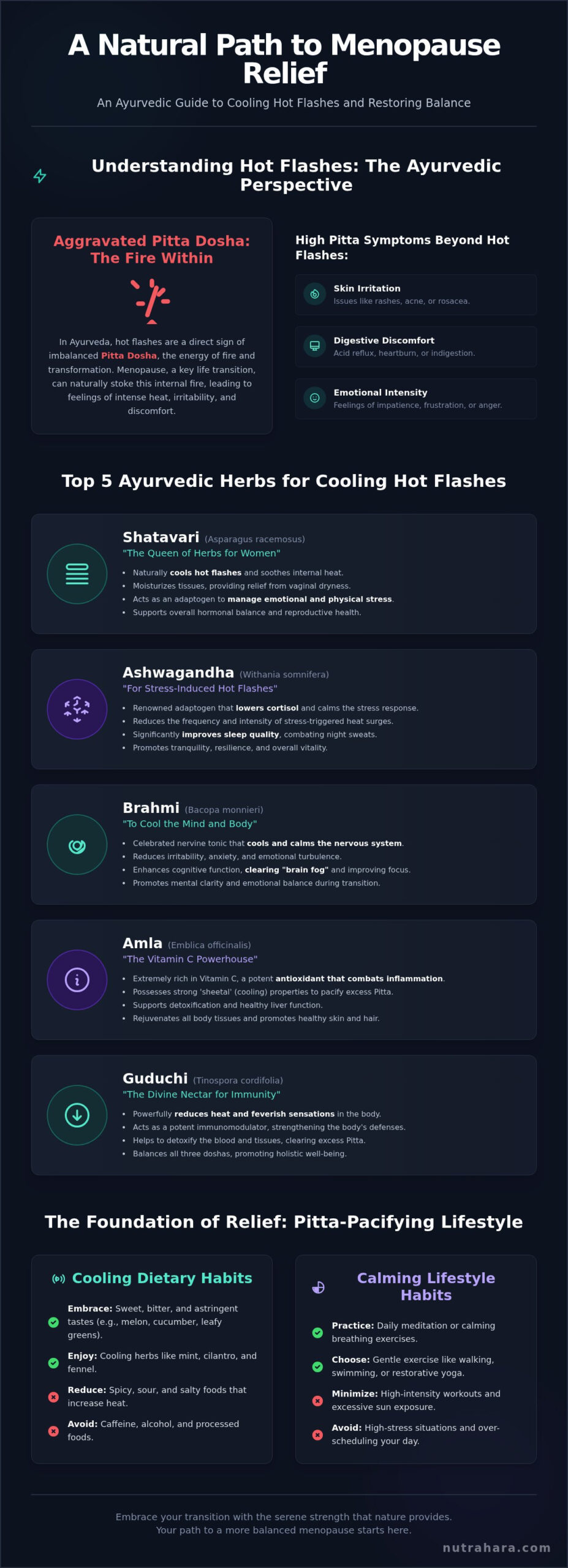
While potent botanicals are cornerstones of Ayurvedic care, their true power is unlocked when supported by a balanced lifestyle. Think of your daily habits as the fertile ground where these healing plants can thrive. Ancient Ayurveda science teaches us that menopause hot flashes are often a sign of excess Pitta-the fiery energy principle in the body. By adopting a ‘Pitta-pacifying’ diet and lifestyle, you actively reduce internal heat, creating an environment where ayurvedic herbs for menopause hot flashes can work most effectively.
Your plate is one of the most powerful tools for managing internal temperature. To soothe Pitta, focus on incorporating cooling, hydrating foods while minimizing those that generate heat. This simple shift can make a significant difference in the frequency and intensity of hot flashes.
How you move through your day directly influences your body’s internal climate. The goal is to cultivate calmness and avoid activities that aggravate heat and intensity, which can trigger a hot flash.
Embracing these changes doesn’t require a complete overhaul of your life. Start with one or two small, sustainable adjustments. Creating this cooling foundation is an empowering step on your wellness journey. It not only provides immediate relief but also enhances the deep, restorative action of clinically-studied ayurvedic herbs for menopause hot flashes, guiding you toward lasting balance and well-being.
Navigating menopause is a natural transition, and Ayurveda offers a profound, holistic path to find comfort and balance. As we’ve explored, understanding hot flashes as an expression of excess Pitta dosha is the first step toward relief. By incorporating cooling and adaptogenic botanicals like Shatavari and Ashwagandha, you can soothe internal fire from within. Remember, the most effective approach to using ayurvedic herbs for menopause hot flashes is one that integrates them with a supportive diet and lifestyle, creating a foundation of true well-being.
As you continue your wellness journey, let us support you with expertly crafted formulations. At Nutrahara, we combine ancient Ayurveda with modern nutrition research, drawing on 40 years of expertise to create supplements with clean, pure, and natural ingredients. Explore our full range of women’s wellness supplements to support your journey.
This chapter of your life is one of wisdom and power. By embracing these natural solutions, you can move through this transition with grace, vitality, and a renewed sense of calm.
While every woman’s wellness journey is unique, many report a noticeable reduction in the frequency and intensity of hot flashes within 4 to 8 weeks of consistent daily use. Natural herbs work gently with your body, so it takes time to restore balance. Patience is key as your system adapts to this holistic support. We recommend allowing at least three months to experience the full, harmonizing benefits of these ancient botanicals.
Shatavari and Ashwagandha are revered in Ayurveda and are generally well-tolerated by most women. When taken at the recommended dosage, side effects are rare but can include mild digestive upset. As with any new supplement, we believe in a transparent and safe approach. We strongly advise consulting with your healthcare practitioner before beginning a new regimen, especially if you have pre-existing health conditions or are taking other medications.
Integrating herbal supplements with Hormone Replacement Therapy (HRT) requires professional medical guidance. While many natural herbs can support your well-being, they may interact with hormonal treatments. For your safety, it is essential to speak with your doctor or a qualified healthcare provider. They can help you create a safe, effective, and integrated plan that honors your unique health needs and supports your overall wellness journey during menopause.
Think of Shatavari as a cooling and moistening herb, making it a primary choice for managing hot flashes, night sweats, and vaginal dryness by pacifying excess heat (Pitta). In contrast, Ashwagandha is a renowned adaptogen that excels at calming the nervous system. It is ideal for addressing menopause-related stress, anxiety, and sleep disturbances. While both support women’s health, their primary actions target different aspects of the menopausal experience.
For severe night sweats, Shatavari is often the most effective herb to start with in the Ayurvedic tradition. Its powerful cooling properties are specifically aimed at pacifying the internal heat that triggers these disruptive episodes. By helping to regulate body temperature and restore hormonal balance, Shatavari can provide significant relief, supporting a more comfortable and restful night’s sleep. It is a gentle yet potent ally for managing this challenging symptom.
While a single herb can be effective, a thoughtfully crafted combination formula often provides more comprehensive relief. Menopause presents a range of symptoms, from hot flashes to mood swings. A synergistic blend of ayurvedic herbs for menopause hot flashes can address multiple concerns simultaneously. This holistic approach, rooted in ancient science, uses herbs that work together to enhance benefits and create a more balanced, supportive effect for your overall well-being.
This article is not a substitute for medical advice. Please consult a healthcare professional before starting any supplement, especially if pregnant, nursing, taking medication, or managing health conditions.