In the United States, vitamin D status is measured with a blood test for 25-hydroxyvitamin D, or 25(OH)D. According to the National Institutes of Health Office of Dietary Supplements, levels below 12 ng/mL are generally inadequate for bone and overall health, while levels of at least 20 ng/mL are generally adequate. These ranges offer a clearer picture than guessing from sunshine alone. A vitamin D result can be one useful piece of information as you think about your health.
Sunlight helps the body make vitamin D, but production varies from person to person. Season, location, and skin pigmentation all play a part, so time outdoors doesn’t tell the whole story. For women balancing work, exercise, family, and changing life stages, understanding how this nutrient enters the picture can be useful. A vitamin D routine is about more than spending extra time outside.
This article explains deficiency and how sunlight, food, and supplements contribute to overall intake. It also covers why the skin’s production changes, helping you understand which everyday factors you can influence. Use this information to reflect on your habits, ask informed questions about your health, and build a practical routine alongside movement, nourishing meals, and rest.
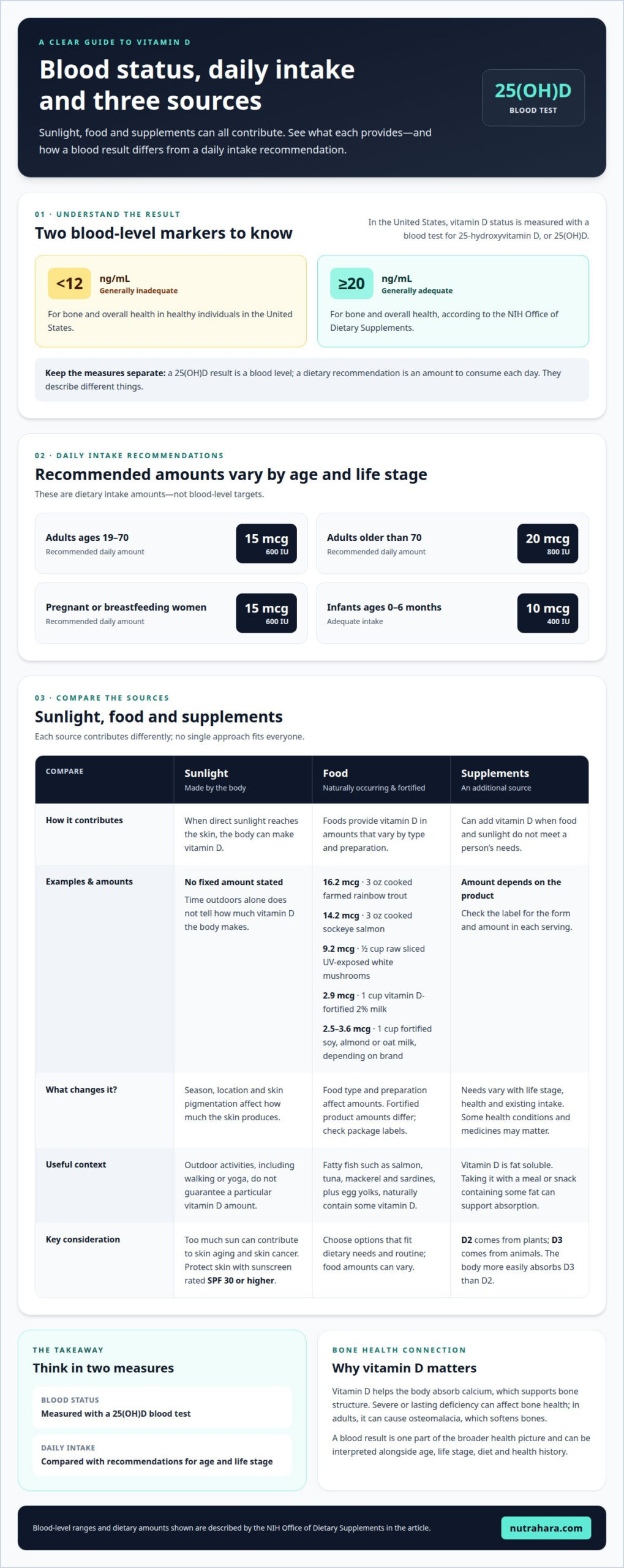
Deficiency means the body has too little vitamin D to support its needs. This nutrient helps the body absorb calcium and maintain healthy bones. A blood test measures 25-hydroxyvitamin D, written as 25(OH)D. According to the National Institutes of Health Office of Dietary Supplements, levels below 12 ng/mL are generally inadequate for bone and overall health in healthy individuals in the United States. Levels of at least 20 ng/mL are generally adequate for bone and overall health, according to the National Institutes of Health Office of Dietary Supplements.
Recommended dietary amounts vary by age and life stage. According to the National Institutes of Health Office of Dietary Supplements:
These are recommended intake amounts, not blood-level targets. A level result and a dietary intake figure describe different things. For example, a pregnant woman can compare her intake with the recommendation, while a 25(OH)D blood test assesses her measured status.
Why does the distinction matter? The body needs vitamin D to absorb calcium, which supports bone structure. Severe or lasting deficiency can affect bone health. In children, deficiency can cause rickets, a disease that weakens developing bones. For adult women, maintaining bone health matters through changing life stages, including after menopause, when fracture concerns may become more relevant.
A personal account can add perspective, but it should reflect a real woman’s words and experience. It should not replace medical evidence or be invented to illustrate a test result. Blood-test information is one part of the broader health picture and should be interpreted alongside age, life stage, diet, and health history. If circumstances change, such as pregnancy or dietary habits, revisit whether your intake aligns with the recommended amount.
Sunlight, food, and supplements can all contribute to vitamin D intake. Pairing awareness of food sources with sensible sun protection can help you make informed daily choices.
When direct sunlight reaches your skin, your body can make vitamin D. This natural process is one source, but it isn’t a reason to seek unprotected sun exposure. Too much sun can contribute to skin aging and skin cancer, so protect your skin with sunscreen rated SPF 30 or higher. The balance matters: sunlight may contribute, while season, location, and pigmentation affect how much your skin produces. Outdoor activities such as walking or yoga can support an active routine, but they don’t guarantee a particular amount.
Food provides another way to add this nutrient, with amounts varying by type and preparation. In the United States, a 3-ounce serving of cooked farmed rainbow trout provides 16.2 mcg; cooked sockeye salmon provides 14.2 mcg. A half-cup of raw sliced white mushrooms exposed to UV light provides 9.2 mcg. These examples make it easier to compare options when planning meals.
Fortified products can contribute, too. One cup of vitamin D-fortified 2% milk provides 2.9 mcg, while a cup of fortified soy, almond, or oat milk provides 2.5-3.6 mcg, depending on the brand. Check package labels, since amounts differ. Fatty fish such as salmon, tuna, mackerel, and sardines, plus egg yolks, naturally contain some. Choose foods that fit your dietary needs and routine.
Supplements offer another source when food and sunlight don’t meet a person’s needs. Vitamin D is fat soluble, so taking a supplement with a meal or snack containing some fat can support absorption. The body more easily absorbs D3 than D2. These differences can help you understand product labels, but don’t assume every woman needs the same approach. Children, pregnant or breastfeeding women, and adults may have different nutritional needs. A balanced plan considers food, sunlight, and supplements together, rather than relying on one source alone.
Supplements offer another source when sunlight and food don’t provide enough. The right approach depends on factors such as life stage, health, and existing intake.
Adults ages 19-70 are recommended to get 15 mcg (600 IU) daily, according to the National Institutes of Health Office of Dietary Supplements. People who may need extra include older adults, breastfed infants, people with dark skin, and those with conditions affecting fat absorption.
D2, or ergocalciferol, comes from plants, while D3, or cholecalciferol, comes from animals. The body more easily absorbs D3 than D2, so the form matters when comparing supplement labels. Both forms provide the same nutrient, but their sources differ. Read the label to identify the form and amount contained in each serving.
Supplements can address deficiency, but treatment depends on its cause and a person’s health needs. A health care provider may order a blood test and consider factors such as diet, health conditions, and medicines. Severe deficiency can cause osteomalacia, which softens adult bones, and supplements are used to treat it. They can also help with inherited conditions that prevent the body from using or absorbing vitamin D. Breastfed infants may need extra intake, so children’s needs require age-appropriate guidance.
There isn’t one supplement dose for everyone. For adults ages 19-70, the recommended intake is 15 mcg (600 IU) daily, according to the National Institutes of Health Office of Dietary Supplements. This amount refers to total intake, not necessarily a supplement dose. Taking more than 4,000 IU of vitamin D per day from supplements might cause harmful side effects, according to the National Institutes of Health Office of Dietary Supplements.
Too much vitamin D from supplements can cause toxicity, unlike sunlight exposure, which doesn’t cause vitamin D toxicity. Before taking another supplement, add up the amounts in products that contain it, including multivitamins. Checking labels can help prevent unintentionally stacking doses. If you have concerns about osteoporosis or a previous deficiency, discuss an appropriate plan with a health care provider.
Sunlight on exposed skin can start the body’s production of vitamin D, but the amount varies. Season, location, skin pigmentation, age, and body composition all affect production. Two women with similar outdoor routines may therefore produce different amounts. Treat time outside as one part of your wellness routine, not a dependable measure of your vitamin D status.
Geography and season shape available UVB light. Some people living north of 37 degrees latitude cannot get enough winter UVB sunlight to make sufficient vitamin D. A bright winter day may not provide the same conditions as summer. Consider the season and your location when thinking about sunlight as a source, rather than relying on how sunny the sky looks.
Skin pigmentation also influences production. Pigmentation can reduce vitamin D production in the skin by over 90%. Skin’s ability to make it decreases with age, too. These factors help explain why outdoor habits don’t produce a uniform result, even among women following similar schedules.
Body composition is another consideration. A body mass index greater than 30 is associated with lower vitamin D levels. This association doesn’t mean body weight alone determines an individual’s status. Sunlight exposure is one part of a broader picture that also includes food intake and other personal factors.
Build movement and mindfulness into a routine you can sustain. For example, take a sun-safe walk when it suits your schedule, then follow it with a short indoor yoga session or a few quiet minutes of meditation. These practices support a balanced wellness routine, but they don’t determine how much your skin produces. Avoid summer sunshine, especially between 10 a.m. and 2 p.m.; don’t extend exposure to try to increase international units. When season, latitude, pigmentation, or age limit production, dietary sources can contribute too.
Nutrahara offers Women’s Health Supplements for women making thoughtful wellness choices alongside everyday habits such as balanced meals, movement, and rest. Its supplements combine principles of ancient Ayurveda with modern nutritional research and natural, clean ingredients. As you consider how sunlight, food, and supplements fit into your routine, explore Nutrahara’s broader support for women’s wellness. Supplements aren’t a substitute for medical care or a personalized plan for addressing deficiency. When reviewing your options through changing life stages, consider what aligns with your needs and existing routine. Visit Nutrahara online to explore its Women’s Health Supplements.
Wellness grows through choices you can sustain, not a perfect routine. Let what you’ve learned about vitamin D inform your everyday habits, while keeping movement, nourishing meals, and rest in balance. A walk outside, a steady yoga practice, or a quiet moment for meditation can each become a meaningful part of caring for yourself. Notice what feels manageable through changing seasons and life stages, and make adjustments with intention rather than pressure.
Your next step can be simple: choose one habit to nurture and give it room to become part of your rhythm. If you’d like to explore Nutrahara’s approach to women’s wellness, visit Nutrahara online. Keep building a health journey that feels informed, personal, and kind to you.
Vitamin D’s clearest role is helping the body absorb calcium and maintain bones. It also plays a part in nerve, muscle, and immune function. When planning meals to support bone health, for example, consider both calcium-containing foods and sources of vitamin D. These nutrients work together, but neither replaces balanced nutrition or individualized care for a bone condition.
It may help with negative emotions for some people, but it shouldn’t be treated as a substitute for mental health care. A review involving 7,534 people found supplementation improved negative emotions in people experiencing them. That finding doesn’t mean supplements treat depression for everyone. If low mood affects daily life, speak with a qualified health professional about support suited to your situation.
A person’s vitamin D status alone can’t establish whether testosterone is low or high. Men concerned about testosterone should seek a proper medical assessment rather than use supplements to try to change hormone levels. Energy, mood, and libido can have many causes, so treating one nutrient level as a hormone result may lead to the wrong conclusion.
Yes. Taking more than 4,000 IU of vitamin D per day from supplements might cause harmful side effects, according to the National Institutes of Health Office of Dietary Supplements. Check the serving information on each supplement, especially if you use a multivitamin alongside a separate product. Add the amounts together rather than assuming each product can be considered on its own.
Sunscreen reduces UVB reaching the skin, which can also reduce skin production of vitamin D. That doesn’t make skipping sun protection a sound strategy: unprotected exposure can damage skin. The article recommends sunscreen with SPF 30 or higher. Food sources and supplements can contribute without relying on deliberate, unprotected sun exposure.
Start by identifying your level with a 25-hydroxyvitamin D blood test, then use the result to guide next steps with a health professional. Avoid trying to speed things up by taking large doses: more isn’t automatically better. Review foods and supplements you already use, including fortified products, so your plan accounts for your full intake.
This article is not a substitute for medical advice. Please consult a healthcare professional before starting any supplement, especially if pregnant, nursing, taking medication, or managing health conditions.