
Ayurveda uses Agni, or “digestive fire,” as a traditional way to describe digestion. Cumin, coriander, and fennel are commonly used in Ayurvedic food practices. When considering herbs and inflammation, distinguish traditional use from medical evidence. For women, digestive wellness is also shaped by individual needs and daily routines.
Whether you’re menstruating, pregnant, breastfeeding, approaching menopause, or post-menopausal, your priorities and circumstances may differ. This guide explores ayurvedic herbs for gut health alongside practical ways to think about digestion without treating one approach as right for every woman. It focuses on established traditional uses and useful context, rather than presenting invented personal testimonials or promising a particular result.
Ayurveda views digestion through Agni, or digestive fire: the body’s capacity to process food. This traditional concept links eating habits and digestive comfort with overall balance. It isn’t a clinical measurement of digestive function, but it can offer a framework for noticing symptoms, meals, and daily routines.
Triphala means “three fruits” and is an Ayurvedic blend traditionally used for constipation and sluggish digestion. Ayurveda describes it as supporting balance, but it isn’t a guaranteed treatment. Notice whether constipation, heaviness, or other discomfort persists rather than relying on an herb alone.
Turmeric is a familiar Ayurvedic spice associated with inflammation and digestive concerns. Traditional use doesn’t establish that it treats gut inflammation or a digestive condition. Ginger also features in Ayurvedic food practices. Pay attention to how your symptoms respond to spices rather than assuming every herb suits everyone.
Daily habits also matter in this framework. Irregular meals, late dinners, low-fibre eating, stress, anxiety, and poor sleep may affect digestion. Eat slowly, chew thoroughly, and leave at least three hours between meals so the previous meal can be digested. Regular movement, such as walking or yoga, can support bowel regularity and stress management. These steps complement, rather than replace, care for ongoing symptoms.
How much do popular Ayurvedic gut-health supplements cost in the United States? There’s no single standard price. Cost varies with the herb, formulation, ingredients, and package size. Compare products by their contents rather than assuming different formulas are equivalent.
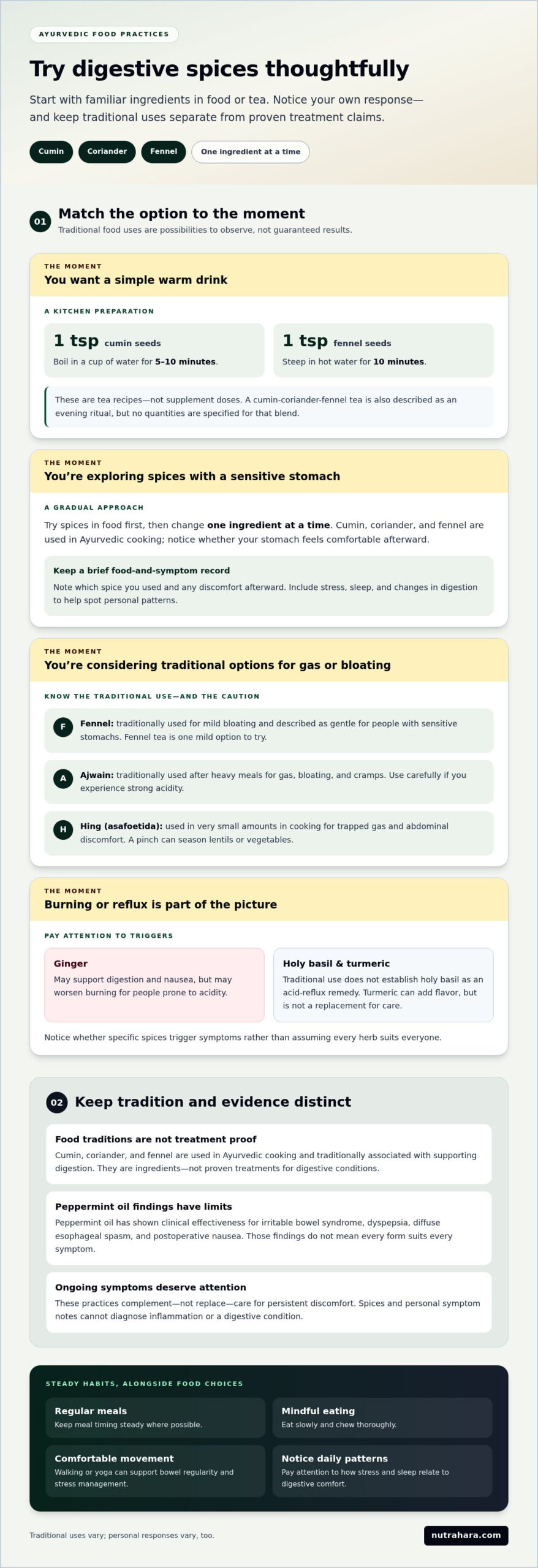
What are the recommended doses and forms of common Ayurvedic digestive herbs? Kitchen preparations offer practical examples: boil a teaspoon of cumin seeds in a cup of water for five to ten minutes, or steep a teaspoon of fennel seeds in hot water for ten minutes. Supplement amounts vary by product, so don’t treat these tea recipes as supplement doses.
How can consumers identify Ayurvedic supplements contaminated with heavy metals? Appearance and taste can’t reliably reveal contamination. Look for batch-specific test results that explicitly cover heavy metals. Gut bacteria and digestive symptoms can’t confirm whether a product is contaminated.
Cumin, coriander, and fennel are familiar spices in Ayurvedic cooking. Traditional dietary guidance includes them among spices that may stimulate Agni and support digestion. Their role is practical: season a meal, then notice whether your stomach feels comfortable afterward. They are ingredients, not proven treatments for digestive conditions.
For a simple evening ritual, sip cumin-coriander-fennel tea. Cumin and fennel are also traditionally described as gentle digestive aids that may support digestion and ease mild bloating with regular use. Try the spices in food first, especially if you have a sensitive stomach, and change one ingredient at a time. This makes it easier to notice how your body responds.
Ajwain is traditionally used after heavy meals for gas, bloating, and cramps. Use it carefully if you experience strong acidity. Hing, also called asafoetida, is used in very small amounts in cooking to help with trapped gas and abdominal discomfort. A pinch can season lentils or vegetables without making the spice the focus of the meal.
For bloating or cramps, fennel tea is a mild option to try. Fennel is also described as gentle for people with sensitive stomachs. Holy basil appears in traditional digestive preparations, but that doesn’t establish it as an acid-reflux remedy. If reflux causes burning, note whether specific spices trigger symptoms; ginger may worsen burning for people prone to acidity. Turmeric can add flavor to meals, but don’t treat it as a replacement for care.
What are the benefits and risks of ginger, peppermint, and fennel for digestive symptoms? Ginger may support digestion and nausea, but can worsen acidity-related burning; fennel is traditionally used for mild bloating. Peppermint oil has shown clinical effectiveness for irritable bowel syndrome, dyspepsia, diffuse esophageal spasm, and postoperative nausea. These findings don’t mean every form suits every symptom.
Food choices work best alongside steady habits. Regular meals, mindful eating, and comfortable movement can help you notice patterns without making every meal a test. Track which spices you use and any discomfort afterward; this simple record can guide your next adjustment.
Ayurveda connects digestive comfort with Agni, but inflammation is a modern medical concept requiring careful interpretation. A warm spice or herbal remedy may be part of a food tradition; that alone doesn’t show it treats inflammation or disease. Ayurvedic herbs for gut health should therefore be understood through both traditional use and the limits of evidence.
Ginger illustrates the difference between a research finding and a health outcome. One study of short-term ginger juice supplementation reported an increase in the Firmicutes-to-Bacteroidetes ratio and Proteobacteria abundance. Those microbiome changes don’t establish that ginger reduces inflammation, improves symptoms, or benefits everyone. They also don’t show that a specific supplement form works like fresh ginger used in cooking.
Triphala is traditionally used for constipation and sluggish digestion, not as a proven anti-inflammatory medicine. If you’re considering it, first note your bowel pattern and existing symptoms. Avoid relying on it when frequent loose motions are present. A powerful-sounding remedy still needs a clear purpose, and persistent discomfort calls for attention to the underlying cause.
Everyday habits can support a thoughtful approach. Keep a brief food and symptom record, noting spices, stress, sleep, and changes in digestion. For example, compare how you feel after a ginger-seasoned meal with how you feel after a meal without it. This won’t diagnose inflammation, but it can reveal personal patterns worth discussing with a healthcare professional.
Balanced meals provide nutrients that support normal body functions; no single spice replaces varied eating. Gentle movement, such as walking or yoga, and calming practices like meditation can help make stress management part of a consistent routine. These steps complement, rather than replace, medical care for ongoing symptoms.
When assessing herbal remedies, separate three questions: What does tradition say? What outcome has research measured? What changes do you notice? This method helps distinguish digestive comfort from treatment claims. It also keeps “inflammation” from becoming a catch-all explanation for bloating, constipation, or other discomfort.
Ayurvedic traditions use different herbs for different digestive patterns. Ginger is used for nausea and gas, and may support appetite or ease post-meal heaviness. It can be added fresh to food, but people prone to acidity may find that it worsens burning. Note your symptoms and how you feel after using it.
Triphala is a blend of three fruits traditionally used to support regular bowel movements and address heaviness associated with sluggish digestion. Its full benefits may take several weeks of consistent use. Avoid it when frequent loose motions are present. Track changes in bowel habits rather than treating every digestive discomfort as constipation.
For acidity-related concerns, Ayurveda describes amla as cooling and traditionally uses it for sour burps and digestive heat. Licorice is used to soothe acidity and support the gut lining. Avipattikar Churna is a classical Ayurvedic formulation for acidity, traditionally used with proper direction. These uses describe Ayurvedic practice, not proof that an herb treats an underlying condition.
Aloe vera juice is another traditional option described as cooling for the digestive tract. The form matters: juice, powder, and multi-herb preparations aren’t interchangeable. Before choosing an herbal remedy, identify the symptom you want to address, such as nausea, acidity, or irregular bowel movements. Then consider the ingredient list and formulation, and introduce only one new product at a time. This makes it easier to notice changes in symptoms.
For a practical approach, keep a short record of the herb, form, and digestive response. If you’re exploring ayurvedic herbs for gut health, match the traditional use to your concern rather than combining several remedies at once. Persistent or worsening symptoms deserve medical attention, especially when they disrupt eating or daily routines.
Nutrahara offers Women’s Health Supplements formulated by combining Ayurvedic principles with modern nutritional research and natural, clean ingredients. For women considering digestion as part of broader wellbeing, supplements can complement nourishing meals, regular movement, restorative sleep, and mindful habits. Nutrahara’s supplements are designed to support women’s overall wellness, energy, and health, not to promise a cure for digestive symptoms.
As you consider supplements, start with your personal wellness priorities and review each product’s ingredients. Keep track of changes in your routine and how you feel to make thoughtful choices over time. Visit nutrahara.com to explore Nutrahara’s Women’s Health Supplements.
Your wellbeing routine should fit your body, preferences, and stage of life. Instead of adding several remedies at once, choose one manageable change and notice how it fits alongside your meals, movement, and rest. A steady approach can help you make informed choices without turning everyday eating into a source of pressure.
Ayurvedic herbs for gut health can be part of a wider wellness journey, but they’re not a substitute for medical care when digestive symptoms persist or interfere with daily life. Nutrahara offers Women’s Health Supplements for women seeking broader wellness support through formulations that combine Ayurvedic principles with modern nutritional research.
Contact Nutrahara to discuss your wellness needs, and take your next step with confidence.
Agni is Ayurveda’s way of describing digestive capacity, not a laboratory measure or medical diagnosis. Use the idea as a prompt to notice patterns: whether meals feel comfortable, appetite feels steady, or certain foods bring heaviness. A simple meal-and-symptom journal can help you observe those patterns without assuming Agni explains every digestive concern.
Ayurveda considers digestion, appetite, and elimination together, alongside everyday routines. For example, note whether rushed lunches or late dinners coincide with discomfort, then adjust one habit and observe the result. This traditional perspective can help you reflect on your routine, but ongoing symptoms may have causes that need medical assessment. It complements, rather than replaces, a clinical understanding of digestive health.
Yes. Ginger may worsen burning for people prone to acidity, and Triphala should be avoided when frequent loose motions are present. Herbs come in different forms and combinations, so check the ingredients and follow product directions rather than combining remedies casually. If symptoms persist, worsen, or disrupt daily activities, seek medical care instead of relying on self-treatment.
Start with steady habits rather than a drastic reset. Eat meals at regular times, chew slowly, include fibre-rich foods, and drink enough water to support comfortable bowel movements. Walking, yoga, or breathing exercises can make movement and stress relief part of your routine. Track meals and symptoms as you make changes to identify what seems helpful for your digestion.
Effectiveness depends on the cause of the stomach problem and the treatment used. Ayurvedic herbs have traditional uses for symptoms such as gas or constipation, but those uses don’t establish that they treat an underlying disease. Conventional care can investigate specific causes and guide treatment accordingly. For persistent or severe problems, don’t substitute herbs for medical evaluation or prescribed treatment.
Some people may notice changes after regular use within two to four weeks, though responses vary. The herb, preparation, consistency, and cause of the symptom can all affect what you experience. Keep a brief record of the remedy, how you use it, and any changes in comfort or bowel habits. Stop relying on self-care if symptoms worsen or continue.
This article is not a substitute for medical advice. Please consult a healthcare professional before starting any supplement, especially if pregnant, nursing, taking medication, or managing health conditions.