Supplements can interact with prescription and over-the-counter medicines, so a quiz to find the right supplements for me should account for your medication list. Recommendations are more useful when they reflect your health priorities and existing routines. Treat a quiz as an organized starting point, not a final decision about what to add to your daily routine.
Your needs can change through menstruation, pregnancy, breastfeeding, perimenopause, and menopause. Your goals and habits matter, too. You might be building a strength-training routine, making time for yoga, or using meditation to support a calmer day. These choices are part of your overall wellbeing, alongside your diet and any supplements you currently take.
This guide explains how these details may shape quiz recommendations and what to consider before acting on them. Learn how to prepare useful answers, assess nutrition and daily habits, and recognize when a health question calls for professional guidance. The goal is to help you make your next wellness decision with greater clarity and confidence.
Yes. Vitamins and herbal supplements can interact with prescription and over-the-counter medicines. St. John’s wort may cause dangerous serotonin levels for people taking antidepressants. Higher doses of some vitamins and minerals can also increase side effects and interaction risks. A quiz can flag medication details, but it can’t assess your full medical history.
A personalized supplement quiz can use your health goals, diet, and lifestyle to shape recommendations. It may ask whether you want to support energy, sleep, or exercise routines, and whether you follow a vegetarian diet. Your answers can point to topics to explore, but they aren’t a diagnosis or proof that you need a supplement. For a useful result, include your current vitamins and supplements, medication names, and doses.
Quiz questions may cover personal details such as your name, age, sex, and diet. Answer accurately, including whether you’re pregnant or breastfeeding, and note life-stage changes such as menopause if asked. Compare recommendations with your current routine. Look for duplicate ingredients across products, follow each label’s directions, and don’t exceed its recommended dose. If a recommendation includes an ingredient that may interact with a medicine, discuss it with your healthcare provider before taking it.
Quiz services can differ in ingredients, price, and cancellation terms, so there’s no single standard plan to compare. Personalized plans and quiz-based subscriptions also vary in cost according to the plan and subscription terms.
During pregnancy or breastfeeding, don’t start a new supplement based only on a quiz. Avoid self-selecting herbal blends or high-dose vitamins; discuss the specific ingredients and doses with your doctor.
To review a supplement, read its label for ingredient amounts, directions, and expiration date. The U.S. Pharmacopeial Convention, NSF International, and ConsumerLab test supplements for purity, potency, and availability. Check the packaging for their testing marks, and compare the listed ingredients with your medicines and current supplements.
A useful quiz turns broad intentions into clear priorities. Instead of selecting “better health,” choose a focus such as steady energy, sleep habits, exercise recovery, or nutrition during menopause. A focused goal makes recommendations easier to assess and helps keep a wellness quiz from sounding like a diagnosis. If you’re thinking, “I want a quiz to find the right supplements for me,” start by naming the change you hope to support.
Personal details put your answers in context. A quiz may ask for your name, age, sex, and diet. It may also ask about life stage, including menstruation, pregnancy, breastfeeding, or menopause. These details can shape which questions come next. Share accurate information, and note when an answer doesn’t reflect your circumstances.
Diet and daily routines add useful context. Describe your eating pattern, including whether you avoid animal products, and list the supplements you already take. Include habits such as yoga, strength training, meditation, and sleep routines if asked. For example, someone who practices evening yoga and wants better sleep has a different starting point from someone focused on exercise nutrition. A quiz to find the right supplements for me should connect its suggestions to the details I provide.
Look for a clear connection between each recommendation and your stated goal. If a quiz suggests a supplement but doesn’t explain why it fits your answers, treat that as a prompt to learn more, not a reason to add it automatically. Your answers can guide thoughtful choices, but they don’t replace clinical assessment when symptoms need attention.
Take the quiz when you have time to review your eating habits and supplement labels. This preparation helps you answer consistently and spot recommendations that overlap with your current routine.
Start with your regular meals. A balanced diet can provide nutrients through fruits, vegetables, beans, whole grains, and other fresh foods. The quiz’s daily targets are 2 cups of fruit and 2½ cups of vegetables. Track what you actually eat for a few days, then note gaps or foods you avoid. A vegetarian pattern, for example, may change which nutrients deserve attention.
Dietary patterns and life stages matter. Pregnant women and vegetarians may require extra nutrients through vitamins, depending on age and gender. Vitamin B12 needs particular consideration for vegans because it’s absent from plant foods; fortified cereals can provide it. Record your usual meals and life stage before reviewing a quiz result. That gives you practical context for considering whether a recommendation fits.
Vitamin D is another nutrient to discuss in context. The NIH Office of Dietary Supplements recommends a vitamin D recommended dietary allowance of 600-800 IU daily. A quiz result doesn’t show whether you have a deficiency. If you’re concerned about a health problem or nutrient status, consult your doctor about appropriate evaluation and next steps.
In the United States, dietary supplements are regulated under the Dietary Supplement Health and Education Act of 1994, according to the U.S. Congress. The FDA has not evaluated statements made about these products, and they aren’t intended to diagnose, treat, cure, or prevent disease. Read labels for ingredients and directions, then compare them with your diet and current supplements. Food remains the foundation; a supplement should address a relevant need rather than replace varied meals.
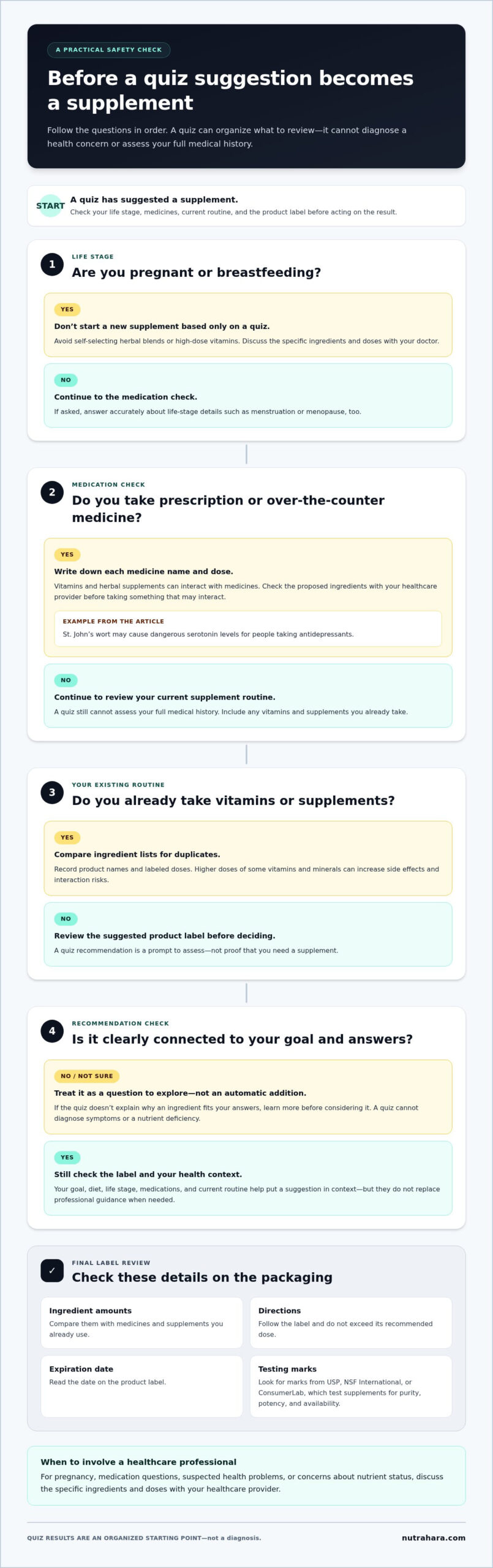
A supplement quiz organizes information; it doesn’t diagnose a condition or determine treatment. For example, a result suggesting a vitamin or mineral doesn’t explain why you feel tired or identify the cause. Use quiz results for educational purposes: to prepare focused questions, not as a medical conclusion.
If you have or suspect a health problem, contact your family doctor for consultation, diagnosis, and treatment. Describe the symptom, when it began, and how it affects your daily activities. Persistent fatigue, changes in menstrual patterns, or ongoing sleep difficulties, for instance, deserve more than a generic quiz result. A qualified professional can assess your symptoms alongside your health history.
Pregnancy and breastfeeding call for added care. Before starting any new supplement during pregnancy, speak with your doctor. Bring the product label and a list of your current supplements, including ingredient amounts. These details help your healthcare provider consider your situation rather than relying on a quiz’s general recommendation. The same careful review can help clarify questions about supplements during breastfeeding.
Keep the distinction clear: wellness goals, such as supporting a balanced routine, differ from investigating a possible health concern. A quiz may help organize choices around diet or lifestyle, but symptoms require professional assessment. If a result seems to conflict with medical advice, pause before acting and discuss the specific recommendation with your healthcare provider. This matters especially when pregnancy, breastfeeding, or ongoing treatment affects your decisions.
Takeaway: use a quiz to prepare, not to self-diagnose. A clear list of your questions, product labels, and current routine can make a conversation with your doctor more specific and useful.
Nutrahara offers Women’s Health Supplements for women seeking options that fit their wellness priorities and daily routines. Its formulations combine principles of ancient Ayurveda science with modern nutritional research and use natural, clean ingredients. If a quiz has helped you identify areas to explore, consider how a supplement’s ingredients and label align with your goals, diet, and current routine.
Women’s needs can change across menstruation, pregnancy, breastfeeding, perimenopause, and menopause. Use quiz results as a starting point for learning, and discuss supplement choices with your healthcare provider if you have medication or health questions. Keep nutrition, movement, yoga, and meditation in view as parts of your broader wellbeing journey.
Visit Nutrahara.com to explore its Women’s Health Supplements.
Let your next step reflect the life you’re living now, not a perfect routine you think you should follow. A quiz to find the right supplements for me can help organize your priorities, but your choices can evolve as your habits and life stage change. Notice what supports your wellbeing, and make room for nourishing meals, movement, yoga, and meditation alongside any supplement decisions.
For women balancing work, family, fitness, and changing health needs, a steady approach can feel more sustainable than trying to change everything at once. Choose one personal priority to focus on, then revisit it as your needs shift. If you have questions about Nutrahara’s Women’s Health Supplements, contact Nutrahara with your questions.
Your wellness journey is yours to shape. Take the next step with curiosity, care, and confidence.
There isn’t one vitamin routine that suits every woman. Your food choices, life stage, medicines, and current supplements all affect what may be relevant. For example, a vegan diet raises a question about vitamin B12, while pregnancy can change which nutrient needs to discuss with your care team. Use your diet and product labels to prepare focused questions for a healthcare professional.
Quizzes may ask about eating patterns, wellness goals, activity, and products you already use. Some also request details such as age and sex. Before starting, consider the goal you want to explore, such as sleep or exercise recovery, and have your supplement labels nearby. Answer health questions carefully, since recommendations rely on the information you enter.
Quizzes can help organize preferences, but they can’t diagnose a condition or determine treatment. A result depends on the details you provide and how the recommendations are explained. Treat it as a starting point for learning about ingredients, not proof that you need a product. For symptoms or health concerns, discuss your situation with a qualified healthcare professional.
Evidence varies by ingredient, intended use, and personal circumstances. A broad goal such as “more energy” doesn’t identify a specific supplement need. Look for clear information explaining why an ingredient is suggested and what evidence supports that use. Consider sleep habits, meals, movement, and stress routines, too; supplements are only one part of overall wellbeing.
Prescription and over-the-counter medicines can interact with vitamins and herbal supplements. For example, St. John’s wort may cause dangerous serotonin levels for people taking antidepressants. During pregnancy, speak with a doctor before starting a new supplement. Keep a current list of medications and products, including label directions, to support a focused discussion about possible interactions.
This article is not a substitute for medical advice. Please consult a healthcare professional before starting any supplement, especially if pregnant, nursing, taking medication, or managing health conditions.