
A thoughtful ayurvedic detox for women doesn’t have to mean a strict cleanse or a sudden change to your routine. It can start with gentle, nourishing habits that leave room for work, exercise, and your body’s needs.
If conflicting online claims have left you unsure what “detox” actually means, you’re not alone. Ayurveda offers traditional ways of thinking about balance and daily care, but its concepts aren’t medical diagnoses. A detox routine shouldn’t be treated as a proven way to remove toxins or replace medical care. Restrictive cleanses and unfamiliar supplements may also be a poor fit, especially during pregnancy or breastfeeding, while taking medication, or through changing menstrual and menopausal stages.
This guide separates traditional ideas from established health evidence and offers realistic ways to think about meals, movement, yoga, meditation, and supplement labels. You’ll also find signs to pause and seek qualified medical advice. The aim is a steady, informed approach, not a punishing reset.
Curiosity about an Ayurvedic detox is understandable, especially when online advice promises a quick reset. A calmer starting point is to ask what the practice means, what it doesn’t establish, and whether the routine feels nourishing and realistic for you. The phrase can refer to different things, so it helps to separate traditional wellness ideas from medical claims.
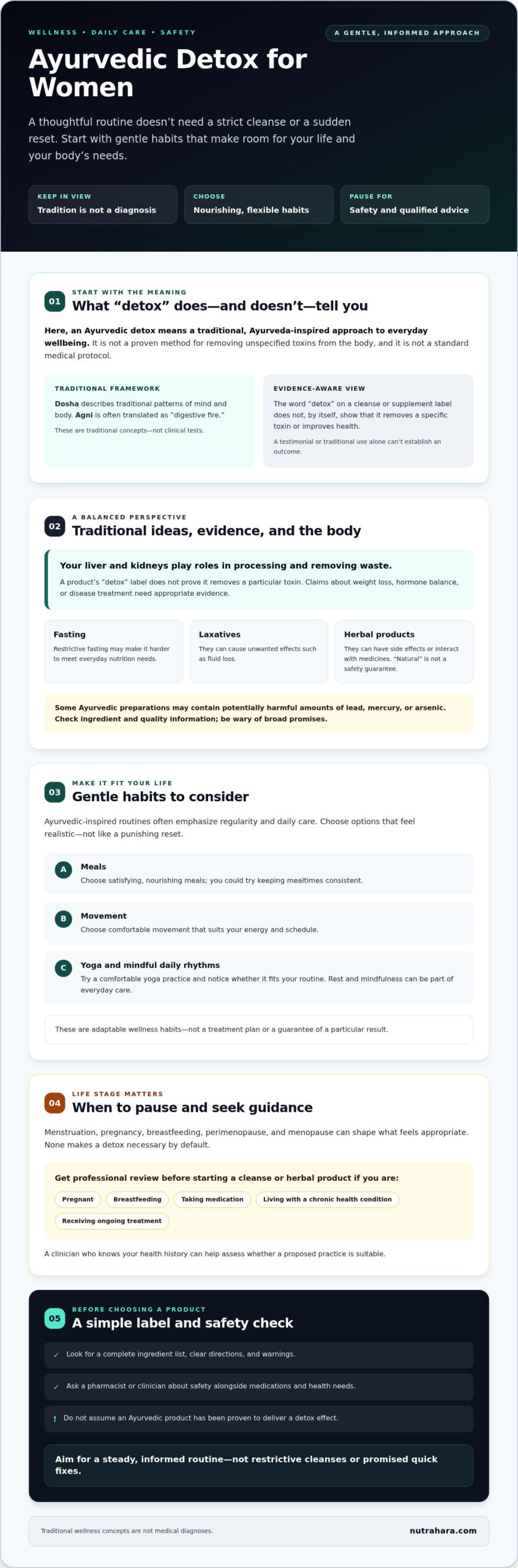
In this article, “ayurvedic detox for women” means a traditional, Ayurveda-inspired approach to everyday wellbeing, not a proven method for removing unspecified toxins from the body. Ayurveda is a diverse traditional system with concepts and practices that have developed over time. A general overview of Ayurveda can introduce its history and ideas, but traditional explanations aren’t the same as biomedical measurements or diagnoses.
Two familiar Ayurvedic concepts are dosha and agni. Doshas are traditional ways of describing patterns of mind and body; agni is often translated as digestive fire. Neither is a clinical test. Fatigue, bloating, or a change in appetite doesn’t prove that a dosha is “out of balance” or that toxins have accumulated.
Ayurvedic-inspired routines often emphasize regularity: satisfying meals, adequate rest, gentle movement, and mindful daily rhythms. You could try keeping mealtimes consistent or choosing a comfortable yoga practice, then notice whether it fits your energy and schedule. These are adaptable wellness habits, not a treatment plan or a guarantee of a particular result.
Your body has organs, including the liver and kidneys, that play roles in processing and removing waste. The word “detox” on a cleanse, routine, or supplement label doesn’t show by itself that the product removes a specific toxin or improves health. Claims about weight loss, hormone balance, or disease treatment need appropriate evidence; traditional use or one person’s experience alone can’t establish those outcomes.
This distinction matters for women at every life stage. Menstruation, pregnancy, breastfeeding, perimenopause, and menopause can shape what feels appropriate, but none makes a detox necessary by default. If you’re reviewing a specific product, use the DetoxifyLife product page to check its current details, not as proof of a detox effect.
Ayurvedic tradition can offer a meaningful framework for thinking about daily habits, but tradition alone doesn’t make every cleanse, herb, or supplement safe for everyone. An ayurvedic detox for women isn’t a standard medical protocol: practices and products vary, and evidence for one approach can’t automatically be applied to another.
That distinction matters if a plan involves fasting, laxatives, or multiple herbal products. Restrictive fasting may make it harder to meet everyday nutrition needs, while laxatives can cause unwanted effects such as fluid loss. Herbal products can also have side effects or interact with medicines. “Natural” describes a source, not a guarantee of safety or effectiveness.
Evidence needs to be considered practice by practice, rather than inferred from Ayurveda’s long history or from one person’s experience. A testimonial may describe what someone felt, but it can’t establish that a cleanse caused a change or that others are likely to have the same result. The National Center for Complementary and Integrative Health offers a balanced overview of scientific evidence on Ayurveda’s value, including safety considerations. It notes that some Ayurvedic preparations may contain potentially harmful amounts of lead, mercury, or arsenic. Check ingredient and quality information, and be wary of broad promises to remove toxins, balance hormones, or treat disease.
For a practical label check, look for a complete ingredient list, clear directions, and any warnings. Then ask a pharmacist or clinician whether the product may be appropriate alongside your medications or health needs. Don’t assume that a product described as Ayurvedic has been proven to deliver a detox effect. Nutrahara’s DetoxifyLife product details can be reviewed as product information, not as evidence of a medical outcome.
Pregnancy, breastfeeding, ongoing treatment, chronic health conditions, and medication use all merit professional review before starting a cleanse or herbal product. A clinician who knows your health history can help you assess whether a proposed practice is suitable. This is particularly relevant during life stages when nutritional needs or treatment plans may differ.
If a practice brings on concerning symptoms, stop and seek medical advice. Don’t use a detox routine to delay care, replace prescribed treatment, or change medication on your own. A steady approach should support your wellbeing, not require you to push through feeling unwell.
There isn’t one routine that suits every woman, and a life stage doesn’t point to a particular “detox” need. For an ayurvedic detox for women, focus instead on habits that feel practical and nourishing. Menstruation, pregnancy, breastfeeding, perimenopause, and menopause can all be reasons to adapt a routine or ask a healthcare professional before making changes, especially if you have symptoms, a health condition, or treatment needs.
Yoga and meditation can support general wellbeing, but they aren’t detox treatments. Choose movement that matches your comfort and capacity, whether that’s a gentle yoga sequence, a walk, or your usual exercise with modifications. Pause or change the activity if it feels uncomfortable. If you’re pregnant, recovering from birth, or managing a health concern, ask a clinician what movement is appropriate for you.
Mindfulness doesn’t need to become another rule. Try a few quiet breaths before a meal or a brief meditation during a break. If it feels calming, keep it; if not, choose another way to rest.
Build meals around your day rather than fasting or following rigid food rules. If you exercise, plan a satisfying meal or snack that fits your schedule, and keep water accessible. Regular rest matters, too. These habits can support everyday wellbeing, but they don’t promise toxin removal or specific outcomes at different life stages.
| Practice | Low-pressure starting point | When to check with a clinician |
|---|---|---|
| Yoga or gentle movement | Choose a comfortable session and modify poses to suit how you feel. | Pregnancy, postpartum recovery, pain, injury, or a condition affecting movement. |
| Meditation or breathing | Take a quiet pause and notice your breathing without forcing it. | If it causes distress or you’re seeking support for ongoing mental health concerns. |
| Meals and hydration | Plan nourishing meals around work, exercise, and daily commitments. | Pregnancy, breastfeeding, a medical condition, or a prescribed nutrition plan. |
| Rest and routine | Make space for a consistent wind-down habit that feels realistic. | Persistent sleep difficulties or symptoms that concern you. |
Use the table as a starting point, not a checklist to complete. If you’re considering a supplement, review its ingredients with a qualified professional when your life stage, medications, or health history could affect what’s appropriate.
A routine should make everyday care feel more manageable, not become another test to pass. An ayurvedic detox for women can be approached as a flexible set of wellness habits, with no strict timeline or required cleanse. Choose one small practice that suits your schedule, see how it feels, and adjust as needed.
Start with parts of your day that already have a rhythm. You might plan regular, nourishing meals around work and exercise, keep water within reach, and make room for movement that feels comfortable. A short yoga sequence or walk can be adapted to your fitness, energy, and health circumstances. If you’re pregnant, breastfeeding, managing a condition, or following a care plan, check whether a change in activity or eating habits is appropriate for you.
For mindfulness, try a quiet pause before beginning your day or a few relaxed breaths between tasks. Meditation doesn’t need to be long or formal. If it doesn’t suit you, skip it or choose another calming moment. These practices are invitations, not steps in a prescribed detox program.
Brief personal notes can help you decide whether a habit fits. After trying a change, record how your energy, mood, sleep, and general comfort feel. Treat these as observations, not proof that a detox is working. A simple note such as “felt comfortable after my walk” is enough; there’s no need to score your body or look for dramatic changes.
Habits such as nourishing meals, comfortable movement, mindfulness, and rest can support general wellbeing, but they don’t replace medical care. For more women’s wellness information, explore Nutrahara’s wellness information.
A thoughtful next step doesn’t need to be dramatic. Before trying a cleanse or supplement, check whether the goal is realistic, the routine feels comfortable, and the claims match the available evidence. An ayurvedic detox for women should never require you to ignore your needs or push through discomfort.
Supplements are optional. If you’re considering one, read the full ingredient list, directions, and warnings, and be cautious of claims that sound too broad or certain. Consider how it fits your circumstances, not just its traditional framing. If you’re pregnant, breastfeeding, receiving treatment, managing a chronic condition, or taking medication, discuss it with a qualified healthcare professional before use. Don’t change prescribed care based on a product label or online claim.
A useful question is: “What evidence supports this specific product for the outcome I’m considering?” If the answer is unclear, take time to review the information rather than feeling pressured to decide. Nutrahara describes its approach as combining Ayurvedic principles with modern nutritional research, but that approach alone doesn’t establish that any supplement provides a detox effect.
If you want to assess a specific product, review the DetoxifyLife product details for the information currently provided, and consider it alongside your own needs and professional advice. Product information isn’t proof of a medical benefit. You can also explore Nutrahara’s women’s wellness resources as part of a broader, evidence-aware learning journey. There’s no need to rush; choose a next step that feels informed and appropriate for you.
An ayurvedic detox for women doesn’t need to mean a restrictive cleanse or a promise to remove toxins. Treat it as an opportunity to explore traditional wellness ideas thoughtfully, while keeping evidence, comfort, and your individual health needs in view. Nourishing meals, movement that feels right, yoga, meditation, and rest can be adaptable parts of everyday wellbeing, not substitutes for medical care.
Supplements are optional. Review ingredients and product information carefully, and seek qualified medical advice before trying something new if you’re pregnant, breastfeeding, taking medication, or managing a health condition. Your routine can change with your life stage. Start with a realistic goal, then keep only the habits that feel supportive.
Nutrahara brings Ayurvedic principles together with modern nutritional research and offers women’s health supplements and wellness e-books. Explore Nutrahara’s women’s wellness approach for more information as you consider your next step.
An Ayurvedic detox for women usually refers to wellness practices inspired by Ayurveda, such as mindful routines, food choices, movement, and rest. The term alone doesn’t prove that a program removes toxins or treats a health condition. Practices vary, and some cleanses involve fasting, laxatives, or herbs. Consider your health circumstances before making changes, and ask a qualified healthcare professional about practices or products that may affect your care.
Safety depends on the specific practice or product and your individual circumstances. Pregnancy and breastfeeding aren’t times to assume a cleanse or herbal supplement is harmless. Before starting a restrictive routine or supplement, discuss it with a qualified healthcare professional who understands your care. This general information can’t determine whether a particular product or practice is appropriate for you, so seek personalized guidance before making a change.
Yoga and meditation can be part of a wellbeing routine, but they aren’t methods proven to remove toxins. Choose movement that suits your fitness and health, and adapt or pause if it feels uncomfortable. A brief meditation or quiet breathing practice can offer a mindful pause in your day. If you’re pregnant, recovering from birth, or managing a health condition, ask a healthcare professional about suitable activity.
There isn’t one meal plan that suits every woman, and a “detox” label doesn’t show that restrictive eating is beneficial. Consider regular, nourishing meals that fit your needs and preferences rather than fasting or following severe food rules. If you’re pregnant or breastfeeding, have a medical condition, or are receiving treatment, consult a qualified healthcare professional before making substantial dietary changes. Your nutrition needs are personal.
A supplement’s traditional framing or marketing doesn’t establish that it removes toxins or treats a health condition. Your body has organs, including the liver and kidneys, that play roles in processing waste. Review the product’s ingredients, directions, and warnings. If you take medication, have a health condition, are pregnant, or are breastfeeding, ask a qualified healthcare professional to review the product with you before use.
There’s no universally appropriate duration for an Ayurvedic detox, and a longer cleanse isn’t automatically safer or more effective. Avoid rigid schedules if you don’t understand what the routine involves. Before starting a program that includes fasting, laxatives, or supplements, seek professional guidance, especially if you have health concerns or take medication. Everyday habits that fit your needs don’t have to follow a timed detox plan.
Stop the practice that may be contributing and seek appropriate medical advice, especially if symptoms are severe, persistent, or concerning. Don’t assume discomfort means toxins are leaving your body. If you’ve used a supplement or laxative, tell the healthcare professional what you took and when. Seek urgent care for symptoms that feel serious or need immediate attention, rather than trying to continue the routine.
The word “detox” isn’t evidence that a routine causes lasting weight loss or balances hormones. Don’t rely on cleanse claims to address unexplained weight changes, menstrual concerns, or other symptoms. A qualified healthcare professional can assess your individual concerns and discuss appropriate options. Nourishing meals, comfortable movement, sleep, and stress care may support general wellbeing, but they don’t guarantee a specific medical outcome.
This article is not a substitute for medical advice. Please consult a healthcare professional before starting any supplement, especially if pregnant, nursing, taking medication, or managing health conditions.