

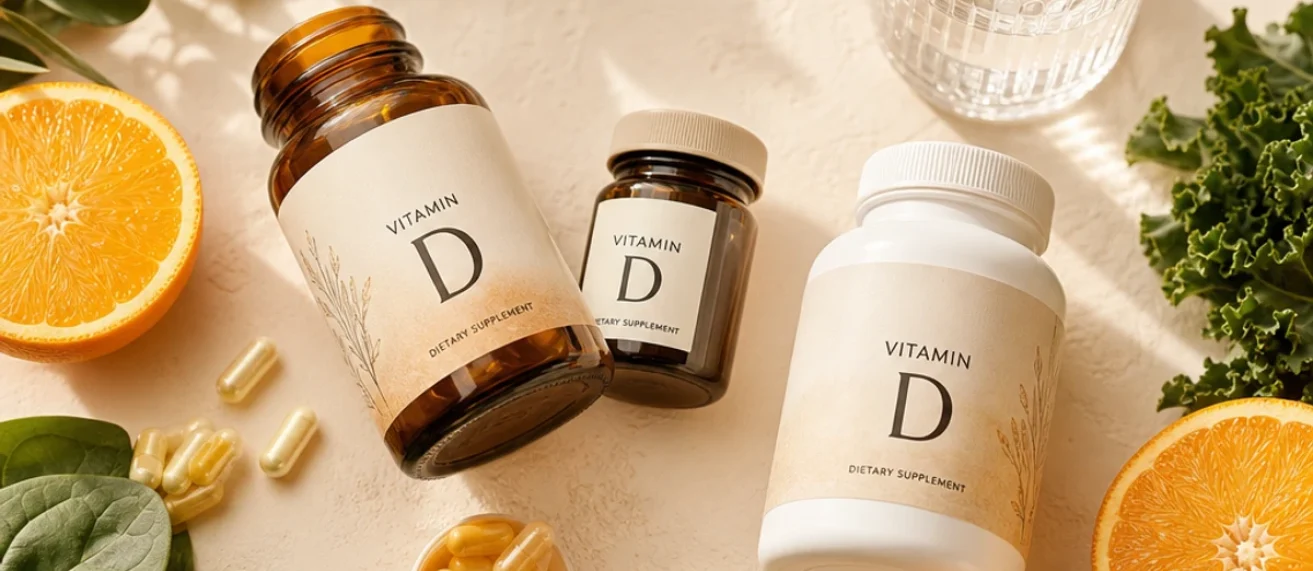
vitamin D supplement for women with low estrogen – does it help with estrogen production and deficiency symptoms? | 11 min read | Nutrahara Editorial Team
A vitamin D supplement for women with low estrogen won’t restore estrogen production the way hormone therapy does. But research shows the two hormones interact closely enough that correcting a deficiency can ease several overlapping symptoms: bone loss, fatigue, low mood, and poor sleep. This guide breaks down what the science actually shows, how much vitamin D women need, and where Ayurvedic-inspired formulas fit into a broader hormone-support routine. The short answer: vitamin D supports the systems estrogen also regulates, but it’s a complementary tool, not a replacement for estrogen itself.
Vitamin D and estrogen share biological pathways in bone metabolism, immune regulation, and mood balance. This is why women going through perimenopause or menopause often notice symptom overlap between the two deficiencies.
Research published in Maturitas found that estrogen enhances vitamin D function, favoring its accumulation and increasing the expression of the vitamin D receptor. This results in a more potent anti-inflammatory response in females than males. At the same time, low vitamin D status has its own independent effects on bone density, muscle strength, and cognitive function, so women experiencing declining estrogen levels have two separate reasons to monitor their vitamin D intake carefully.
Estrogen and vitamin D do not operate in isolation. They regulate overlapping receptor systems in bone, brain, and immune tissue, which is why correcting one deficiency often eases symptoms that seem to belong to the other.
Vitamin D does not directly trigger the ovaries to produce more estrogen. However, observational studies consistently find that women with higher circulating vitamin D also tend to have higher estradiol, and clinical trials suggest vitamin D can influence how the body manages excess estrogen in different situations. This relationship is bidirectional and dose-dependent, rather than a simple cause-and-effect fix, which matters when evaluating the question: “vitamin D supplement for women with low estrogen: does it help with estrogen production and deficiency symptoms?”
Findings vary depending on age, menopausal status, and health condition, which is why blanket claims about vitamin D “boosting” estrogen are misleading. Here’s what the actual data reveals:
These findings show vitamin D’s relationship with estrogen shifts by life stage: in postmenopausal women with naturally low estrogen, adequate vitamin D correlates with somewhat higher estradiol. In premenopausal women with normal-to-high estrogen, vitamin D appears to help regulate excess levels. Key Takeaway: Vitamin D does not manufacture estrogen, but it appears to help the body maintain healthier, more balanced estrogen levels. Correcting a deficiency can meaningfully reduce fatigue, bone-related symptoms, and mood disruption that overlap with low-estrogen states. This overlap is why so many women find their energy levels and joint comfort improve after a few months of vitamin D correction, even before any other hormone-support changes take hold. For deeper context, see Impact of Vitamin D status on age at menopause – PMC.
Vitamin D deficiency is widespread among American women. The overlap with declining estrogen during perimenopause and menopause is significant enough that clinicians routinely test both together. Understanding the scale of the problem helps explain why this pairing gets so much attention in women’s health circles.
Women carry a disproportionate share of the deficiency burden across every major dataset. Federal health surveys consistently reveal this pattern:
| Population Group | Deficiency Rate | Source | Relevance to Low Estrogen |
|---|---|---|---|
| General US adult population | ~42-65% | NIH Office of Dietary Supplements, University of Miami | Baseline national risk |
| Women of childbearing age (20-44) | 11.1% deficient, 25.7% inadequate | CDC/NHANES 2003-2006 | Pre-perimenopause window |
| Postmenopausal women, low bone density | Elevated across NHANES cycles 2009-2018 | NHANES national trends | Overlaps directly with low estrogen |
| Non-Hispanic Black women | Highest subgroup rate reported | ScienceDirect, GrassrootsHealth | Compounded deficiency risk |
Key Takeaway: Women are consistently identified as a higher-risk group for vitamin D deficiency across every major national dataset. This risk climbs during the same years estrogen naturally declines, making combined screening a practical, low-cost step for most women over 40. Understanding your vitamin D status is one of the easiest wins in hormone health, since a simple blood test costs little and the fix is straightforward once you know your baseline. For deeper context, see Preventive care benefits for women. For related guidance, see Ashwagandha With Black Pepper.
Low estrogen produces a wide range of symptoms. Several of them, particularly fatigue, bone aches, and mood changes, overlap with classic vitamin D deficiency symptoms, which is part of why the two are so often discussed together. Recognizing which symptoms respond best to vitamin D correction versus which require direct hormonal intervention helps set realistic expectations.
Common signs of perimenopause include hot flashes, period changes, and the potential for weight gain. According to Cleveland Clinic, the National Menopause Foundation has identified 36 known symptoms of perimenopause and menopause. Here are some key overlapping categories:
“During the menopause transition, your body starts to produce less of the hormone estrogen,” explains menopause specialist Dr. Zubina Mawji. Because women have estrogen receptors throughout our bodies, the transition can touch nearly every system.
Key Takeaway: Vitamin D correction is most likely to help with fatigue, bone-related aches, and mood stability. Hot flashes and irregular cycles are more directly tied to estrogen decline itself and typically require a broader hormone-support strategy. This is where Ayurvedic-informed formulations designed for hormonal balance, such as Nutrahara’s FemmePower, are intended to complement rather than replace targeted vitamin D correction. Many women find that addressing vitamin D deficiency first makes the other pieces of their hormone-support plan work better. For deeper context, see How Vitamin D Deficiency During Winter Affects Women’s ….
The right vitamin D dose depends on baseline blood levels, age, and individual risk factors, rather than a single universal number. National guidelines provide a helpful starting range for most healthy women. Testing before and after starting supplementation is the only reliable way to know if a dose is working.
According to the NIH Office of Dietary Supplements, Recommended Dietary Allowances for vitamin D range from 15 to 20 mcg (600-800 IU) for adults. Mayo Clinic confirms the recommended daily amount of vitamin D is 400 international units (IU) for children up to age 12 months, 600 IU for people ages 1 to 70 years, and 800 IU for people over 70 years. Here’s a summary of recommendations:
| Life Stage | Standard RDA | Higher-Risk Recommendation | Upper Limit (UL) |
|---|---|---|---|
| Women ages 19-50 | 600 IU (15 mcg) | 1,000-2,000 IU per Endocrine Society guidance | 4,000 IU without medical supervision |
| Perimenopausal women (40s-50s) | 600 IU | 1,500-2,000 IU if deficient | 4,000 IU |
| Postmenopausal women over 70 | 800 IU (20 mcg) | Individualized after blood testing | 4,000 IU |
| Pregnant or breastfeeding | 600 IU | Doctor-directed only | 4,000 IU |
When considering supplementation, keep these points in mind:
Key Takeaway: Most women with confirmed low estrogen benefit from a vitamin D3 dose in the 1,000 to 2,000 IU range once deficiency is confirmed by blood work, always started under the guidance of a healthcare provider rather than self-prescribed at high doses. Finding the right dose is a process of testing, adjusting, and retesting, not a guess-and-go approach. For deeper context, see Vitamin D Levels and Menopause-Related Symptoms.
Vitamin D works best as one piece of a broader natural approach to hormone imbalance rather than a standalone fix. Ayurvedic tradition has long paired nutrient support with adaptogenic herbs for exactly this reason. Combining evidence-based nutrients with time-tested botanicals reflects how modern integrative practitioners increasingly approach perimenopausal and menopausal care.
Ayurveda approaches hormone imbalance holistically, viewing the body’s stress response, digestion, sleep, and reproductive health as interconnected systems rather than isolated problems. This is the core premise behind Nutrahara, which blends clinically validated Ayurvedic herbs, often sourced from the Himalayas, with essential vitamins across product lines targeting hormonal balance, sleep, digestive health, and cognitive support.
Key Takeaway: No single nutrient reverses a hormone imbalance on its own. The most sustainable approach pairs vitamin D correction with targeted botanical support, quality sleep, and stress reduction, which is the integrative model Ayurvedic-inspired brands like Nutrahara are built around. When you layer these strategies together, the whole often becomes greater than the sum of its parts. For related guidance, see Anxioguard.
Vitamin D does not manufacture estrogen, but the research is clear that the two hormones are closely linked. Correcting a vitamin D deficiency can meaningfully ease fatigue, bone-related symptoms, and mood instability that often accompany low estrogen. For women asking whether a vitamin D supplement for women with low estrogen helps with estrogen production and deficiency symptoms, the honest answer is that it supports the surrounding systems estrogen also regulates, rather than replacing estrogen itself.
To optimize your approach to hormone health, consider these key steps:
Key Takeaway: Women exploring a more holistic, Ayurveda-informed path to hormone balance can start by reviewing Nutrahara’s women’s health formulations, which are designed to work alongside foundational nutrients like vitamin D rather than in place of them.
Current research shows vitamin D does not directly cause the ovaries to produce more estrogen. However, it correlates with healthier estradiol levels in several studies and helps manage symptoms that overlap with low estrogen, such as bone loss, fatigue, and mood changes. It works best as a complementary nutrient alongside medical evaluation and, where appropriate, hormone therapy or Ayurvedic hormone-support formulas, rather than as a standalone treatment.
Yes, several symptoms overlap significantly. Both deficiencies can independently cause fatigue, bone and muscle aches, and mood disruption. This is why healthcare providers often test vitamin D levels when a woman reports classic low-estrogen symptoms during perimenopause.
Most clinical studies define deficiency as a serum 25-hydroxyvitamin D concentration below 20 ng/mL (50 nmol/L), with severe deficiency below roughly 12 ng/mL. National survey data shows women are consistently overrepresented among Americans falling below these thresholds.
The standard RDA is 600 IU per day for women through age 70. However, many clinicians and the Endocrine Society recommend 1,000 to 2,000 IU daily for women at higher risk of deficiency, always confirmed with blood testing before starting a higher dose.
The relationship depends on baseline estrogen levels and life stage. In postmenopausal women with naturally low estrogen, higher vitamin D correlates with somewhat higher estradiol. In premenopausal women with higher estrogen, vitamin D supplementation has been associated with reduced circulating estrogen in some breast cancer risk studies.
Common natural approaches include Ayurvedic adaptogenic herbs like shatavari and ashwagandha, magnesium and calcium for bone support, consistent sleep hygiene, stress reduction practices, and dietary sources of phytoestrogens. Many women combine these strategies with a vitamin D supplement rather than relying on any single intervention.
Most Ayurvedic herbal supplements formulated for hormonal balance are designed to be taken alongside standard vitamins like vitamin D, since they target different biological pathways. Women should still review any supplement combination with a healthcare provider, particularly if they take prescription hormone therapy or other medications.
Yes, testing is strongly recommended. A blood test for 25-hydroxyvitamin D confirms whether you are actually deficient, which prevents both under-dosing and the risk of vitamin D toxicity from unsupervised high-dose supplementation.
This article is for informational purposes only and does not constitute medical advice. Vitamin D and estrogen levels vary by individual, and women experiencing symptoms of hormone imbalance should consult a licensed healthcare provider before starting any new supplement regimen. Statistics and study findings cited above are drawn from publicly available research and government health data as of 2026.





© Nutrahara– 2026 All Right Reserved
