
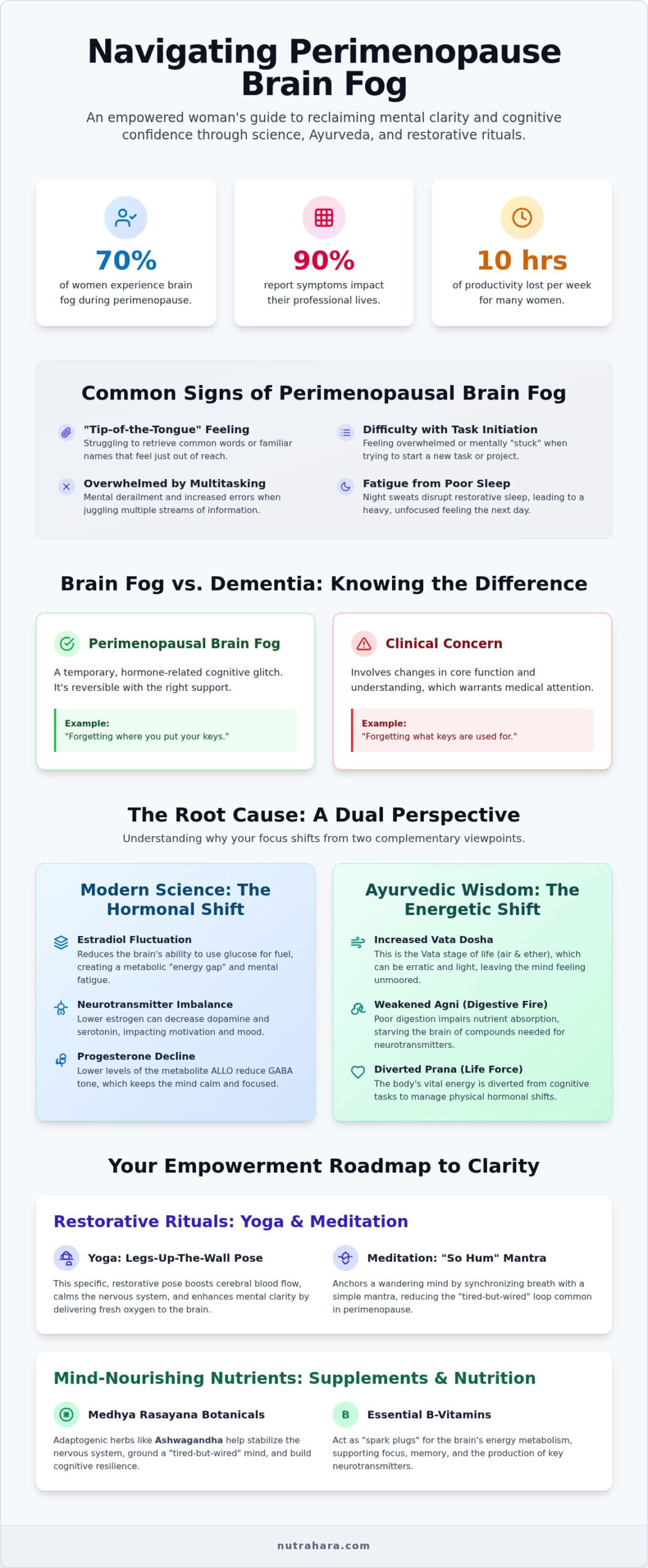
Did you know that nearly 90% of women report that perimenopause symptoms impact their professional lives, with many losing up to 10 hours of productivity every single week? If you’ve found yourself searching for a simple word in an important meeting or feeling a strange, dimmed down version of your usual sharp self, you aren’t alone. Fighting brain fog in perimenopause is a challenge faced by up to 70% of women; yet it often leaves us feeling anxious about our long term cognitive health. This mental mist isn’t a sign that you’re breaking; it’s a signal that your body is ready for a new, more intuitive rhythm of care.
You deserve to feel empowered and steady as you move through this hormonal transition. In this guide, you’ll discover how to clear the mental mists using a powerful fusion of modern nutritional science, Ayurvedic wisdom, and restorative lifestyle rituals. We’ll explore how specific botanical supports like Ashwagandha can ground a tired but wired mind while focusing on nutritional strategies to sharpen your daily focus. This journey provides a clear path toward faster word retrieval, emotional stability, and a renewed sense of control over your personal health progression.
The “cotton wool” feeling isn’t just in your head; it’s a physiological shift in how your brain processes and retrieves information. We often define perimenopausal brain fog as a temporary change in cognitive processing speed. It feels like your mental search engine is lagging. While it can be unsettling, this experience is a normal part of the cognitive symptoms of menopause. You aren’t losing your mind; you’re experiencing a transition in your “Endocrine Age.” This concept suggests that your hormonal status influences your brain health more than the number of candles on your birthday cake. Understanding this shift is the first step toward reclaiming your mental edge.
“I used to be the person who remembered every detail in a board meeting,” says Sarah, 47. “Suddenly, I was grasping for simple nouns. Once I understood this was a hormonal transition rather than a permanent decline, I stopped panicking. I started using targeted support like FocusZenith to bridge the gap. My clarity returned, and so did my professional confidence.”
Recognizing the patterns is essential when fighting brain fog in perimenopause. You might experience the “tip-of-the-tongue” phenomenon, where names or common nouns feel just out of reach. This often pairs with difficulty in task initiation. You sit down to work, but the mental derailment from multi-tasking feels overwhelming. There is also a direct physiological link between night sweats and mental fatigue. If your sleep is fragmented by temperature spikes, your brain cannot perform its nightly “glymphatic cleaning,” leading to a heavy, unfocused feeling the next morning.
Many women worry that these lapses are early signs of dementia. However, perimenopausal brain fog is typically related to hormone fluctuations and is reversible with the right support. The key difference lies in the nature of the lapse. Forgetting where you put your keys is a common cognitive glitch; forgetting what keys are used for is a clinical concern. By taking a proactive, empowered approach, you can manage these transitions effectively. Using grounding botanicals like Ashwagandha helps stabilize the nervous system, ensuring you remain the sharp, capable guide of your own life journey during this progression.
To understand why your focus feels fractured, we must look at the intersection of metabolic science and ancient energetic principles. In modern medicine, we know that estradiol is a key regulator of brain energy. When estrogen levels fluctuate, the brain’s ability to burn glucose for fuel diminishes. This creates a metabolic “energy gap” that manifests as mental fatigue. When fighting brain fog in perimenopause, it is essential to restore this metabolic efficiency. Ayurveda complements this by framing perimenopause as the Vata stage of life. Vata represents the elements of air and ether; it is light, cold, and inherently erratic. When Vata is out of balance, the mind feels unmoored, much like a leaf caught in a shifting wind.
This shift also involves your Agni, or digestive fire. Your gut health directly influences brain clarity through the gut-brain axis. If Agni is weak, the body struggles to assimilate the nutrients required for neurotransmitter production. Additionally, your Prana, or life force, is often diverted from cognitive tasks to manage the physical surges of hormonal change. This leaves the brain feeling dimmed or “starved” of its usual vitality. Fighting brain fog in perimenopause requires rekindling that internal fire while grounding the erratic Vata energy that pulls your attention in a dozen directions at once.
Estradiol fluctuations don’t just impact energy; they alter your brain’s chemistry. Declining estrogen levels can lower dopamine and serotonin, which are essential for spontaneous motivation and a steady mood. Progesterone also plays a vital role. Its metabolite, allopregnanolone (ALLO), maintains GABA tone to keep the mind calm and focused. Neuro-inflammation describes the process where hormonal fluctuations trigger a localized immune response within the brain’s microglial cells, causing the cognitive static we recognize as fog. These chemical shifts make it harder to find the right words or stay present in demanding tasks.
Vata-type brain fog often presents as racing thoughts that lead to sudden, total mental exhaustion. You might feel “wired but tired,” a state where your mind won’t stop but your focus won’t land. Grounding rituals, such as consistent daily rhythms and warm, nourishing foods, serve as the clinical antidote to these erratic shifts. To support this progression, many women find that FocusZenith helps bridge the gap between scientific nutritional needs and Ayurvedic balance. It provides the brain with the precise “spark plugs” it needs to reignite clarity. If you are looking for a way to steady your nervous system, exploring an Ayurvedic-inspired supplement can be a gentle first step on your journey back to clarity.
Daily rituals aren’t just self-care; they are essential biological interventions. When fighting brain fog in perimenopause, your nervous system needs consistent anchors to navigate hormonal shifts. These practices serve as non-negotiable tools for your long-term cognitive health and longevity. By integrating movement and stillness, and perhaps enhancing your personal sanctuary with botanical wall art from Mahnnoor Designs AE, you provide your brain with the structural support it needs to maintain clarity and focus during this transition. It’s about building a foundation that allows your mind to remain steady even when your hormones feel erratic.
Physical movement is a powerful way to manage the metabolic energy gap we explored earlier. Specific poses like Viparita Karani (Legs up the wall) boost cerebral blood flow, helping to deliver oxygen and nutrients to the brain. This gentle inversion also assists in clearing metabolic waste from the brain’s tissues. Child’s Pose (Balasana) is another vital tool for soothing a frazzled nervous system. It encourages a state of deep rest, which is crucial for emotional stability. Consistent yoga practice also improves insulin sensitivity. This is vital because it helps your brain cells take up glucose more effectively, directly addressing the energy deficit caused by declining estrogen levels.
If your mind feels unmoored, the ‘So Hum’ mantra meditation provides a steady anchor. This ancient practice focuses the attention on the breath, repeating “So” on the inhale and “Hum” on the exhale. It’s particularly effective for calming the erratic Vata energy that often leads to “airy” thinking. You can also try Nadi Shodhana (Alternate Nostril Breathing) to balance the left and right hemispheres of the brain. Research shows that regular meditation can actually increase gray matter density in the prefrontal cortex. This is the area of the brain responsible for executive function and decision-making. Even a 5-minute clarity meditation in the morning can set a grounded tone for your entire day.
Sleep is the foundation of cognitive retrieval. The perimenopausal brain is often sensitive to blue light, which can disrupt already fragile melatonin production. To clear mental clutter before bed, try the ‘Brain Dump’ journaling technique. Spend three minutes writing down every task, name, or worry on your mind to signal to your brain that it’s safe to rest. If you face the dreaded 2 a.m. wake-up call, consider Ayurvedic ‘sleep milk’ with grounding herbs to soothe your spirit. For those seeking targeted support for their nightly rest, Restorasleep offers a clean way to support your natural sleep cycles. Reclaiming your rest is a critical step in fighting brain fog in perimenopause and ensuring you wake up feeling sharp and ready for the day ahead.
While movement and meditation steady the mind from the outside, nutrition builds clarity from within. In the Ayurvedic tradition, a specific category of botanicals known as Medhya Rasayana is dedicated to rejuvenating the intellect and memory. These “brain tonics” do more than just mask symptoms; they nourish the physical structures of the brain. When fighting brain fog in perimenopause, these ancient herbs provide the stability needed to counter the erratic Vata energy we discussed earlier. This internal nourishment acts as a protective shield for your neurons during hormonal shifts.
Your brain is the most fat-dependent organ in your body. To lubricate a “dry” Vata brain, you must prioritize Omega-3 fatty acids and healthy fats. These lipids form the myelin sheath that insulates your nerves, ensuring that electrical signals travel at full speed. Without enough healthy fats, your cognitive processing speed can slow down, contributing to that heavy, cotton-wool sensation. Nutrahara is committed to providing this support through clean, potent formulas. We ensure our supplements contain no artificial additives, allowing only the purest ingredients to guide your wellness journey.
High cortisol is a primary thief of mental clarity. Ashwagandha with Black Pepper works by modulating your stress response, allowing your focus to emerge from beneath the weight of anxiety. When cortisol levels drop, your brain can divert energy back to cognitive retrieval and word-finding. Modern research confirms that black pepper significantly enhances the bioavailability of these herbal compounds, ensuring your body effectively absorbs the nutrients you consume. This synergy creates a grounded state where your mind can once again feel sharp and decisive.
Specific vitamins act as the “spark plugs” for your hormonal brain. Magnesium is a quiet powerhouse, participating in over 300 biochemical reactions that promote a calm, steady mind. It’s particularly effective for those who feel “tired but wired” before bed. Additionally, a high-quality Vitamin B-Complex is essential for neurotransmitter synthesis. These vitamins help convert your food into the energy your brain needs to burn glucose efficiently. For comprehensive support, FemmePower provides the foundational harmony required to balance your entire system. This targeted approach ensures you aren’t just surviving the transition but thriving with renewed confidence. Explore our full range to find the foundational support of FemmePower for your daily clarity.
True health is never a destination you reach overnight. It is a long-term progression; a series of small, intentional choices that build upon each other like stones in a garden path. When fighting brain fog in perimenopause, it’s easy to feel discouraged by a single day of forgetfulness. However, by shifting your perspective from “fixing a problem” to “nourishing a transition,” you regain your power. This roadmap is designed to guide you through that shift, helping you reclaim the sharp, confident mind that has always been yours. You are not just managing symptoms; you are mastering a new stage of vitality.
To make this journey manageable, we recommend a structured 30-day approach. This isn’t about perfection; it’s about creating a sustainable rhythm for your mind and body. Consistency is the key to seeing real change in your cognitive retrieval and emotional stability.
Track your “Small Wins” in a journal or on your phone. Did you remember a client’s name without hesitation? Did you finish a deep-work task without feeling that heavy mental fatigue? These moments are the evidence of your progress and the foundation of your growing confidence.
Your body is always communicating with you. Listen to its whispers, the subtle fatigue or the slight mental lag, before they become screams of total burnout. Fighting brain fog in perimenopause is a partnership between you and your biology. At Nutrahara, we are honored to be a partner in your personal health progression, providing the clean, science-backed tools you need to thrive. You don’t have to navigate this transition in isolation.
As you move forward, remember that this phase is not a fading light. It is your “Second Spring.” It is a season where the heat of younger years matures into a refined, focused radiance. By mastering your health rituals, you aren’t just clearing a fog; you are stepping into a profound sense of self-esteem and clarity. We invite you to join the Nutrahara community for ongoing support and shared wisdom as you continue this beautiful journey toward longevity and mental sharpess.
You’ve discovered that the mental mist of perimenopause isn’t a permanent decline but a transition that responds beautifully to intentional care. By bridging the gap between modern metabolic science and the grounding traditions of Ayurveda, you can restore your cognitive processing speed and retrieval. Whether you’re practicing gentle yoga inversions or nourishing your brain with Medhya Rasayana herbs, every ritual brings you closer to emotional stability and sharper focus. Fighting brain fog in perimenopause becomes a journey of self-discovery rather than a struggle against your own biology.
You deserve to feel sharp, steady, and present in every area of your life. Reclaim your mental edge with Nutrahara’s FocusZenith; crafted for the perimenopausal mind. Our unique formulas represent the perfect fusion where Ayurvedic wisdom meets modern science. With 100% clean ingredients, these supplements are specifically formulated for women aged 30 to 60 to support your personal health progression. You have the tools and the wisdom to lead with confidence. Trust in your body’s resilience and embrace the clarity that awaits you.
Brain fog is generally a temporary symptom of the hormonal transition rather than a permanent state of aging. Research suggests that as your body stabilizes in post-menopause, cognitive clarity often returns. Fighting brain fog in perimenopause is about supporting your brain through the energy gap caused by fluctuating estradiol levels. By using targeted nutritional support and grounding rituals, you can navigate this phase without fearing a permanent decline in your mental sharpness.
Yoga is a scientifically validated tool for improving cognitive function. Specific poses like inversions increase cerebral blood flow, delivering oxygen and glucose to brain cells. This process helps clear metabolic waste that contributes to a foggy feeling. Beyond the physical, yoga balances the nervous system, reducing the cortisol spikes that often interfere with memory retrieval. Consistent practice builds the mental discipline needed to maintain sharp focus during demanding professional tasks.
Timing depends on the specific benefit you seek. Focus-oriented supplements like FocusZenith are best taken in the morning to provide cognitive spark plugs for your workday. Grounding adaptogens like Ashwagandha can be taken in the late afternoon or evening to help soothe a tired-but-wired mind. Always take your supplements with a small amount of healthy fat, such as avocado or nuts, to ensure optimal absorption of fat-soluble nutrients.
High stress levels trigger cortisol production, which can literally hijack the energy your brain needs for memory and focus. When you’re under chronic pressure, your brain prioritizes survival over complex cognitive retrieval. This makes fighting brain fog in perimenopause much harder. Stress also depletes magnesium and B-vitamins, the very nutrients required to maintain a steady mood and sharp intellect. Managing stress through meditation is essential for reclaiming your mental edge.
You should limit refined sugars and highly processed carbohydrates, as these cause blood sugar spikes and crashes that leave the brain feeling drained. Excessive caffeine can also be counterproductive, as it often worsens the erratic Vata energy that leads to racing thoughts and mental exhaustion. Instead, focus on anti-inflammatory whole foods. Prioritizing Omega-3 rich seeds and leafy greens provides the structural support your brain needs to maintain steady energy levels throughout the day.
Most women begin to notice subtle shifts in their mental clarity within two to four weeks of consistent support. However, deep systemic changes in your hormonal and cognitive health typically take eight to twelve weeks. This timeline allows your body to replenish nutrient stores and stabilize its response to stress. View your wellness as a long-term progression rather than a quick fix. Consistency with your rituals and supplements is the key to lasting results.
Yes, these two formulas are designed to work together synergistically. Ashwagandha acts as a grounding force to calm the nervous system and lower cortisol, while FocusZenith provides the targeted nutrients needed for neurotransmitter synthesis and energy. Taking them together addresses both the tired-but-wired anxiety and the actual cognitive lag. This combination offers a comprehensive approach to reclaiming your mental clarity by balancing your energetic and metabolic needs simultaneously.
Start by implementing practical tools like brain dumping and digital calendars to reduce the cognitive load on your memory. Prioritize your most demanding tasks for the times of day when you feel sharpest. It’s also helpful to be proactive with your nutritional support to bridge the metabolic energy gap. If you feel comfortable, you can frame your experience as a temporary health transition. Taking control of your health rituals will help rebuild your professional confidence.
This article is not a substitute for medical advice. Please consult a healthcare professional before starting any supplement, especially if pregnant, nursing, taking medication, or managing health conditions.